
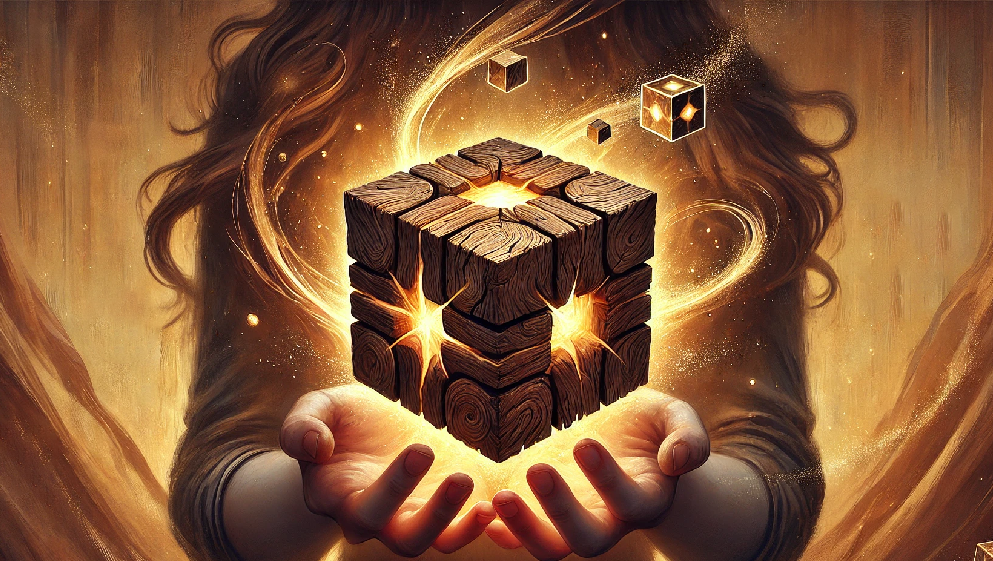


The Surface – What the World Sees
Imagine, if you will, standing before a mirror. You see yourself reflected back—your face, your posture, the way the light catches in your eyes. This is the version of you that the world sees, the carefully arranged composition of who you are, or at least, who you appear to be. It is the surface, the outer shell, the projection that interacts with the world.
But tell me—how much of what others see is truly you?
We walk through life presenting a version of ourselves that is curated, filtered, adjusted to fit the expectations of the world. We smile when we are exhausted, we nod politely when we would rather scream, we pretend confidence when doubt gnaws at the edges of our minds. And the world, being what it is, accepts this projection without question.
Ah, but here is where the trouble lies! The world does not see you. It sees an image, a persona, a mask crafted from necessity. People interact not with the depth of your soul but with the impression you leave behind. They make judgments based on a moment, a glance, an assumption—never realizing that what they perceive is but a shadow of the whole.
The surface is deceiving. The quiet one is mistaken for arrogant. The outspoken one is dismissed as foolish. The strong one is assumed unbreakable, and the kind one is mistaken for weak. And so, we walk through life, not as we are, but as we are interpreted.
But tell me, how long can one live as only a reflection?
How many of us spend our days performing the role we believe we must play—until one day, we look into that same mirror and realize… we no longer recognize the person staring back? We have been shaped by expectations, worn down by perception, confined by the walls of who we were told to be.
And yet, there is hope in this realization.
Because to see the surface for what it is—to acknowledge that we are not defined by it—is to take the first step toward something greater. The surface may be what the world sees, but it is not all that we are.
We are layers upon layers of experience, thought, and depth. We are the laughter that hides pain, the silence that speaks volumes, the strength born from scars. We are both the mask and the truth beneath it—and it is our choice whether we allow ourselves to be known beyond what is seen.
So, I ask you—who are you beyond the surface?
Because when the mask falls, when the reflection fades, when there is no one left to impress… who remains?
The Smooth Side – What We Let Go
Imagine, if you will, a river stone.
Over time, the currents of life have polished it, smoothing away the rough edges, washing over it with the weight of time. It has been struck by rushing water, tumbled against rocks, weathered by the relentless force of the world around it. And yet, it remains—serene, unshaken, softened by experience but not broken by it.
This is the smooth side—the part of us that lets things roll off instead of letting them sink in.
Life, in all its unpredictability, will throw words, actions, and obstacles in our path. People will misunderstand us. We will face moments of rejection, pettiness, and undeserved cruelty. Some days, it will feel like the world is sharpening its knives against our spirit. But the truth is, not every battle is worth fighting. Not every insult needs to be taken personally. Not every wound is meant to be carried.
Ah, but how easily we forget this!
How often do we let small annoyances fester? How many times have we replayed a single moment of irritation in our minds, feeding it, nurturing it, letting it grow until it becomes something much larger than it ever needed to be?
There is wisdom in knowing what to hold onto and what to release. The smooth side of the block does not mean indifference, nor does it mean weakness. It means choosing peace over war, understanding over outrage. It means learning that not every slight against us is a sword worth drawing.
Does this mean we should ignore everything? No. There are wounds that cut deep, injustices that should not be tolerated, battles that must be fought. But the smooth side reminds us that not every hardship deserves our energy.
Letting go is not giving up. It is choosing freedom.
- It is refusing to let the careless words of others steal our joy.
- It is deciding that we do not have to carry resentment just because it was handed to us.
- It is learning that our time, our peace, and our happiness are worth more than temporary frustration.
And so, we must ask ourselves:
- Are we allowing every little thing to cling to us, or are we letting the water roll off?
- Are we becoming jagged from the friction of the world, or are we learning to smooth our edges with grace?
Because in the end, those who master the smooth side do not live without hardship—they simply refuse to be shaped by it.
The Rough Side – What Challenges Us
Imagine, if you will, a block of wood fresh from the sawmill. The edges are uneven, the grain stands up in defiance, and splinters wait for unsuspecting fingers. Run your hand across it, and you will feel the roughness, the resistance, the imperfections that refuse to be ignored.
This is the rough side of the block—the part of us that feels irritation, frustration, and friction when faced with challenges, difficult people, and opposing ideas. It is the unpolished, unfiltered part of ourselves that doesn’t take well to discomfort.
We all have things that rub us the wrong way—people whose words grate on our nerves, situations that make our blood boil, ideas that clash against our beliefs like sandpaper against raw wood. It is easy to recoil from these moments, to assume the problem is the external force pressing against us.
But pause for a moment. What if the roughness isn’t a flaw? What if it’s an opportunity?
Think of a woodworker with sandpaper in hand. The grain resists at first, but with each careful pass, the roughness begins to soften. The splinters give way to smoothness. The shape begins to emerge. The process isn’t gentle, but it is necessary.
And so it is with us.
The rough side teaches us patience when we would rather react.
- It teaches us humility when our pride is wounded.
- It teaches us resilience when we are tempted to give up.
But more than anything, it reveals who we are beneath the surface.
- If something irritates us, we must ask why.
- If an idea offends us, we must ask what it threatens within us.
- If a person grates on us, we must ask if the discomfort is theirs to own or ours to examine.
Not everything needs to be accepted. Some things deserve to be challenged. Some things should make us uncomfortable. But the rough side of the block asks us to recognize the difference—to know when the friction is there to refine us, and when it is simply there to be endured.
The truth is, we are not meant to stay rough forever. We are meant to grow, to evolve, to become something greater. But growth does not come without friction. And the places we resist the most? Those are often the very places where change is trying to happen.
So I ask you—what is rubbing against you right now?
And is it there to wear you down… or to shape you into something stronger?
The Cracked Side – The Wounds That Shape Us
Now imagine and think.., a block of wood that has seen the weight of time. Its surface, once pristine, now bears the marks of its journey—deep cracks, thin fractures, and the splintered scars of pressure and force. Some of these cracks run shallow, mere surface wounds that time will smooth. But others? Others cut deep, forever changing the grain of what once was.
This, my friends, is the cracked side of the block—the side that holds our pain, our losses, our betrayals. The wounds we wish would heal cleanly, but instead remain, etched into us like the very lines of our existence.
We do not pass through this life unmarked. We may wish it were so. We may long to remain untouched by sorrow, free from the weight of suffering. But that is not the nature of the world. No tree stands against the storm without bending, no wood remains unscarred when shaped by the hands of time.
Some will tell you that wounds can be ignored, that cracks must be covered, sanded away, hidden beneath fresh layers of varnish. That if we pretend they do not exist, they will cease to be. But this is a lie—one whispered by those who fear their own fractures.
The truth is, we are not broken by our wounds. We are defined by what we choose to do with them.
Consider, for a moment, the ancient practice of Kintsugi—the Japanese art of repairing broken pottery with gold. The philosophy is simple: the cracks are not flaws to be erased, but marks of resilience to be honoured. They do not weaken the piece; they make it stronger, more unique, more beautiful than before.
And so it is with us.
The cracks in our souls—the betrayals that still sting, the words we cannot unhear, the memories that remain long after the moment has passed—these do not make us weak. They make us survivors. They make us real.
Ah, but here is the lesson that so many fail to see: the light finds us through the broken places.
Think of wood that has been split by time. What do you see? The gaps, the openings, the spaces where light can pass through. The more fractured the surface, the more it allows illumination to seep in. The same is true for us.
Those who claim to be unbroken are often the most fragile. They fear the weight of pain, and so they build walls around themselves, sealing away any chance of true growth. But those who have been cracked, those who have faced the storm and come out the other side—they are the ones who shine with a light that cannot be extinguished.
And so, my friends, I ask you this:
- Do you see your cracks as weaknesses, or as the evidence of your endurance?
- Do you try to hide your fractures, or do you allow them to tell your story?
- Do you curse your wounds, or do you let them shape you into something greater?
The cracked side does not ask us to be flawless. It does not demand perfection. It only asks that we acknowledge our scars, that we recognize our journey, and that we understand this one simple truth:
{We} are not broken. {We} are becoming.
The Layers – The Story Within Us
Imagine, if you will, a cross-section of a great wooden beam. Look closely, and you will see rings upon rings, layers upon layers—a lifetime of growth recorded in the very grain of its being. Each line tells a story, each knot holds a memory, each imperfection is proof that life has passed through it.
And so it is with us.
We like to think of ourselves as single, unchanging entities, but the truth is, we are built in layers. Our past, our experiences, our history—they do not exist separately but build upon each other, shaping us in ways both visible and unseen. Some years in our lives leave smooth rings, untroubled and even, moments of joy and ease. Others bear deep scars—twists, knots, disruptions in the grain, where the world pressed too hard, where we bent under the weight of hardship, where we were forever altered.
But let us not fall into the trap of believing that we are defined by a single moment, a single failure, a single triumph. No tree is just one ring, no block of wood is just one layer. We are the sum of everything that has come before us—the joy, the sorrow, the lessons, the mistakes, the resilience.
Ah, but here is where many struggle. Some layers, we cherish. Others, we wish we could carve away.
The mistakes of our past, the things we wish we had done differently, the times we faltered and fell—these, too, are part of us. To cut them away would be to cut away the wisdom they gave us. The knots in the wood, the scars in our soul—these are not flaws. They are evidence that we have lived, that we have endured, that we have come through the fire and emerged, not untouched, but shaped.
And so, the question is not "How do I erase my past?" but rather "How do I embrace every part of my story?"
Because, my friends, you are not one chapter. You are the entire book.
- Your failures do not define you—but neither do your successes.
- Your pain is not all you are—but neither is your joy.
- You are a collection of moments, a layered masterpiece, a soul etched with the marks of time.
So the next time you look back and wish you could change something, ask yourself this:
Would I be who I am today without that moment?
And if the answer is no, then perhaps it is time to stop wishing away the past and start embracing the wholeness of who you have become.
The Wounded Side – The Scars We Carry
Now flip it over and see the other side, a block of wood bearing the marks of time, of life, of pain. It is not untouched—it has felt the weight of burdens pressed upon it, the sting of nails driven deep into its surface, only to be pulled out again, leaving behind empty hollows. Each hole, each scar, tells a story of something that once was—of pain given, of trust broken, of wounds that never quite healed the way we wished they would.
This is the side we try to protect, the side that has felt too much, suffered too deeply. The side where people have left their mark upon us—not always with kindness, not always with care.
And yet, here we stand, still whole, still here.
The truth is, we cannot always fix what has been damaged. We cannot go back and undo the wounds that shaped us. The scars remain, etched into the grain of who we are, like knots in the wood that refuse to be smoothed away.
But does that mean we are broken beyond repair?
Ah, how often we are tempted to believe so! How often we run our fingers over the hollows left behind and think, "If only this had never happened. If only I could go back. If only I could be whole again."
But tell me, what is wholeness, truly?
Is it the absence of wounds? Or is it the wisdom to live fully, bravely, and openly despite them?
A piece of wood that has never been touched by hardship is soft, fragile, easily broken. But the wood that has endured, the wood that has been carved, pressed, and shaped—it is stronger, more resilient, more defined by the journey it has taken.
Yes, there are wounds we will always carry. There are hurts that will never fully leave us. Some marks cannot be erased, but they can be transformed.
- We may never be unscarred, but we can be strong.
- We may never be untouched, but we can be wise.
- We may never be unbroken, but we can choose to keep going anyway.
And so, my friends, I ask you:
- Do you see your scars as proof of your damage, or as evidence of your survival?
- Do you protect yourself by hiding away, or do you step forward despite the pain?
- Do you see yourself as ruined, or as reforged by the fires you have walked through?
Because in the end, wholeness is not about being untouched by life. It is about carrying our wounds with grace, with courage, with the quiet understanding that though we have been hurt, we are still here. And that, my friends, is the greatest victory of all.
The Core – Where God and Transformation Reside
Lastly, image a block of wood. You can touch its surface, feel its rough edges and smooth planes, trace the scars where time has left its mark. You can see the layers that form its history, the places where knots have twisted the grain, the wounds left by nails driven in and pulled free.
But there is one side you cannot see. One side you cannot touch, nor carve, nor measure.
It is hidden, internal, buried deep within the heart of the wood—untouched by the world outside, yet influencing everything that the world perceives. It is the core, the foundation of all things.
And so it is with us.
Beneath the masks we wear, the pain we carry, the roles we play, there is a part of us that no one else can see, but which defines us more than anything else ever could. It is where our faith lives, where our beliefs take root, where our transformation begins—not in the hands of others, but in the silent depths of who we are.
This is the seventh side—the side that shapes all others.
Ah, but this is the great truth, is it not? The most important part of anything is rarely seen.
The roots of the mightiest tree lie underground, unseen, stretching deep into the earth.
The foundation of the strongest structure is buried, holding the weight of everything above.
And so too, within each of us, there is something beneath the surface, something that cannot be measured, touched, or taken away.
This is the seventh side of the block—the unseen side, the hidden foundation, the place where faith, purpose, and transformation reside.
We are not merely what we appear to be. We are not just the sum of our experiences, nor the reflection of how others perceive us. We are something more, something that cannot be easily defined, for we are always in the process of becoming.
The Nature of the Core
The core is the shaper of all things. It is where belief takes root, where change is possible, where our truest self—unburdened by the masks we wear, the wounds we carry, or the judgments of others—exists in its purest form.
But here is where many falter. They look only at the surface. They see only what is visible, what is immediate, what is simple. They believe the block to be only a block because they do not know how to look beyond it.
They see themselves the same way.
“I am what I am,” they say, as if they were carved into stone rather than something capable of growth, change, and boundless transformation.
But I ask you—is a block just a block? Or is it a gateway to something greater?
There is a question that lingers at the edge of all things, a whisper carried on the winds of time: Who am I?
- Some will say, “I am my past.”
- Some will say, “I am my pain.”
- Some will say, “I am nothing more than what the world has made me.”
But they are wrong.
A block of wood is not merely a block. In the hands of a (and "thee") carpenter, it becomes a masterpiece. In the grip of a sculptor, it becomes art. And in the heart of one who believes… it becomes anything.
You, too, are such a block. You may think yourself limited, finite, bound to the shape you are in today. But you are mistaken. The only true limits that exist are those you have chosen to believe in.
A block may sit unchanged for years, but the moment one sees its potential, the moment one dares to shape it, to transform it, to believe in what it might become—it is no longer just a block. It is something more. And so are you.
The Lesson of the Block: Who Will You Become?
At first glance, the Congrieve Cube is nothing but a block of wood—until it becomes something more.
In the same way, we are more than what we first appear to be. We are not defined by our limitations, by our wounds, by the surface-level observations of others. We are defined by what we choose to do with all of it.
So I ask you:
What will you do with your block?
Will you remain as you are, fixed in place, believing yourself to be unchanging, unmovable? Or will you dare to see the possibilities within yourself, to shape your sides, to carve, to refine, to build something greater?
The cube reminds us:
- We are not one thing.
- We are many things.
- We are strong, vulnerable, wise, broken, healed, layered, ever-growing.
- We are works in progress, living stories, limitless potential in motion.
And just like the block, our only true limitation is what we believe is possible.
So believe.
So say we all.
In God, All things are possible
...for he created, the block of wood.

