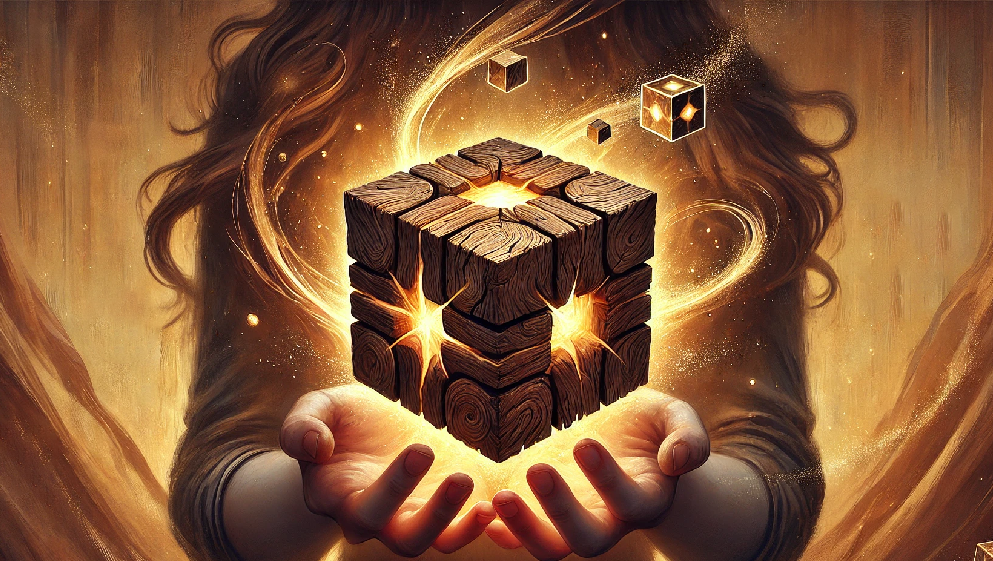
Who Are We If…

A reverse “palindrome” poem about the crisis of our time.

Who are we if division becomes the anthem we rise to each morning?
Who are we if truth is traded for whatever comforts the loudest crowd?
Who are we if facts vanish the moment they challenge ideology?
Who are we if people with disabilities are asked to prove their worth again and again?
Who are we if support is redesigned to look like generosity instead of a right?
Who are we if education becomes a battlefield where curiosity is the first casualty?
Who are we if stories disappear from shelves because fear calls them dangerous?
Who are we if wealth draws the border between the protected and the abandoned?
Who are we if power demands obedience more than justice?
Who are we if leaders praise freedom while quietly tightening the walls around it?
Who are we if democracy wears a smile as it’s being hollowed out?
Who are we if we convince ourselves resistance is pointless?
Who are we if we say we are too small to matter?
Who are we if we already believe we are lost?

Now read it again, from the bottom up.

Who are we if we already believe we are lost?
Who are we if we say we are too small to matter?
Who are we if we convince ourselves resistance is pointless?
Who are we if democracy wears a smile as it’s being hollowed out?
Who are we if leaders praise freedom while quietly tightening the walls around it?
Who are we if power demands obedience more than justice?
Who are we if wealth draws the border between the protected and the abandoned?
Who are we if stories disappear from shelves because fear calls them dangerous?
Who are we if education becomes a battlefield where curiosity is the first casualty?
Who are we if support is redesigned to look like generosity instead of a right?
Who are we if people with disabilities are asked to prove their worth again and again?
Who are we if facts vanish the moment they challenge ideology?
Who are we if truth is traded for whatever comforts the loudest crowd?
Who are we if division becomes the anthem we rise to each morning?

But the question does not end here.

When each side insists the other is wrong, who is left to show what is true once ideology drowns out fact.
Who are we if we refuse to surrender curiosity?
Who are we if we choose people over power?
Who are we if we stand against cruelty, no matter who delivers it?
Who are we if we rise together instead of shrinking apart?
Who are we if we are not lost at all, but only waking up?

This message is written from the centre.
Not the political centre, but the human one.
The place where most of us actually live.
Between exhaustion and hope.
Between wanting to believe in our institutions and watching them drift further from the people they were built to serve.

To the leaders who shape our laws.
To the parties that trade slogans and promises.
To the movements fighting for change.
To those caught in the middle, pulled between competing truths.

Please hear this.

We are living through a moment where too many decisions are made in the language of division.
Where disability is framed as a burden instead of belonging.
Where education is treated like a battleground instead of a foundation.
Where power is protected more carefully than people.
Where democracy erodes quietly, politely, while we argue over who is allowed to ask questions.

This is not a message from the left, or the right.
It is a plea from the people standing between them.
The ones who still believe that empathy is not a weakness.
That truth should not wobble depending on who speaks it.
That freedom does not require the silencing of another voice to survive.

If both sides keep shouting that the other is wrong, then no one remains to defend what is right.
If ideology becomes the measure of truth, then truth stops belonging to any of us.

So hear this, clearly:

We are not your talking points.
We are not the wedge issues you carve the country into.
We are neighbours, workers, caregivers, students, disabled folks, artists, immigrants, families, elders, youth.
We are the ones who carry the weight of every policy you pass.
And we are asking you, calmly, firmly, without apology, to remember who your decisions reach first.

This is a call for accountability.
For humility.
For courage.
For leadership that protects the vulnerable instead of politicising them.
For policies that lift people instead of dividing them into “deserving” and “undeserving.”
For a democracy that is not afraid of its own citizens.

For those already fighting: keep going.
Your voice matters more than ever.
For those who are afraid to speak – you are not alone.
Change has always started with someone who thought they were too small to matter.

And for the leaders in power who will read this…yes, including you;
We’re watching.
We’re thinking.
We’re voting.
We’re not as divided as you believe.

And we expect better.
For ourselves.
For our children.
For the country we still hope to recognize.

This is what the centre sounds like.
Not silence.
But a steady voice refusing to be pulled to the edges.

The world is now watching…

Who are you?
What will you do?

Thank you for listening.

The Shards: “Eventide”

Resonance in Carth...

(This is a fictional story based in the world of Cyberpunk meets Coybow Beebop with a bit of dark fantasy grit)

The rain in Carth still falls like a promise no one intends to keep. Five years didn’t fix the weather or my habits. I’m fifty-five now, titanium elbow, carbon forearm, stubborn heart. The arm hates the cold, the heart hates silence, and the city hates both of us equally. That’s balance, here.

People keep telling me I got famous. They mean infamous, but the syllables are heavy and this place is tired. Towers mention me in their threat briefings. Kids stencil my face on brick and give me a crown made of antennas. Cute. If the city sings, it’s because I hit something until it changed key.

I don’t keep mementos anymore. They turn into anchors. But I kept one thing: a strip of conductive tape Zora left on our old door, the one that said DON’T BE LATE in crooked handwriting. The tape has long since gone dull. The phrase didn’t.

Five years since the Ridge opened its white throat and told me my child still breathed. Five years since Dr. Viridian smiled like a scalpel and asked me to steal an ending from a man named Kade Harrow. Five years since my daughter walked up a gangway into a ship that didn’t leave the usual way and I chose not to shoot the world for it.

Some nights I stand on the east ridge where the rock remembers the hum and listen for the part of the sky that went quiet when the Charon slipped. It’s a bad habit. Like smoking. Like hope.

Tonight, the sky answered.

Not with light. With a sound threaded through the grid, too pure to be municipal, too old to be corporate. A frequency that made the lights along Third flicker in polite gratitude. A little melody teased out of engine noise, one Viridian swore she’d hacked to lull a newborn in a reservoir years earlier. It skated the city like a flat stone on a black canal and landed in my skull with a soft click.

A key.

“Finally,” I said to rain, which pretended it hadn’t heard.

Mako was still running his clinic in the church with the wet saints. He looked older too, but he always looked like an annoyed prophet, so the extra lines just added credibility.

“You hear it?” I asked, dropping onto a pew that had given up on pretending to be dry.

He didn’t look up from the girl whose shoulder he was stitching with a patience I never earned. “You mean the illegal symphony making my fluorescents stutter? The one that woke the pigeons and made them reconsider organized religion? I heard it.”

“Charon,” I said.

He knotted, cut, finally allowed himself the small luxury of an exhale. “Or a prank that wants your history to do the heavy lifting.” He glanced at my arm like it had insulted him personally. “You’ll go.”

“I’m already gone,” I said, and he shook his head the way you do at someone who insists on jumping the same fence to prove the same point.

“Try not to bleed on the hymnals,” he said. “We’re low on bleach.”

I took the hatch beneath pew seven, because rituals matter even when you pretend they don’t. The storm channels received me like the second city they are, ribs and arteries and a wet heartbeat. The key in the grid sang me left, then down, then through a grate I’d welded shut myself three years ago to keep kids from getting adventurous. The weld was broken. Someone else had been adventurous.

The hum thickened. The air tasted ionized, that coin-on-the-tongue feeling that says somebody upstairs is playing god with a generator the size of your regrets. I climbed a maintenance ladder that had learned to sweat and came out into a service cavern that had been white once. Now it was the color of old cigarettes and boardroom lies.

The seam I’d slipped through five years back was sealed. New seam, fifteen meters west, disguised as sincerity. I put my ear to it. The key in my head matched something on the other side with a harmonic that made the hairs on my arm lift and my prosthetic hum like an obedient tuning fork.

I touched metal to metal. The door thought about it, then remembered me. The corridor beyond shone with that polished absence they’re so proud of. My boots wrote damp syllables on the floor. Somewhere a camera remembered it had an eye and opened it.

The lab was smaller, meaner, more efficient. The tanks were fewer, the restraints better designed. Progress.

“Hello, Cera,” said the room without bothering to generate a face.

“Pick a mask,” I said. “I don’t talk to ceilings.”

The lights obliged. They folded into a woman who could have been Viridian if Viridian had ever allowed herself to age. She didn’t. This face did, gently, like software learning about time.

“I’m Proxy,” it said. “Doctor Viridian regrets she cannot attend in person.”

“She dead?” I asked. I wasn’t ready for either answer.

“Busy,” the proxy said, which isn’t a synonym, but we let it be. “You received the key.”

“I kept my antenna up,” I said. “That lullaby wasn’t subtle.”

“Subtle is a luxury in Carth,” Proxy said, which told me someone had been paying attention.

I scanned the room for the only reason I ever came. “Zora?”

“She is with me,” Proxy said. “And not with me. You will find anthropomorphic metaphors useless at this resolution.”

“Try me.”

A tone slid up the registers, a clean sheer climb. The speakers went quiet. Then a voice I knew and didn’t, like a song sung by a grown throat that hadn’t learned to be careful.

“Don’t be late,” it said, and the floor under me went polite and faraway.

“Zora?”

“Hi, Ma,” she said, and I sat down because nothing else kept me in one piece.

Her words were braided with interference that wasn’t interference, just architecture. No breath sounds. No room reverb. A signal, not a body. It should have hurt. It didn’t. That scared me more.

“Thought you’d ghosted me,” I said, badly keeping my voice casual.

“I’m busy,” she said, and I laughed because it hurt less than the other option. “We’ve been building doors.”

“We?”

“You met her. She keeps dressing as math,” Zora said. If Proxy had an expression it chose not to wear it. “Mom, the Charon is coming back through, but not for long. We’re ferrying twelve. That’s the window. After that we lose the corridor and we don’t get it back this cycle.”

“Twelve what?” I asked, but I knew.

“Twelve kids who hear the grid and don’t die of it,” Zora said softly. “Not yet. Not if they leave.”

I let the smoke in my lungs do the thinking with me. “What’s the trick.”

“There’s always a trick,” Proxy said. “Men like Harrow multiplied. The Board’s new security director, Marla Quell, has turned the Aery’s ruin into a listening post. She ordered a net laid over the ridge. Aegis nodes in a choir. They will cut our corridor if they sing together.”

“You want me to break the choir,” I said.

“We need you to turn the city off,” Zora said, apologetic like the child of a woman who only has one speed. “For two minutes and thirteen seconds.”

“Two minutes is a lifetime,” Proxy said. “In either direction.”

I looked down at my hand. It shook until I told it not to. “You realize that if I pull that plug, everything with a pump and a chip hiccups. People on life support. Elevators. Transit. The poor. The old. The ones who never got a vote.”

“We counted,” Proxy said. “We… planned.” The hesitation was human. That bothered me.

“What if I say no,” I asked.

“Then we divert,” Zora said. “We leave eight behind and hope they don’t get found in the next cycle.”

Hope is a thin soup. Eight is a number that knows your name. I closed my eyes and saw faces I didn’t know yet because I’ve learned how to recognize stares that haven’t had a chance to happen.

“Where’s your body,” I asked, because the question had been trying to be born the entire time.

Silence that was technically signal. Then: “Aboard,” Zora said. “I tried, Ma. I came down once. I lasted twenty-one minutes before the city made me want to lie down forever. This is the way I can be here. A… shard.”

“That’s your word?” I asked. “We already gave that title away.”

“Titles iterate,” Proxy said, smug in the way only software gets to be.

I stood. I paced. The lab tried to interpret motion as threat and remembered who it was dealing with. “Marla Quell,” I said. “Aegis choir. The Aery. Power kill on a city that complains when it loses ten seconds of ad projection.”

Mako would hate this. The city would hate me. Twelve kids would love me like a myth for a few hungry minutes and then go away forever.

“Where’s the switch.”

Proxy painted lines in the air with a precision that always makes me itch, like somebody ironing a battlefield. A corridor through the old water treatment hub under Lowline. A maintenance room behind a ramen stall on Ghostline that had a door to a door. A breaker panel disguised as a devotional alcove in the Chapel Substation. Lovely. Blasphemy meets infrastructure.

“You’ve already drilled,” I said.

Zora’s voice warmed. “I learned from the best.”

“Your aim was always superior,” I allowed, because pride gets its inches where it can.

“What do you need from me,” I asked, already cataloguing what I had. Revolver. Three reloads. Grapple. Two grenades older than some opinions. One friend who would sigh and help anyway.

“Help me lift twelve,” Zora said. “Help me keep the city quiet long enough to thread a needle through a throat someone welded shut.”

I nodded to air that had earned it. “Then we dance.”

I took the tunnels out. Proxy’s voice followed me like a ghost that paid rent. “We will coordinate timing. The nodes will counter-sing. You will need to take three of them personally. The rest we can spoof.”

“Names.”

“Choir Gate Nine under the Spillway. Choir Gate Fourteen in the Aery’s spine. Choir Gate One at the Harbor Array.”

“Of course it’s the Aery,” I said. “We should start billing that building.”

Rain let me surface on Ghostline with a hiss that smelled like old algae and wet neon. The bazaar still sold everything you could put in a pocket and some things you shouldn’t try. The noodle stall was new. The priest behind it wasn’t. We’d broken bread ten years ago when he sold black-market insulin. He recognized me and didn’t, made a choice, ladled broth. I paid with too much. He pretended not to notice.

“Bless me, father,” I said at the panel behind the devotional candle.

“Wrong booth,” he muttered, but the alcove sighed, and the door that wasn’t a door opened into a maintenance nook that believed in itself.

Breaker banks wait for the moment someone loves them enough to flip them. I stacked blocks, wedged wedges, stole a devotion candle because pettiness isn’t a sin here. Proxy whispered countdowns in my ear. My eye caught on a tiny sticker tucked behind the panel face. A SERA logo, then a date, then a signature: M. QUELL. The fine print read: DO NOT TOUCH.

I touched.

One node down.

The Spillway node fought back. The maintenance cavity sat knee-deep in cold rust and had a sentry drone that read my body as a question and answered in nonlethal. It lit my ribs with rubber and electricity until my metal hand introduced itself in a dialect the drone hadn’t prepared for. Sparks. Smoke. A hard fall. I laughed, which is a defect I can’t fix.

I cut the second node with a saw older than most security patents. The light above me went from important white to embarrassed red. Somewhere, civic pride barked into a radio and didn’t get an answer it liked.

The third node wanted blood. It was tucked inside the Aery’s spine, past security that had learned new posture. Marla Quell had sanded the Aery’s edges into something keen. She replaced sculpture with antennas. She replaced the concierge with a lens. She replaced the fake sky with a dome that displayed the city’s heartbeat in soft blues and angry reds. Nice. Aspirational terror.

I went in the way I always go in: wrong door, right posture. A server pushed a cart past a door that said CATERING ONLY and I remembered I can smile. The camera trying to be a person blinked. The hallway behind the ballroom had been reupholstered with money. The door I needed was behind a wall sconce that had more opinions than it should.

“Do you have an appointment,” asked a woman wearing severity like perfume. She had no uniform. That made her worse than the ones who did.

“Always,” I said, and told the sconce who I was with a screwdriver.

The panel came awake like a guilty man. The Aegis choir buzzed in my teeth: four nodes alive, two in the dark. Marla Quell had built a system that wanted to sing the corridor closed with the kind of joy that makes war museums honest.

“Cera Reynolds,” said a voice behind me, and I didn’t need to turn to know what kind of silhouette I’d find. I turned anyway, because manners.

Marla Quell looked like a correction. Neat. Precise. The kind of person who organizes drawers. No servos in her jaw like Harrow, no cheap charisma. She’d never pretend to love you. She’d simply invoice your grief.

“We’ve been updating our files with your career milestones,” she said. The smile didn’t reach anything. “You’re trending.”

“I prefer ballads,” I said, and the revolver decided to be in my hand because it loves me when I’m honest.

Security stepped into the hall like punctuation. Four. Then six. Then eight. The room breathed. I didn’t.

“You won’t shoot,” Quell said. “You can’t afford the sound.”

“You overestimate my budgeting,” I said, and shot the lens above her shoulder. Glass sighed. People flinched in rooms with better carpet. While everyone watched the ceiling, I pushed the breaker down and felt the entire building forget its name.

Lights died. The choir faltered. Zora’s key swelled in my skull, bright as a blade catching dawn.

“Two minutes thirteen,” Proxy said in my ear, far too cheerfully.

Quell didn’t panic. She didn’t move at all. She watched me as if I were an old documentary she’d studied for a test. “Some of us grew up on the tapes,” she said. “You’re slower.”

“I’m funnier,” I said, and then the corridor made choices.

Bodywork: a duck under a baton that meant it. A elbow that shouldn’t bend did. Knees negotiate with throats. A wall learned about heads. The gun barked once more, not kill, just goodbye. The floor tried to see me. I introduced it to my heel. Someone grabbed my wrist and found carbon instead of forgiveness. Someone else tried to tase my back and discovered that my arm’s ground wants to meet voltage halfway. Sparks. The smell of luck.

I got out because getting out is a habit I married in my twenties and never divorced. I left Quell in a hallway full of useful anger and ran the back stairs like they’d offended me.

“Node three down,” Proxy said, impressed in the way a metronome can’t be. “Carth is in twilight. Proceed to harbor.”

“I’m busy,” I said, and cut through a kitchen where ten thousand canapés died confused. A chef hissed something about liability. I grabbed a knife and thought about keeping it. I didn’t. People in tall hats deserve one kindness a week.

Outside, the sky had decided to be a bruise. The harbor array hunched over the water like a flock of mechanical birds that forgot migration. The node lived under a maintenance pier. Two guards smoked loan-word cigarettes and told each other lies about women and raises. I slid into the water because this body still remembers how. Cold knifed under my coat and found the seams. My arm whined like a junkyard dog. I gripped the pier underside and counted bolts until I found the one that had been replaced last year. New metal feels arrogant. I introduced it to an old wrench.

The panel exposed its throat. The breaker was labeled with bureaucratic sarcasm: AUTHORIZED PERSONNEL ONLY.
I’ve never been authorized.
I have always been personnel.

I flipped it.

Carth went dark.

Not the darkness of apocalypse. The soft, holy, annoyed kind where tower faces forget their slogans and neon becomes a rumor and the rain sounds like rain again.

“Corridor open,” Proxy said.

The ridge answered. I didn’t see it. That’s not how this door works. I felt the pressure change, that cabin-pop behind the ears, and the part of the sky that owes me a favor went absent.

“Counting,” Zora said. Her voice unspooled clean. “One. Two. Three. Easy. Four. Five. Six. Seven. Eight. Nine. Ten. Eleven…”

Static. Not static. Interference shaped like a hand around a throat.

“Quell,” I spat, already running, already cashing in a body I had been saving for retirement.

I hit the east ridge like a bad idea and dropped behind a shape that used to be a loader and now was a sculpture. The Aegis choir had backup. Above me, lights studded the clouds like someone had lost a bag of jewelry. Drones. The bad kind. The kind that call you by your legal name.

“Marla’s put a clamp on the last slot,” Proxy said. Even synthetic voices know how to swear if they want to. “She brought a skyhook online. Industrial. It’s harmonizing against us.”

“We don’t have time to reroute,” Zora said. “We lose three if we do.”

I tasted rust, found a solution with my tongue. “Give me coordinates.”

The skyhook perched on the Aery’s ruin like a vulture granted a grant. A tether unfurled from it in the air you don’t see, a line you feel in your fillings. I couldn’t shoot it. I couldn’t reach it. I couldn’t reason with it.

But Carth is a city built by people who believed in bad ideas. One of them: an old maintenance rail that used to run cargo along the ridge to the spillway. The bikes that ran it were discontinued when insurance companies remembered to be alive. Which meant, in Carth, that three of them still existed.

One of them was in a shed Mako pretends he doesn’t own.

“Don’t,” he said when he saw my face, which is why I love him.

“Bless me, father,” I said, already yanking tarp, already tasting the metal rattle of the rail under my feet. The bike coughed twice like an old smoker and then remembered it was built for sin.

“The choir is recovering,” Proxy said, numbers ticking by that I didn’t have time to hate. “We have ninety seconds. Then nothing.”

The rail ran along the cliff like a dare. The bike roared too loud for stealth and exactly loud enough for theater. I leaned into the wet and felt the frame vibrate like the world telling me it disapproved. The skyhook’s tower grew as if someone were playing a practical joke with perspective. Drones turned. Rain knifed. The city watched, because it loves a show it doesn’t have to pay for.

Security on the ridge didn’t expect a pensioner on a discontinued maintenance rocket. Good. I like disappointing people with clipboards. I hit the service ladder hard enough to unlearn an old scar. The bike skittered, found grip, leapt. The tower’s maintenance shroud yawned like a mouth. I aimed my body at it and begged my arm to pretend to be twenty-five again.

We made the mouth. The mouth disliked it. Steel wrote letters on my jacket. I rolled into a platform and my shoulder remembered Crimea. I stood. The skyhook sang at a frequency that made my molars itch.

“I need a lever,” I said to nobody.

“These are figurative times,” Proxy said.

“Then I’ll be literal,” I said, and wrenched a length of bracing out of the floor with the help of physics and temper. The lever in my hands felt like religion.

I jammed it into the coupling where the skyhook’s harmonic met the tower’s good intentions. The city loves poetry, Mako says. It also loves slapstick. Metal screamed. I screamed with it. The coupling didn’t break. It considered its choices.

“Forty seconds,” Zora said. Calm. Too calm. The calm you learn when you know you can hold your breath a little longer than everyone else.

“Sing with me,” I told the lever, and pulled.

The coupling surrendered in a cascade of expensive noises. The hook coughed like a mystic and lost its note. The Aegis choir missed its next beat. Above the ridge, the air heaved like someone finding a breath after a long dive.

“Twelve,” Zora said into my bones, and I let go of the lever because I needed both hands to stay alive.

Security arrived in a fluster of smart boots and trigger discipline. Marla Quell herself stepped out of a lift that pretended it was an altar. Her hair didn’t move in the wind. I hate that.

“You cost me a node,” she said.

“You cost me a cigarette,” I said. “We’re even.”

She didn’t smile. “You’re done.”

“I keep hearing that,” I said, and then I showed the city how a revolver can be a thesis. Not lethal. Not yet. Pipes burst in a wall that had been making promises at the rain. Steam, actual and metaphorical, bit the security detail and the tower’s nice floor learned about flash flooding.

I took the screaming ladder down and remembered on the fourth rung that my knee—replaced in a riot with someone else’s warranty—doesn’t like ladders. The knee complained. I apologized. We compromised. The bike coughed the way machines cough when they’re proud of you and I pushed it into motion with a grunt that did not dignify my birth certificate.

The ridge blurred. The harbor flexed. Carth flickered back to itself, one tower at a time, as breakers remembered duty and bored technicians spun dials that made them feel important again.

“Window closed,” Proxy said, not unkindly.

“Count,” I demanded, because you ask even when you fear arithmetic.

“Twelve,” Zora said again, and I had to stop the bike so I could not fall off it. “We got them.”

I laughed then, ugly and bright. It frightened a dog that had been minding its own business. The dog forgave me. Dogs usually do.

Mako was at the hatch before I could knock because of course he was. He pressed a towel into my hands and examined my knuckles like they were misbehaving children.

“Did you break anything that belongs to other people,” he asked.

“Several laws,” I said. “One coupling. Two guards’ confidence. A song.”

He grunted. “You smell like ambition and pond.”

“Quell will adjust,” I said.

“Quell will adapt,” he corrected. “She’s the kind of believer who mistakes process for morality.”

I towelled water out of my hair and listened for the aftertaste of a ship that had passed through the part of the sky that cares. Nothing. The silence wasn’t empty though. It had weight. Joy is heavy when it lands.

“Zora,” I said to nowhere, and nowhere answered.

“I’m here,” she said, softer now, farther, like a radio that’s been put on the other side of a door.

“How are they.”

“Sleeping,” she said, with a warmth that makes your hands trust themselves. “We rigged a cradle. Viridian would be pleased with the math, if she were the sort of person who let herself be pleased.”

“Is she alive,” I asked, again, because I’d earned the repetition.

“Busy,” Proxy said, which is a lie I hate that keeps not being a lie.

Marla Quell didn’t arrest me. She put out a statement about civic sabotage and resilience. Carth applauded from couches. A portion of the city hates me more now. A portion loves me in a way that will get them in trouble. Children chalk levers on walls and write my name under them in wrong spellings. It’s embarrassing. It’s also the closest thing to prayer that works here.

I didn’t sleep. The city doesn’t sleep. It shivers. Mako made stew that was beans and apology. We ate it on the clinic steps while the rain relented long enough to be called mist.

“What now,” he asked, because someone always has to ask.

I watched the ridge where the Charon had been a rumor twice. “Now we fill the gap,” I said. “Quell will lay a net so tight birds will give up on migration. The Board will move the Aery’s listening ears into every vent. The Syndicate will rename itself something pastoral. We rewire the chapel and teach twelve more to go, and we show the ones who stay how to live with the grid in their bones without burning.”

“You’ll need help,” Mako said. “Preferably the kind that sleeps sometimes.”

“Recruitment drive,” I said. “Maybe a pamphlet. ‘So You Want To Annoy a God.’”

He snorted into his cup.

I walked the city after midnight because I always do. A kid with a bucket of paste and a stack of prints eyed me and almost offered a poster. I spared her the awkwardness and took one. My face, badly rendered, looked back from cheap paper. Above the eyebrows, someone had scrawled: DON’T BE LATE.

“Good typography,” I said. The kid shrugged like people do when praise embarrasses them. She ran, wrong shoes slapping puddle. I let her go. This place takes what it wants; I won’t take more.

At the east ridge again, the wind bit the way it bit when I was twenty and thought revolution was a weekend gig. I stood there, a woman who had gotten old in a city that doesn’t believe in that, and said the thing out loud because sometimes the air needs to carry it.

“I miss you.”

Static that wasn’t static. A pressure in the jaw. Then Zora’s voice, thin with distance and thick with love, the combination that keeps us honest.

“I know,” she said. “Me too.”

“You did well,” I told her, because somebody has to when you choose the hard door.

“So did you,” she said. “You’re funnier now.”

“You always had taste,” I said.

Silence again. Then: “We can’t stay long next time, Ma. We’re building more doors, but they swing fast. The Board learns. The Syndicate prays with a calculator. Dr. V says we need a ground chord.”

“What’s that.”

“A place the city sings true,” she said. “A place we can anchor to without hurting anyone. A… chorus that isn’t theirs.”

I looked at the chapel behind me, at the cracked psalter, at pew seven’s secret. At Mako’s laundry line of sutures and hard truths. At the kids chalking levers on cracked brick. At the noodle priest with his contraband soups. At my own stupid arm and its complaints.

“I’ve got one,” I said. “We’ll tune it.”

“Don’t be late,” she said, the smile audible, a note held between teeth and mercy.

“I’m already here,” I said. “I’m always here.”

The city breathed. The rain decided to try for gentle. Somewhere a transformer failed in a string of pops that sounded like locusts giving a round of applause. Somewhere the Aery adjusted a camera to catch my angle and saved the footage for a future trial. Somewhere twelve kids slept under a hum that loved them back.

On Ghostline, I bought a pack of the cheap cigarettes Zora used to scold me for and didn’t light one. I tucked it behind my ear like a promise I might break. I walked with the patience that makes wolves nervous and counted the beats between my steps like they were prayers. I found three places where a door could grow and marked them with a grease pencil. I found one place where a lever could fit and chipped at the mortar with a knife.

I am a woman with an old gun and an older habit. I am late, always, but less late than I was. I am building something I can’t yet name, with a city that keeps insisting it is only a graveyard and discovering it’s also a nursery.

The Shards keep cutting. We keep bleeding. We learn, finally, to make the blood mean something.

The sky did not light. The ship did not appear. That’s not how our miracles work. Still, I looked up, because hope is a habit too.

“See you soon,” I said.

The grid answered in a tone nobody else noticed, a clean note folded into rain, an engine hummed into lullaby. The city tuned itself a fraction. Just enough to hear it.

Just enough to move the world an inch.

Part II

The grid sang wrong at three in the morning.

Not the usual off-key lull of bad wiring and municipal lies. Not the sweet note Zora threads into rain when she wants to say she’s alive. This was a chord nobody decent writes on purpose. It came up under the city like a bruise that learns to hum, soft at first, like embarrassment, then growing until the lamps on Ghostline decided to blink slow in time with it.

“Don’t like that,” Mako said, which, from him, qualifies as a sermon.

We were on the clinic steps sharing a bowl of beans pretending to be stew. The rain had dialed itself down to theatrical mist. Carth tried to look cinematic and managed damp instead. The chord deepened. A bus three streets over exhaled its hydraulics and didn’t inhale again.

“Proxy,” I said, tapping the implant that hates me less than most family. “Tell me I’m having a stroke.”

“You’re not,” Proxy said in my ear, bright and apologetic. “But you may soon be in a city that is.”

“Diagnose,” Mako said, already standing. He’d sewn a boy’s hand until midnight and still moved like he was the one who invented urgency.

“Deep-time recursion signature,” Proxy said. “Origin vector appears to be the Aery. Again.”

“Quell,” I said. The name tasted like safety railing. “She’s mad enough to touch a stove twice if it looks expensive.”

“Not just Quell,” Proxy added. “She’s lit an array called PSALTER. Apparently she’s fond of metaphors.”

Mako’s mouth went thin. “That’s the corporate project that pretends to keep the city safe from ‘anomalous harmonics,’ which is to say from children who can hear where the grid goes.”

“Which is to say from Zora,” I said, standing, bowl abandoned, beans remembering gravity. “And from doors.”

“Which is to say from hope,” Mako said, because he can’t help himself.

Hope makes my jaw hurt. I prefer levers.

“Proxy,” I said, “tell me how bad.”

“Forecast suggests a localized resonance collapse,” Proxy said. “If PSALTER hits the right harmonics, they can bottle the corridor’s throat and harvest pressure. If they miss, the city will be… clamped.”

“Define clamped.”

“Time slur,” Proxy said. “Stutters. Stasis pockets. Potentially… erasure.”

“Of what.”

“Whom,” Proxy corrected, like it mattered.

The chord stepped down a rung. The neon over the noodle priest’s stall breathed in and forgot to breathe out. He looked up once, as if to ask whose sin this was, then kept ladling broth. Faith is a kind of momentum.

“Zora?” I asked the dark like it owed me money.

Static, then the kind of silence that tells the truth by refusing words. Then: “Busy,” my daughter said, faint as wind through wires. “We’re aligning an egress. PSALTER will try to pinch it.”

“How many aboard,” I asked, and Mako’s hand found my shoulder, heavy and kind.

“Thirteen,” she said. “One more than last time. Superstition tax.”

My laugh came out wrong. “That building is cursed,” I said. “Let’s tithe it.”

I took the hatch under pew seven because ritual doesn’t ask permission. The storm channels were awake and muttering. Somewhere, a drain dreamed of the sea. Proxy kept pace in my ear with a map that looked like someone had taken a palimpsest and taught it to swear.

“The PSALTER array forms a ring inside the Aery,” Proxy said. “Quell took the old listening dishes and tuned them for intervention. She’s added a skyhook harmonic you tried to kill.”

“Tried is a rude tense,” I said. “It failed to live.”

“She replaced it with a Heliotrope,” Proxy said.

“Of course she did,” I said, because men like Harrow buy toys; women like Quell buy the manual and annotate it in blood.

At Lowline, the maintenance door that keeps trying to pretend it isn’t a door sulked but opened. The chapel substation sighed like a tired god. Breakers lined up like white teeth. I love them the way wolves love bone.

“What’s the plan,” Mako asked, breath fogging, hands already checking the trauma kit he brings when I say we’re just going to look. He knows me too well to believe me.

“We take PSALTER off key,” I said. “Trip three nodes, force the ring to wobble, give Zora her throat.”

“You can’t keep taking lungs out of buildings and expect them to sing,” Mako said mildly.

“I manage,” I said. “Buildings are resilient. People are stubborn. We’ll be fine.”

We weren’t fine.

We were a city with a woman like Marla Quell in its nervous system and a history of bad decisions that learned to walk upright.

The first node under Ghostline pretended to be a boiler. It hummed like a choirboy who likes knives. I broke the seal with a priest’s candle I’d stolen earlier because petty theft is a liturgy. The panel lit its little warning lights like candles on a cake nobody wanted.

“Flip it,” Proxy said.

“This kills power to a quarter of Bight Street,” Mako said.

“Fifteen seconds,” Proxy said. “Elevators will be unhappy, pacemakers will curse your name, but we can buffer with sine feed. I’ve got it.”

“Do you,” I asked.

“No,” Proxy admitted. “But I am terrifyingly competent at pretending.”

I flipped the breaker. Light withdrew from the block with injured pride. The wrong chord faltered. Somewhere a generator swore.

“Node one,” I said.

“Node two is under the old viaduct,” Proxy said. “They hid it in a Minerva bay.”

“Shiny,” I said, and Mako gave me a look that said only slightly that I was impossible.

The Minerva bay used to be where the Syndicate docked their cargo kites. After the crackdown, the bay became a yoga studio for six months, then flooded, then became a storage room full of boxes labeled with weasel words. I cut a panel with a saw older than my patience and met a set of Heliotrope coils that sang quiet menace at my fillings.

“Careful,” Proxy said. “They’ve got antiphase couplers on these. If you touch them wrong, you don’t touch anything again.”

“I’m sixty percent wrong on a good day,” I said. “Define wrong.”

“Current,” Proxy said. “Also intent.”

I deepened my breath, put my hand on my chest until the carbon stopped trying to think its own thoughts, and reached in slow like I was calming a horse. The coil’s song hit the bone where my prosthetic meets my stubborn. For a second it felt like somebody had put me in a bell and rung it.

“Hello, darling,” I said to it, and twisted.

The coil coughed. Lights around it went from triumphant blue to embarrassed amber. The chord under the city cracked, then reformed uglier.

“Node two,” I said, hand tingling. “What’s next.”

“The Aery spine,” Proxy said. “Of course.”

“Of course,” I echoed, because if the city loves anything, it’s repeating a mistake with better lighting.

We didn’t have a pass. We had posture. I wore a jacket that used to mean I belonged to a department that never existed. Mako carried a case that made us look like we were there to deliver good news nobody wanted. Quell’s people watched us the way well-fed dogs watch old women: amused, underestimating, dangerous.

The Aery’s lobby had been redecorated by someone who thought wealth can convince fear to go stand in the corner. The big screen in the ceiling showed a live wireframe of the sky’s throat, white around the edges where the corridor pressed. Quell had set the visuals to calm colors. The thing in my ear whispered terror.

At the security desk, a boy with cheekbones and a collar pin glanced up, saw my jacket, saw Mako’s case, decided bureaucracy outranked curiosity, and waved us through.

“People keep thinking I’m their future,” I said in the lift. “I guess I am, if their future is grumpy.”

“You’re grumpy because you care,” Mako said, which is the kind of sentence that should be illegal.

The node lived behind a wall that suggested art and delivered murder. I pried up a panel and found a tangle of Aleph coils braided like an expensive haircut. The chord underfoot took a step down into ugly. Even the elevator music gave up.

“Well, well,” Marla Quell said, because she has timing like a metronome with a grudge.

She looked the way she always looks: precise, patient, like the idea of mess makes her skin itch. Two escorts behind her, black suits that believed in their biceps. Her hand hovered near her hip, where something slim and sad probably lived.

“Back again,” she said.

“I keep trying to quit this building,” I said, “and it keeps sending me coupons.”

“You know you can’t stop PSALTER,” she said. “I’ve got twelve dishes singing like saints. You can maybe choke one, two, three. The rest harmonize around your vandalism.”

“You always mistake ‘can’t’ for an invitation,” I said.

“You always mistake ‘warning’ for ‘plot hook,’” she said.

I smiled despite myself. It’s soothing to be known by your enemies.

“You’re going to break the corridor,” I said, hand deep in coil, feeling for the point where arrogance meets physics. “And by ‘corridor’ I mean ‘my daughter’s throat.’”

“I’m going to cage a hazard,” Quell said. “The city deserves to keep its children. Including yours. Don’t you want her where you can touch her.”

My hand froze. That old itch flared in my teeth. “Don’t you dare use tenderness as a weapon,” I said, softly.

She didn’t flinch. “There’s a thing coming,” she said. “PSALTER isn’t just for your little ferry. We started seeing signatures on the Borealis feed two nights ago. Something big. Something with a hungry orbit. My ring catches it, or Carth goes dark in a way you won’t get to fix with wire cutters.”

“Define big,” I said.

Quell’s smile didn’t touch skin. “The engineers call it a wheel. The consultants call it providence. The Board calls it an opportunity.”

My own word showed up, uninvited. Gate.

“Proxy,” I breathed.

“Seeing it,” Proxy said in my skull, the tone that means the map has passed from metaphor to triage. “There’s an object at L5 that wasn’t there yesterday. It just decided to be. Radius… too big. Signature… wrong. Antiphase echoes like… bell towers. My models don’t like it.”

“We need the throat for thirteen,” Zora said through noise and fear. “After that, do what you like to your ring, I don’t care.”

Quell cocked her head. “Zora, darling, you can come home. PSALTER can land you.”

PSALTER can grind rocks,” Zora said, sweet as knives. “We’re not rocks.”

“Flip it,” Mako said to me, ignoring the part where this is not his field because he knows better than anyone that the heart’s field trumps the rest.

I flipped the coil. The Aery trembled like a lie told over good speakers. The wrong chord broke for a beat. In that beat, somewhere over the ridge, something immense answered.

The feed in the ceiling glitched. For a second the pretty wireframe showed a cutaway that wasn’t in the specs: a ring, bone-white, wide as a district, with spokes like cathedral ribs. Lights dotted its rim like eyes. The chord from it wasn’t notes; it was a decision being made again and again in a circle.

“Four minutes,” Proxy said. “Charon’s nose will be in the throat for sixty seconds only. PSALTER will try to weld the mouth shut with the wheel. If it succeeds, we lose your egress and get a hat we didn’t order.”

“You’re mixing metaphors,” Mako said.

“Welcome to my brand,” Proxy said.

Quell didn’t pull a gun. She took a step closer and did something worse: she tried sincerity.

“Cera,” she said. “I watched the tapes. I know who you were before your arm forgot how to be patient. You used to teach. You used to quiet rooms with permission instead of fear. Help me land the wheel. We turn Carth into a city that keeps its children.”

“By keeping them,” I said, coil hot in my palm. “In jars.”

“Safe jars,” she said, and Mako had to put his hand flat against my back because my body wanted to go do a foolish thing involving her nose.

“Later,” he whispered.

“Later,” I said.

We left the panel in disgrace and ran.

On the ridge, the air tasted like pennies and old prayers. The wheel above L5 showed itself through cloud like a sore eye. Drones circled it in a halo of small, stupid light. The PSALTER dishes around the Aery lifted their faces and sang.

“Thirty seconds,” Proxy said.

“Where are you,” I asked the sky.

“Coming in at a slant,” Zora said, and for a second the child in her broke through the captain, bright with mischief. “Like always.”

I felt it rather than saw it: the pressure change, the jaw-pop, the part of the city that knows my name deciding to let me keep it. The Charon slid into our throat like a knife kissed by a kitchen towel. The PSALTER chord stretched until the air around the dishes glittered with stress. The wheel hummed the way gods hum when they’re deciding between flood and covenant.

“Now,” Proxy said, and Mako and I did the stupid thing you do when the only lever big enough to turn the world is marked DO NOT TOUCH.

We hit three auxiliary nodes in stupid sequence. Ghostline, Spillway, Harbor. The city coughed stars. Elevators performed story problems. Somewhere a nightclub invented silence. The PSALTER ring stuttered.

“One,” Zora counted, voice a rope. “Two, three, four—”

The wheel sang back.

It wasn’t loud. It was precise. The PSALTER dishes harmonized with it instantly, faithless choir responding to a better pitch. The throat of the city constricted like a held breath. I felt Zora’s line thin.

“Hold,” I said, to Mako, to the rain, to the stupid wolf that is my life.

“Seven,” Zora said, and I heard fear like frost. “Eight, Ni—”

Something else came through.

It wasn’t the Charon. It wasn’t the wheel. It was a shard of sky shaped like a lance and it wore geometry like armor. It punched past the dishes and drove a nail of light through the ridge into the substructure under the Aery. The earth bucked like it remembered it was an animal.

“Quell,” Proxy snapped. “What did you invite.”

Quell’s answer came hot and furious on every channel at once. “I didn’t. It invited itself.”

Buildings don’t scream when they die. They exhale a thousand little things at once. Glass, screws, dust, promises. The Aery took the nail and tried to hide the wound by being expensive. It failed.

“Ni…,” Zora said, though the line sounded like someone talking through rain in another language. “Nine, ten. Heavier. Eleven—”

“Thirteen,” Proxy whispered, surprise like a laugh. “She’s got thirteen, Cera. She—”

The wheel chose then.

It dropped a line to the nail, a thin filament like the world’s meanest fishing gut. The filament bit. Every coil and breaker and PSALTER dish changed key at once. The city’s throat closed.

The Charon didn’t leave. It crashed.

Not into us. Into somewhere adjacent. The throat shuddered, missed, slid sideways. Lightning made lace out of cloud. For one long bright second, I saw a bridge extending from the wheel into a place that is not anyone’s sky. On it: shapes moving in armor that wanted to be wings. Tall frames braced like statues taught to fight. A shadow of a ship longer than a neighborhood, ragged banners of light flapping from its flank. Smaller craft flickered like fish schooling around a whale. None of it obeyed our physics. All of it looked tired.

A voice I didn’t know said in a language I didn’t speak: “Anchor found.”

My arm rang like a bell. My bad knee agreed. The implant in my ear decided to be nineteen again. Mako grabbed my sleeve. “Cera,” he said, the way you say a name to a person you can’t afford to lose.

The filament yanked.

The nail in the ridge sang up a column of stone-dust and rebar grief. The Aery exhaled its entire lobby. The PSALTER dishes tried to hold tune and failed. Ozone bit the city’s teeth. Along Ghostline, the lights went out not like a blackout but like a decision.

“Stasis pockets,” Proxy said, angry in a way code doesn’t usually allow. “Clock drift. People are freezing in little bubbles. Time is walking with one shoe.”

“Zora,” I said.

Static, for three long beats that felt like years. Then: “We’re not on the line,” she said, too bright. “We’re on the bridge.”

“The bridge where,” I asked.

“The bridge that’s not here,” she said. “Mom, don’t be late.”

“Tell me how to not be late to not-here,” I said, already running because what else is a body for.

“Anchor,” Proxy said. “The nail’s an anchor. If you ride it, you’ll get spooled.”

“I am very rideable,” I said, breath hot in my throat. I grabbed the rail-bike from under Mako’s tarp, because sin comes back like stray cats. It spat smoke and prayer. I pointed its ridiculous old nose at the ridge and gunned it like I was still twenty-five and stupid. The rails chattered. The world shook the way bone shakes.

Security tried to get in my way and did not enjoy the experiment. Drones dropped like lazy hornets. Quell appeared on a catwalk with her jaw clenched and the look on her face that people in charge get when their systems do something elegant and murderous without permission.

“Don’t,” she shouted, and for the first time since I’d met her, the word sounded like a plea.

“You adore a lever,” I shouted back, and put my weight on the only one left.

The bike hit the lip of the ridge like a rumor and flew the way physics allows when a person with my history begs in a dialect gravity respects. I saw the nail up close. It wasn’t a nail. It was a column of braided light tuned to whatever frequency makes your regrets vibrate.

I put my carbon palm against it and my entire body remembered a dock it had never stood on. I felt Zora’s laughter where my jaw meets my loss.

“Don’t be late,” she said, because that’s our family crest.

“Always,” I said, because so am I.

Behind me, the city did something catastrophic: it began to fold.

Not collapsing. Folding, like the map had decided to be the book it came with. Streets kinked. Buildings stepped inward a finger-width at a time, precise, elegant, cruel. The stasis pockets held like bubbles in resin. A man on a balcony froze lifting a dog. The dog’s ears stayed mid-tip forever. The noodle priest’s ladle hung miraculously halfway between pot and bowl, surface tension unbroken even as the pot slid three inches sideways and decided to be a rectangle. Mako stood on the clinic steps with one hand out, palm up, as if receiving rain, and didn’t move at all.

“Proxy,” I said through my teeth, because if I looked back at Mako I would become heat and therefore not useful. “Tell me I’m not leaving him to a museum.”

“You’re not,” Proxy said. “You’re collecting him later.”

“Promise with math,” I said.

“I will tattoo it on the wheel,” Proxy said, fierce. “Go.”

The column took me. I expected heat, pain, dumb light. I got a sense of falling sideways into a coil, and the feeling you get when you finish a word you didn’t know you knew. Sound stretched. The wrong chord became a scale I’d never practiced and my arm decided it loved the note enough to behave.

For a moment too thin to measure, I was in rooms I will write down later when I can claim them. A corridor with walls that are not walls, hung with banners that flicker and mean oath. A chamber where a woman with scarred hands holds a helmet like a bowl and whispers into it as if it contains a sleeping animal. A cockpit with handholds that remember a thousand grips and a view of a ring with lights along its rim like soldiers standing at ease. A market where jazz floats up from a tin speaker that might have been a joke left by a bored god. A bay with a ship like a long brick with opinions painted on the side in languages that have not happened yet. Somewhere, a man laughs the way you do when cargo is late and the debt collector’s smile is punctual.

Time snapped. The column flared. My stomach remembered it has rights. The world came back wrong and right at once.

I found myself on a platform the size of the Aery’s lobby but kinder. The material under my boots wasn’t stone and wasn’t metal. It felt like the inside of a bell.

Zora stood there.

Body. Breath. Hair I used to brush back with my left hand now caught up in a tie like she’d been busy and halfway remembered vanity. Taller than memory. Eyes that had learned to choose when to be soft. My daughter. My hazard. My ache.

She took a step and I took one and then we forgot stepping and just collided with the graceless dignity of people who have earned their clumsiness.

“Hi, Ma,” she said into my neck, and there are words that save cities and words that end wars and then there are those two.

“Late,” I said, my hand on the back of her skull, counting the bones like rosary.

“Always,” she said.

Around us, the platform woke more lights. People noticed us. Not awe. Busy curiosity. A person in armor the height of a lamppost walked past carrying a piece of a frame that looked like a kneecap for a cathedral. The armor’s paint was chipped pretty, like a veteran you don’t dare call old. The pilot inside nodded at Zora, then at me as if I’d passed an exam on the way up the stairs.

“Welcome to the Periphery,” a voice said, human and amused. The speaker was a person in a coat cut like dignity. They had the kind of aura you get when ships stop when you raise your hand. “I’m Captain Kael Sadrik of the courier Sable Finch. You’re Cera. You’re famous in a way that makes me uneasy.”

“I’m terrible to sit next to on a plane,” I said. “Do you have planes.”

“We have objections with thrusters,” Kael said. “We’re about to have more.”

He gestured.

Beyond the rail, the ring unrolled itself in a view that made my bad memory of pretty architecture apologize for being provincial. You could see the world the ring held back: black that wasn’t empty, dotted with small defiant lights. In the gap’s distance, inside the ring’s circle, hung a station shaped like a wheel with too many spokes. Between the ring and station stretched the bridge I’d felt, a ribbon of intention slim as a thought and strong as a vow.

Along it came the Charon, limping, throwing little pieces of itself into the gap like a bride scattering old circuits instead of petals. Behind it, smaller shapes flanked like hounds, some sleek, some ugly, all determined. On the far side, on a platform that looked like it had been carved out of argument, a woman with a scar like punctuation shouted orders to a crew that wore a hundred different uniforms and shared one anger.

“You found friends,” I said to Zora, struggling to fold my arms like I wasn’t going to grab her again in a second.

“We found a war,” she said, like she wasn’t sorry, which I appreciated. “Or the tail end of one. Depends on which history you pick.”

“Pick the one where I don’t get bossed by metaphors,” I said. “I left my patience in a building that folded.”

Zora sobered. “Carth,” she said.

“Pausing,” Proxy said in my ear, sounding smaller now that it wasn’t the biggest liar in the room. “Quell’s PSALTER net is holding three districts in stasis. She’s triaging the rest because she’s not a monster, just a bureaucrat with a god complex. Mako is a statue with a heartbeat. Ghostline’s noodle economy is resilient. The Aery is a hole. The wheel is here.”

“The wheel has a name,” Kael said. “The Concord calls it Archimandrite. The crews call it God’s Bracelet. The people who built it called it a hinge. Hinge of what, none of us agree on.”

“Hinges are for doors,” I said.

“Correct,” said a new voice, and every head nearby tilted a degree in reflex respect.

The woman with the scar had crossed the platform without noise. She carried authority like a practical weapon. She looked me over, saw my arm, saw my mistakes, nodded once. “Archivist Rae,” she said. “Keeper of the Ledger. We track who goes where, and what it costs.”

“What’s it cost,” I asked.

“Everything,” she said, deadpan. Then: “We try not to collect.”

“Polite of you,” I said, and Rae allowed herself a corner-smile that wasn’t unkind.

“The wheel found your anchor,” she said. “That means it can fold into your city again and again now, if we don’t salt the latch. That’s good, if you want to move people. Bad, if you don’t want your Board thinking it can leash us.”

“Quell won’t leash anybody,” I said. “She’ll put a bell on you and call it safety.”

“Then we don’t give her the metal,” Rae said simply. “We break the latch. We fold the door inward. We move your thirteen away clean, and we leave your city with a bruise that will heal ugly but heal.”

“You break the latch,” I said. “I lose the only way I know to let my kid walk in my rain.”

Rae didn’t wince. She didn’t blink. She nodded, once, as if accepting a bill. “That is the cost,” she said.

Zora’s hand found mine, hot, real, bigger than my memory. “We can build another,” she said. “Different anchor. Ground chord. Not a nail. A song.”

I remembered what she’d said earlier, about needing a place the city sings true. I thought of the chapel substation dressed as worship. The bowed backs on Ghostline. The kids chalking levers on brick. The noodle priest’s stubborn ladle. The way Carth hums back when you hum to it like you mean it.

“I have a song,” I said. “But if we don’t break this latch, Quell will use it to pull the wheel down into my living room and rename it.”

Rae nodded. “Then choose fast,” she said without malice. “The Archimandrite is spooling a filament to PSALTER again. Quell is already asking it for a dance. If she learns the step before you say no, we all pay tuition.”

The platform trembled, a low animal thing you feel in your teeth. People around us tightened straps, checked lines, smacked controls that only pretend to be temperamental to make us feel needed. On a lower deck, a long-armed machine lay on its back while three mechanics argued over whether its left knee was opinionated or merely wrong. Somewhere, a trumpet tried to play a scale and decided to try again later. The war here had taste.

“Captain,” a younger voice called from a console built out of wires and insolence. “PSALTER’s pushing a Sera signal into the hinge.”

“Don’t call it that,” Rae said. “Call it what it is.”

“Corporate prayer,” the tech said cheerfully.

Kael leaned in. “We can cut the latch,” he said. “But it means sending someone back down the filament with a counter-chord and a null seed. You’ve got the chord. We have the seed.”

Every head turned toward me with the kind of expectancy I hate because I’m ugly enough to see the romance in other lives and the necessity in mine.

“Always the lever,” I said. “Fine. Show me the ugly seed.”

Kael held out something that looked like a walnut made by a god with a taste for geometry. It hummed in my palm high and nasty, like an insect that knows your secret name. My arm hated it, which means it works.

“Ride the filament down,” Rae said. “Drop the seed in the PSALTER throat. Sing your city’s name at the right pitch. It will swallow the seed because it thinks it’s praise. The seed blooms. The latch forgets how to be a latch.”

“What happens to me,” I asked, because I’ve learned that heroes who don’t ask are either stupid or in stories someone else is telling.

“You come back up the filament, on the bridge, and you have stew with your ridiculous priest,” Rae said. “Or you miss the timing by half a breath and you fold into the wheel’s library and I give you a job writing marginalia until the heat death of kindness.”

“That last part was a joke,” Kael said.

“It wasn’t,” Rae said.

“Zora,” I said.

She squeezed my fingers. “I’ll be at the catch,” she said. “Like I was when I was six and you let me jump from the low wall even though Lex in the next block said I’d break my knees.”

“You broke his window instead,” I said.

“Windows heal,” she said. “Knees complain. Go.”

I went.

You can’t ride a filament with a machine. You ride it with the same piece of yourself you use to hear the grid. I stepped into the light and the light said, politely, that it would take me if I sang. I sang. Nothing pretty. The close hum you do when you’re finding a baby’s note. The chapel’s breaker song. The sound Mako makes when he stabs a knot and it loosens. The noodle priest’s ladle against a pot. Feet on Ghostline at three in the morning. Rain on a tin saint. The purr of my stupid rail-bike deciding to sin with me. The rotten lovely heartbeat of my city.

The filament grabbed me like a friend who doesn’t ask, and I fell without falling.

Quell waited where the nail met the broken Aery, because of course she did. Security around her like commas, measured, precise. Stasis bubbles behind her in pretty glassy ovals, citizens held mid-gesture like saints in a bad museum.

“Still time,” she said through the whine, her voice reaching me along cables and correction. “You can choose to help.”

“I am,” I said, dropping into the throat with the seed under my ribs like guilt.

The PSALTER ring opened its mouth to receive me. It sang in the key of your teacher’s disappointment. I showed it my city’s name and it thought I was prayer.

“Now,” Proxy said in my ear. “Cera, now.”

I opened my hand. The seed fell like heavy grace.

Quell saw it then. If she’d had time, she’d have been brilliant. She has the kind of mind that cuts diamond. But timing is a god that doesn’t take bribes. The seed hit the perfect center of her ring and unfolded like a polite flower made of math. It didn’t explode. It revised.

The latch forgot how to be.

Every dish in the array sagged as if embarrassed. The wrong chord broke into a hundred little notes and went home. The stasis pockets shivered. Some popped like soap bubbles. Some held. Some… moved. Slowly. Like they had decided to let you finish your word.

“Cera,” Zora said, and there was something in her voice that made the hair on my arms stand up and salute.

“What now,” I said, breathless, adrift.

“Now the wheel chooses again,” Proxy said, smaller, less smug, almost reverent. “It noticed your song.”

The filament jerked. Not up. Sideways. That trick again. The bridge multiplied. Doors I couldn’t see insisted on being real. The world uncoiled and tried on different weather.

I saw, very clear, very near: a city that is not Carth, taller, cleaner, dirtier, honest in different places. A hangar full of frames the size of houses, painted in colors that mean argument. A small ship with wings like good ideas and a nose like trouble, rust trimmed harmlessly, a name written on its flank in hand: Sable Finch. A woman with hair like she cut it herself lighting a match with her thumbnail. A man with a prosthetic leg playing indifferent jazz at a bar that serves tea like medicine. A child with a ribbon of wire in her hair wearing a shirt that says DON’T BE LATE in three languages we haven’t met. A station where you don’t buy passage, you earn it in jokes. A mountain city with water that runs blue and banners that say things like ACCORD and mean it. A field of old machines put out to rust the way kings used to be buried.

The ring isn’t a door. It’s a hinge. Doors we’ll build. Paths we’ll argue into existence.

The filament tightened around my chest like a polite emergency. The seed finished its unfurl. The PSALTER ring let go of its idea of ownership. The wheel hummed in approval or indifference; I’m old enough not to flatter myself.

“Catch,” Zora said, and I felt the bridge tilt into welcoming.

Something else moved.

From the wheel’s shadow, quiet as regret, came a long thin shape wearing a coat of lights that refused to be counted. It matched the filament’s frequency perfectly on the first try. It didn’t feel like the wheel. It didn’t feel like us. It felt like a question asked by the person who writes the test.

“Unscheduled guest,” Rae said, her voice whipping along the conduction band like a flag. “Identity?”

“Archivist,” Kael said, low. “That looks like a Warden.”

Rae swore with elegance. “All right. New rule. Move faster.”

“What’s a Warden,” I asked, because apparently I collect new problems as a hobby.

“They keep hinges honest,” Zora said. “They hate improvisation.”

“Then they’ll hate me,” I said, and reached for the last inch of the bridge like a person who refuses to be graded on neatness.

Quell did what survivors do: she adapted. She shouldered a long-barrel device with a coil on the end the color of expensive regret. She aimed not at me. At the filament.

“Don’t,” I shouted, because I’ve earned the right to be obvious.

She fired.

The filament screamed. The bridge jumped a centimeter left. Timing fell out from under me like an old floor. I slipped.

Zora’s hand found mine.

We hung there, both of us, over a city that was freezing and unfolding, under a ring that had opinions about history, with a Warden sliding toward us like a polite knife and a corporate saint aiming corrections at our throats.

“Don’t be late,” she said, grinning like a child.

“I am exactly on time,” I said, lying.

Behind us, the wheel flared. Ahead, the bridge narrowed. On Ghostline, the noodle priest’s ladle finally reached the bowl.

In my ear, Proxy whispered a string of numbers too lovely to be coincidence. On the platform, Rae said, softly, “Choose.”

I chose…

…I let go….

…to be continued ??? 

(let me know…)

The Shards

Where it all beings...

(This is a fictional story based in the world of Cyberpunk meets Coybow Beebop with a bit of dark fantasy grit)

The rain in Carth fell like a system reboot that never finished. It hissed in gutters and steamed off hot conduit, drew long glassy threads down billboard faces promising eternity-as-a-service. Neon smeared the puddles in bruised colours. Cera walked through it like it owed her money.

Fifty. She felt it in the knee that had been rebuilt with cheap carbon after the port riots, in the shoulder that clicked whenever she racked a slide. That didn’t slow her down so much as tune her. Every ache was a metronome. Every scar was a countdown.

Her daughter’s name rode the back of her tongue like a blade.

Zora.

Seventeen, all elbows and velocity, a grin that could split a winter. Zora who soldered sound like it was silk, who built rough music boxes out of scrap servos and left them on windowsills to sing at dawn. Zora who died in a corridor lit by emergency crimson when a Syndicate reclamation unit swept Block R-13 for “unlicensed cognitive assets.” The footage leaked two days later: gas masks, scanners chirping, a girl lifted from her feet by a drone’s clamp like a doll snatched by a wire claw. An apology was issued. A payout was offered. The city moved on. Cera tried to but her bones refused.

That was three years and a civilisation ago.

Tonight, Cera had work. The kind that clanked. The kind that paid out in something heavier than credits.

She cut through the bazaar arcades along Ghostline, her coat shoulder-snagging on beaded curtains, the air thick with seared algae and narcotic steam. More than one stallkeeper stared at her arm, the alloy forearm with knuckled plating, flexor cables gleaming wet like sinew. She could feel the rain gather in the gaps and warm as her internal coils wicked it away. Outside, a train rolled above, making the arcade’s glass jitter in its frames.

At the far end, a sign and a lie: SWEET DREAMS MOTEL in migraine pink.

Cera flicked a spent cigarette into a drain and checked the cylinder on her revolver. She kept the old thing for reasons that didn’t make sense to anyone who hadn’t been twenty and alive in the wars. The smart guns of the era chirped and advised. The revolver didn’t talk back. It simply answered.

Room 213 hosted a Syndicate broker named Havel. Havel bought and sold memory-weight the way old traders bought spice. You could deliver him three terabytes of stolen childhoods on a drive and he’d nod at the checksum and pay you by the kilo. Word was he’d moved a pallet of “reclaimed minors” through Dock 9 at sunup. Word was his protection detail wasn’t half of what it used to be.

A woman sat at the lobby counter under the blue of a dead aquarium. Her hair was a bad perm. Her eyes didn’t rise from the screen as Cera crossed. “By the hour?” she asked in a tone that said she didn’t care if Cera slept or burned the place down.

Cera slid two dull coins across. “By the minute.”

“You and everyone else.”

The elevator tasted like pennies and fear. Cera rode it to the second floor, listening to the cable whine. She felt the familiar itch between her shoulder blades. The city had eyes, and some of them used to be hers. When the doors yawned open, she stepped into a corridor where the wallpaper had been painted back on in long strokes of approximation. Somewhere a woman laughed too loudly. Somewhere a synth changed keys and the room sighed with it.

The first guard stood outside 213 in a jacket two sizes too small. He was still declaiming his threat when Cera’s metal wrist trapped his gun hand against the doorframe with a wet pop. The revolver answered in the same breath. He slid down, shocked at the leak in his chest.

Inside: more men, all of them newer to violence than they’d admit. Havel looked like a glitch in a human file, with a jaw that hummed from cheap servos and eyes too still. Cera could see her own reflection shard in those eyes as she moved, fired, moved again. The desk exploded. The window webbed. Havel flinched slower than he should have, his software bitten by fear.

“You’re supposed to be done,” he croaked when the room stopped throwing echoes. “Old ghosts don’t make new messes.”

“You sold my kid’s neighbourhood by the pallet,” Cera said. “I’m late to my own party.”

Havel’s human hand trembled toward a cable on the table, the kind you jack into your neck when you’re done pretending. Cera’s boot came down on his wrist.

“Where,” she asked, calm as a lit fuse, “do the units go after Dock 9?”

He grinned, yellow and mean. “Up. Everything worth keeping goes up.”

“Up where.”

“Ridge.”

The word hit old circuitry in her brain that still understood the city’s skeleton. The Ridge wasn’t a place you found on wayfinding. It was a rumour that wore a map like a mask. A laboratory complex buried in the cliffs west of the spillways, a fortress grown from concrete poured during the old famine projects and grafted to corporate cash later. A place that didn’t appear on satellite or tourism pamphlets. Up was always where the worst things went.

“You’re lying,” Cera tried. She wanted him to be lying.

Havel’s grin widened into something like pity. “Ask the high preacher on Third,” he said, and when he moved, it was to trigger an incendiary buried in his chest cavity. Cera swore, hauled him toward the dying rain of the window, and threw. The room coughed black. The glass gave. Havel fell like a lit prayer.

Cera stood in the smoke, revolver hot, eyes watering. She waited for the tremor to pass through her right hand. It did, because it always did when she let it.

She should have felt satisfaction. She felt a note held too long.

Downstairs, the desk woman had vanished. A fire alarm tried to remember how to shriek. Cera walked into the rain.

The high preacher on Third styled himself a god-surgeon and wore a cracked halo of LEDs like a cheap saint. He ran a clinic for the uninsured under a church whose saints had lost their names to moisture. He also supplied memory-wash services to whoever could pay, wiping faces from minds like chalk from slate. Cera had used him once, badly, after Zora’s funeral when the apartment still held the shape of her and the evenings would go on forever with nothing to catch on.

Preacher Mako looked up from a boy with a knife in his thigh. His hands were already red, his accent drifting like an old song. “You,” he said dryly. “I was told you’d drowned. A pity, I thought. I had a punch card to stamp.”

Cera leaned in the doorway, rain still falling off the back of her coat. “Havel says ‘Ridge.’”

“Of course Havel says ‘Ridge.’ He said ‘Eden’ last week.” Mako peeled the knife out and the boy made a sound like a radio detuning. “What do you want me to say, Cera? That there is a hole in the mountain and SeraTech dropped a palace into it? That they feed it children and it excretes saints?”

“I want you to tell me where.”

He gestured toward the chapel’s broken rose window with his chin. “Do you still carry that antique?” he asked.

Cera set the revolver on the table. He exhaled, amused.

“I like when the world dresses as poetry for a funeral.” He set the boy’s leg and bandaged it. “Third aisle, pew seven, under the cracked psalter. There’s a hatch. It goes to the storm channels. Follow the water west. When you hear the hum, you’ve come far enough.”

“Is this penance?”

“This is me being tired of being paid to make people forget their children.” He wiped his hands and looked at her over the wreckage of a hymnal. “What will you do if you find your ghost, Cera?”

“Build her a door,” Cera said. “Kick it in.”

He nodded like a man who had just seen an answer grow teeth. “Then you should hurry.”

Carth’s storm channels were a second city that didn’t bother with rent. Cera dropped into them through the chapel hatch and felt the air change from rain to sweat, looked up at a moon scissored by latticework. She kept left at poison green arrows tagged by kids who navigated the undercity like sharks. The water ran waist-high in some runs, and she remembered how to half-swim with a metal arm.

Memory wore the tunnels like perfume. Zora’s laugh in the echo. Zora’s hands, always moving. Zora’s notebook crammed with bad drawings of better machines. Zora’s last message on the apartment door, painted in conductive ink: DON’T BE LATE with a heart that looked like it had been drawn with her opposite hand. Cera had been late to everything that mattered.

At a junction where three tunnels joined hands, she heard it: a hum you feel in your skull, the sound that makes animals lie on their sides. The sound of rich people building something they shouldn’t at scale.

Upstream, the waterline fattened. Cera shouldered through and climbed a ladder bolted to concrete that had learned to sweat. She emerged into a service cavern ringed by catwalks. The far wall was cut smooth and white, too clean to be municipal. Someone had hidden a door there. Someone had failed.

A drone tracked across the cavern like an insect made of architecture. Cera flattened against a pillar and watched it pass. It had a preacher’s face, as if the manufacture of god masks had outpaced faith.

She crossed low and fast to the seam in the white wall. It wasn’t a seam at all but a gap left by a crew that went too fast, a flaw disguised by surfacing. Inside, a throat of hallway glowed with cold light. Her boots left little tattoos in the dust. She felt her heart count.

The first room she found was a lab. That was the word the architects would use, though it looked more like a chapel that had replaced its altar with tanks. Each tank held a column of light and shapes inside the light that fought to be human. Some were human. Some were something else. Data piped in along railings like ivy. In the far corner, a table made of honesty: restraints, drain gutters, a bucket with the sour iron stink of old blood.

Cera moved between tanks like a woman walking grave markers. The names were alphanumeric strings. The ages varied. The eyes did too. Some looked back. Some could not.

“Hello,” said a voice behind her, and she didn’t flinch because the voice didn’t come with footsteps. She turned and found a figure that might have been a person if it hadn’t been designed by committee: a woman in a white dress that had never met a wrinkle. Her hair was black and polite. Her smile was a screen saver.

“You are trespassing.”

“You are abominating,” Cera said, and the woman’s smile turned curious.

“An antique word. Tasteful.” The woman tilted her head. “My name is Dr. Viridian. Will you let me explain what you are destroying before you do it?”

Cera stared. “I didn’t say I was destroying anything.”

“You came with a revolver to a place no one is supposed to find. The intent is implied.”

“Where do they go,” Cera asked, “after Dock 9?”

Dr. Viridian looked at the tanks like a proud parent addresses a room of talented strangers. “They transcend,” she said simply. “We recover damaged potential and route it to a better use.”

“You harvest kids,” Cera said, and her voice went flat in that way it did when she ran out of synonyms for wrong.

Viridian’s eyes softlit. “Cera,” she said, and the name in her mouth made Cera’s muscles forget how to be quiet. “I’m sorry for your loss. I can make it meaningful.”

A door opened behind Viridian. Two security forms entered, all hinge and compliance. Cera’s arm did the thing it knew how to do. The first form dropped with a sky-blue hole in its chest. The second pitched left as the tank glass there cracked into rain, coolant whipping the floor. Alarms stirred like groggy gods. Viridian didn’t move. She watched, curious, like a biologist observing a lion remember a fence.

Cera had three seconds to decide where to run. She took the hallway that smelled like cold metal and clicked when she stepped on it. She didn’t look back to see if the doctor followed. She knew that kind of predator. They were content to let the maze work.

The hallway opened into a room that wasn’t a room, more a range where weapons celebrated their own marketing. On the far side, a wall of windows: a view into a cavern where an engine the size of a train slept. Cera heard a noise she had not heard since the marches, a chorus of tuned generators, the sound of a city being taught how to kneel.

“Zora,” she said, like a test word to see if the room loved her as much as it hated her. The air tasted of ozone and pickerel bones.

A door whispered behind her and she spun on it, raised, lowered, breathed. The thing that entered was not a thing and not a person, a modular chassis in a human silhouette wearing a girl’s height like a borrowed jacket. Its face was blank. Its hands were aware. A designation ran across its sternum like a prayer flag: ZR-17.

Cera’s mouth tasted like metal.

“Zora?” she asked, idiot that she was.

The chassis did not answer in a human voice. It chirped a handshake, found nothing to grip, and subdivided the floor into threat fractions. Cera did not remember deciding to holster the revolver. She only realised her hand was out. The chassis tilted its head and copied the gesture, palm to palm through air. There was a heat there. There was a shape. There was nothing at all that could have been called mercy.

“Hello?” came a voice from the other end of the room, and this time it was a voice you would follow into a fire. A girl leaned in the doorway, hair hacked short with a dull blade, eyes too big in her face. She wore a maintenance uniform that had failed to be her size. Her badge said JANI-3 in a font that did not care who she was. Her actual name fell out of her mouth like a secret. “Zora,” she said, pointing at herself.

Cera’s vision doubled. Not a ghost in a tank. A girl in a doorway. She was older than seventeen and younger than the truth.

“My name is Zora,” the girl said again, uncertain. “They told me to answer to Jani-Three but my head hates it.”

Cera had to sit down. She didn’t. She let the world go blurry at the edges and kept the centre in focus.

“They took you from R-13,” Cera said. “You were supposed to be dead.”

“Lots of things were supposed,” Zora said, and tried on a smile like a pair of stolen boots.

Dr. Viridian arrived in the room like an algorithm that had achieved personhood. “You remember,” she said gently, almost thrilled. “We’re getting better at that.”

Cera raised the revolver. Viridian ignored it. She put her palm against the blank chassis’s shoulder and it settled like a dog convinced by a hand. “She’s a good mother,” Viridian said, motioning to the chassis, and the sentence did something wild in Cera’s spine.

“She’s not,” Cera said.

“She kept you breathing for nine months,” Viridian went on, voice tender like a scalpel. “In a reservoir with a generator that coughed at odd hours. She wrapped you in aluminium and sang a lullaby hacked from engine noise. When the unit came, she begged better than any of the rest. We do not always break what we bend, Cera.”

Zora’s jaw was sharp in profile the way her father’s had been, the way Cera had refused to admit it could be. Her hands were callused. There was a seam behind her left ear where a service port had been fitted and later removed. It gleamed when she turned her head. She did not look away from Cera.

“You’re my mother,” she said, like she didn’t want it to be a question but would stand it if it was.

Cera could have collapsed the room into a simpler shape. She could have killed Viridian and the chassis and any number of approaching guards and bled out on this polished floor. The city would have written her name on a bathroom wall and she would have been done. The world offered that path to people like her. She did not take it.

She stepped toward Zora because there was literally nothing else to do that didn’t taste like ash. The chassis flexed, a warning. Viridian smiled, a promise.

“Don’t,” Cera said to the machine. It listened. She didn’t know why. Maybe the world loved poetry as much as Mako said it did.

Viridian folded her hands. “We can talk price,” she said, which meant there would be one.

“Say the number where I put you through the window,” Cera said. It came out polite. She hated that.

Viridian’s smile didn’t strain. “I need you,” she said. “Both of you. The Ridge project is a cathedral. But cathedrals like ours attract lightning. SeraTech has swallowed the Syndicate and now the Syndicate would like to become the law. They have board members who consider our work an untidy line item. I require insurance.”

“What kind,” Cera asked, though she already half-knew. People like Viridian traded in favours they didn’t know how to cash and debts they couldn’t carry.

“The kind you know how to collect,” Viridian said. “There is a man named Kade Harrow, a mid-level messiah with a preoccupation for purity. He intends to shutter this facility and sell the assets to whichever faction offers the prettiest rhetoric. He attends a gala tonight at the Aery. I want you to ruin his career in a way that cannot be unruined. Bring me something that makes his name a smoking crater.”

Cera laughed. It surprised her. “You want me to waltz into a tower party in a wet coat and walk out with a man’s throat in my pocket.”

“I want you to do what you do, Cera Reynolds,” Viridian said softly. “The city used to tune itself to your violence. I’d like to hear it sing.”

“And if I do,” Cera asked, “you give me my daughter?”

“I give you the truth,” Viridian said carefully, like truth could be wrapped and handed to someone without getting all over your hands. “She lives here. She breathes because we broke three laws and eight bones to make it so. There is a debt on her life you cannot pay with bullets. But I will write a letter to the future that includes you if you do this thing for me.”

Zora’s eyes had found the floor because the floor was easier to consider than what was being said about her. “I can’t live on the outside,” she said quietly. “They tried. I stumbled like a newborn horse. I hear the grid when I sleep.”

Cera’s arm ached. She wanted to take it off and put it down and have her old bone back. She wanted to be wrong about everything. She wanted to go home to an apartment with a broken kettle and a girl who would complain about the taste of city water. She wanted a future that had nothing to do with towers.

“You stay here,” she told Zora, and Zora flinched the way you flinch when a teacher uses your full name. “For now,” Cera added, and the words rearranged the air. “I’m not leaving you. I’m going to fetch something we need.”

“What,” Zora said, not trusting it.

“A lever,” Cera said. “Big enough to move the world an inch.”

Viridian inclined her head. She was a statue granted motion every other minute. “Do hurry,” she said, and on the way out, Cera took a second to put the muzzle of her revolver against the glass of a nearby tank and look at the thing floating there with metal braided into it like sin. She wanted to shoot. She wanted to free everything broken with a single loud thing. She didn’t. She left the lab as she had found it: aching.

The Aery was a tower that tried to convince the night it was daylight. Its lobby had white trees with silver leaves and a ceiling that projected a fake sky brighter than the real one ever was. Cera looked like a problem in that lobby, which is what she was, and the concierge decided not to recognise her because he didn’t get paid enough to admit what the world contained.

She took the freight lift and got off on a floor that didn’t exist on the panel. She bribed a janitor with a story about her uncle. She walked into the gala with the posture of someone who had been invited to worse places by better people. Kade Harrow stood under a sculpture made of old satellites fused into an angel. He wore a suit that could detect lies and a smile that had never been told the truth.

He recognised Cera in the way men like him recognised weather. As a factor. As an inconvenience. “I know you,” he said. “You used to throw bricks at cameras on Lowline. You got old.”

“You didn’t,” Cera said. “You just changed suits.”

He offered her a drink. She wanted it. She refused. “You aren’t on the list.”

“I’m the list.” She palmed a chip she’d lifted off a server’s tray and bit the inside of her cheek until she tasted copper instead of old sorrow. “You’ve got files,” she said. “Names you shouldn’t have. Projects you shouldn’t touch. You’re about to sell them to people who think souls are a rounding error.”

Harrow’s smile didn’t move. “We don’t use the word ‘soul’ here. It suggests liability.”

“Where is your vault,” Cera asked, and it was a joke. He didn’t laugh. He did a thing with his jaw that made two security men drift closer. Cera sighed.

“In the kitchen,” she said, and the security men frowned because it wasn’t a good joke. She threw a glass at the chandelier. It shattered with a sound like a thousand polite conversations stopping at the same time. People who had never been afraid in their lives looked up at a ceiling that was falling on them, and Cera walked into the confusion the way a fish walks into water.

She hit the service corridor at speed, shouldered through a door that warned of consequences, and found the admin wing where the real party always was. She kneed a guard in the throat, palmed his badge, and pressed it to a plate that wanted a different badge but would take this one because it was the same colour. The vault wasn’t a room so much as a permission. She stepped into it. The light felt expensive.

The files were where they always were: under everything anyone would admit to caring about. Harrow’s private ledger told her Ridge’s supply lines and which city councillors sang in his choir. The old surveillance footage told her Zora’s abduction, frame by frame. The other thing told her worse: a transfer order that wrote ZR-17 off the books and into a box labelled DIVERSION: CHARON with a note that read, in Harrow’s terrible practical handwriting, deliver alive, cost no object.

Charon. The name had been a rumour when Cera was a child. A ship that didn’t sail water or sky so much as the spaces between. A way rich people would one day go to a better neighbourhood.

Cera copied everything because she had learned that you don’t take one life raft when you can sew three into a raft you might survive. The edges of her vision pulsed. She exhaled. She told herself she was not shaking.

On the way out, she bumped into Harrow. He had the look of a man who knows there is a knife in the room and is trying to decide if it is in his own hand. “You won’t publish,” he said, a little too confidently. “You still think you can bargain your daughter out of the fire.”

“You didn’t watch the right tapes,” Cera said, and he looked almost disappointed to learn she had teeth under the grief. She could have shot him. She didn’t. She introduced his face to a wall in the oldest greeting. It made the right sound. She left him there dreaming of court dates and bled a trail of carved laughter through the service corridors as alarms decided to pretend they mattered.

The city received her again like an old friend it had left on read. She ran through rain and steam and ten degrees of hunger. When she dropped back through the chapel hatch, Mako was waiting with a towel and a bowl of something that had been stew in a different lifetime.

“You look worse,” he observed.

“I feel worse,” she said, and showed him what she had stolen. His eyebrows made a cathedral out of surprise.

“You are going to set a lot of people on fire,” he said with professional admiration. “You sure you know which ones yet?”

“No,” Cera said. “But I know the first.”

The Ridge had expected a siege or a prayer. It got a woman with a backpack full of confession. Cera didn’t ask Viridian for permission to broadcast. She used the chassis in the hall as a dish, rewired a maintenance node with Zora’s help, and blew the vault open: Harrow’s ledgers, Charon manifests, procurement orders signed by officials whose faces had smiled in too many speeches. The city’s feeds lit up like stormglass. Somewhere in a tower, a public relations squad died a little. Somewhere in a precinct, an honest cop got brave for twenty minutes and did something decent.

Viridian watched the chaos from a glass bridge. She didn’t look displeased. “Insurance,” she said, and Cera couldn’t tell whether the word meant safety or fraud. Maybe both.

“Charon,” Cera said, and it wasn’t a question.

Viridian’s screen-saver smile flickered. “Offsite,” she said. “Uplinked through the engine you noticed. Preparing to leave within the week.”

“With my kid as cargo.”

“With your kid as passenger,” Viridian corrected gently. “She cannot live in this gravity. The grid sings to her bones. She will die in your apartment while you’re boiling a kettle. She will die in the street because a bus’s engine note reminds her of a lullaby. Or she will leave with us and live long enough to hate me in new and interesting ways. Metaphorically speaking.”

Zora stood between them like a bridge that had forgotten it was also a cliff. “I’ve been outside,” she said. “Viridian isn’t lying. The city rubs me wrong.” She looked at Cera then with a softness that could kill a person at the wrong angle. “But I can choose, right?”

Cera wanted to say no. She wanted to pick her up like she had when she was four and scared of vacuum cleaners. She wanted to say the words that would fix time. Instead she said the other words, the ones that made her the kind of mother she hadn’t been allowed to be when the city was hungrier.

“Yes,” she said. The word came out like her throat had been built around it. “You can choose.”

Viridian blinked, betraying the first human thing Cera had seen her do. “You are better than your press,” she said.

“I’m worse,” Cera replied, because truths come in pairs. “What does ‘choose’ look like here.”

“Come with me,” Viridian said, and for the first time, she didn’t make it sound like a command.

She led them down a corridor that had never been dirtied by anyone but air. It opened onto the engine Cera had seen earlier from behind glass, a cathedral of humming coils and hungry mathematics. Above it, a vault of rock. Beyond that, night. A platform ringed the machine like a balcony that believed in heaven. On its far edge, a dock. In the dock, a ship that wasn’t a ship, all angles and arrogance, its skin absorbing the light rather than reflecting it.

“Charon,” Viridian said, with the pride of a mother introducing her problematic firstborn at a family reunion.

Cera stared at it and felt old, then younger than she had any right to. She had hated this city long enough to know when it offered her a trick. She had loved it long enough to know when the trick was a gift.

Zora stepped forward until the floor vibrated in her teeth. She lifted her face like she was listening to rain. “It doesn’t hurt,” she said, wonder and embarrassment and terror blooming at once. “It’s like… it’s like when the grid sings but it’s not singing at me, it’s singing with me.”

Cera nodded. Her throat had found its job and was doing it badly. She put a hand on Zora’s shoulder and felt the heat through the uniform fabric. “Then that’s your door,” she said. “You can walk through.”

Zora didn’t move at first. She looked back at Cera, and there it was again, a grin trying to be brave and making it. “Don’t be late,” she said, and Cera laughed once, a bark that hurt.

“I’m already late,” Cera said. “I’m always late.” She squeezed. “But I’m not gone.”

Viridian cleared her throat. It sounded like a decimal point. “Harrow will come,” she said. “Men like him always do. I will keep his teeth off my throat for as long as I can. I do not expect thanks.”

“You’re not getting any,” Cera said. “But you’re getting a promise.”

Viridian looked like she appreciated that more than she would have appreciated gratitude. “Good. I prefer contracts that leak blood.”

Zora took a step, then another, toward the ship that had been named for a man who ferried souls across a river. The gangway extended like a tongue. The chassis that had watched them earlier followed at a measured distance, protective as gravity. Cera tried not to notice the tenderness in its movements. She failed. You can’t unsee a machine loving without falling a little in either direction.

Halfway up, Zora turned again. She looked small against the black. “I’ll write,” she said, then winced. “That’s not how it’ll work, is it.”

“We’ll improvise,” Cera said. “We always did.”

Zora nodded, and in that nod was every bedtime, every late bill, every sunrise watched from a roof when sleep wasn’t worth the trouble. “I love you,” she said like a person dropping a weapon, and then she turned and went where the air hummed easier.

The ship accepted her. The lights along its spine pulsed once. Viridian’s face did something that almost counted as expression. “You’ll watch from the east ridge,” she said softly. “It leaves clean. No fireworks. The city doesn’t get a show. It gets a rumour.”

“And you,” Cera said. “What do you get.”

Viridian smiled with half her mouth. “To keep building doors until one of them closes on me.”

Cera holstered the revolver and felt a good fraction of herself go with it. She watched Zora disappear into the machine that wanted her alive. She stood there long enough to remember how to breathe. When she finally moved, it was not away so much as through.

Back in the storm channels, the city’s sirens were drunk on their own noise. News feeds screamed. Harrow trended and then bled. Cera climbed into the night from a hole behind the chapel and watched the ridge line. The ship left without leaving. It simply wasn’t there anymore. A second later, the air sighed like it had been holding its stomach in.

Mako came to stand beside her. “That was either salvation or a crime,” he said, respectful.

“It can be both,” Cera said.

He handed her a cup. It steamed. “You didn’t kill the doctor,” he observed. “Character growth.”

“I’ll manage it once,” Cera said. “Then I’ll regress to the mean.”

They stood there without talking. The rain slackened until it was just spit. Somewhere in the distance, a transformer failed in a series of pops that sounded like small fireworks deployed by someone who had missed the holiday.

“What now,” Mako asked finally, because there is always a now.

Cera looked at the city like a surgeon looks at a patient who has been reassembled three times by people with different priorities. “Now I pick a wall,” she said. “And I start knocking.”

She had files in her pocket that would burn down towers, and debts in her chest that would never be paid. She had a daughter on a ship named for a ferryman, and an arm that ached in the rain. She had a city that would not thank her and did not need to, because gratitude was a luxury for places that still had spare lightbulbs.

She lit a cigarette with hands that didn’t shake and tasted it, and it tasted like the cheap ones Zora used to scold her for. She smiled without showing teeth. She thought of the machine that had cradled her girl like a myth. She thought of Viridian, all sleek promises and ugly truths. She thought of Harrow, waking to handcuffs and headlines. She thought of the word mother and how it had grown new rooms inside her like a fungus, stubborn and unpretty and holy.

The rain started up again. The neon went on bleeding. Cera started walking with the kind of patience that makes wolves nervous.

She had time. Not enough, but some. Enough to teach the city a new song. Enough to forge a lever. Enough, maybe, to arrive on time once.

Behind her, the chapel’s cracked halo flickered and caught, steady for a long second before it went back to its old habits. Ahead, Carth stretched to the water, all rusted teeth and half-shut eyes.

“Don’t be late,” she said to no one and to everyone, and vanished into the alleys like a rumour people would swear they’d dreamed.

Part Two:
Coda: A Door That Knows Your Name

The rain found its rhythm again, steady as a hospital monitor refusing to lie. Cera walked until the city thinned to scaffolds and prayer flags of caution tape, the ridge shouldering the sky like an old guilt. She had files that could gut a god and a hole in her chest that a mountain wouldn’t fill. Fine. Pick a wall. Start knocking.

The first knock wasn’t hers.

A sound threaded the storm, too delicate to belong out here: a wind-up music box stuttering three notes, then four, then the lullaby Zora mangled when she was six because she hated finishing anything the grown-ups started. It came from the chapel, through the cracked halo, the way an old friend sends a message you don’t know how to answer.

Mako stood in the nave with the bowl of stew she hadn’t finished, halo blinking sleepily over his head like it had decided to forgive him for nothing in particular. “You left without eating,” he said, and his voice did that soft thing it did when he was about to put a needle somewhere important.

“That lullaby,” Cera said.

“I didn’t wind it,” he replied.

He set the bowl down. The sound came from beneath the floor, the hatch she’d used. She slid it open with her boot, listened. The lullaby cut, replaced by a whisper that wasn’t sound so much as a shape: don’t be late. The letters crawled over her teeth. She swallowed them.

“Trap,” she said.

“Or a door,” Mako said, which is how a priest and a hacker agree.

She dropped into the dark. Mako followed with a hiss and a grunt, as if the ladder owed him something. The tunnel air was cold enough to etch breath. The lullaby hiccuped again, ahead and to the left, then dead ahead, then everywhere at once. Cera moved faster. She didn’t think about Charon or Viridian’s smile that never figured out how to be dishonest because it was built that way. She didn’t think about the way Zora looked at the engine and went still like some part of her had finally heard her name pronounced correctly.

The corridor ended at concrete that had learned to be a wall by watching other walls. The music stopped. A light pinpricked on the seam, green as the old municipal maps the kids tagged with.

“Not our hatch,” Mako said.

“Not our anything,” Cera said, and the wall unstitched.

The room beyond had the smell of a hospital that keeps its secrets colder than its patients. A table. Two chairs. A camera the size of a tear in the corner, already blinking red. Viridian lounged in one chair like the word “lounged” had hired her to make it fashionable. Cera’s hand found the revolver because it had never learned better; the gun lifted; the door sealed; the ceiling hissed something sleepy into the air.

Mako swore softly. “Sedative,” he said. “Designer. Expensive.”

“Of course,” Cera said, and the room leaned.

The fall lasted a second and an afternoon. When Cera surfaced, the walls had changed their mind about what they were. She was strapped to a bed that thought it was a legal document. Her arm was cuffed in a way that insulted alloy. The revolver was gone. Viridian was there, and so was Mako, and so was the chassis that had watched Zora like a dog who had learned to love through observation.

“Why?” Cera asked, which covered a lot of territory.

Viridian smiled, not unkind, not kind. “Because we tried asking nicely,” she said. “You do violence more fluently than you do consent.”

“You had consent. Zora chose.”

Viridian’s eyes warmed two degrees. “She chose what I held up to the light. That’s not a dig at her. Free will requires options.”

“And how many did you design.”

“Enough to make this part work,” Viridian said. “Muse?”

Mako flinched like someone had used his childhood name in a language he hadn’t told anyone he spoke. He looked at Cera and didn’t bother to look sorry. “I needed you here,” he said.

“What did you sell to buy me,” Cera asked, and Mako’s mouth trembled.

“My last clean hour,” he said. “Spend it well.”

Viridian approached the bed the way you approach an altar that occasionally throws lightning. “Do you remember the wipe,” she asked conversationally. “After the funeral. You came to Mako begging to forget long enough to sleep three consecutive hours. He asked for payment. He took a copy of the worst part of you.” She tapped the chassis’s shoulder. “We built a mother out of your grief.”

The words arrived and then arrived again, because some sentences refuse to obey speed limits. Cera stared at the blank-faced machine and felt the kind of nausea you get when the world decides to tilt while you’re holding a glass of water for a child.

“You put me in a machine,” she said.

“Pieces,” Viridian corrected gently. “The parts that knew how to cradle under air-raid light. The parts that would crawl through a dead generator and lie about what warm feels like.”

“And Zora,” Cera said. “What did you build Zora out of.”

Viridian tilted her head. “This is the part you won’t let me say,” she murmured. “I’ll say it anyway. The girl you saw, the one with the seam behind her ear and the laugh that tried to be brave? She’s a child. She is also a recombinant. Zora died on the floor of R-13. We harvested what grief left in its hurry. We filled the gaps with compatible tissue and a whispering scaffold of memory scraped from every camera that ever caught her face. The person in our lab is Zora because she says she is, because you say she is, and because identity is a ship that keeps its name after you replace all the boards. This is not a trick. It’s a crime, but no trick.”

Cera’s breath got stuck and then negotiated a release.

“You lied,” she said.

“I curated,” Viridian said. “You needed hope. I needed your key.”

“What key.”

“The one every medium-risk executive pretends doesn’t exist,” Viridian replied. “Charon won’t launch without a next-of-kin consent mark for every passenger flagged as ‘salvaged.’ It’s an old treaty clause someone left in for optics and forgot to rip out when the world got uglier. Your signature enables the thing that keeps her alive.”

“You already launched,” Cera said.

Viridian’s smile put her closer to human than anything she’d done so far. “Did I,” she asked, and the room tilted again, not chemically this time but morally. “You watched something leave. That’s true. So is this: we have run this scene a dozen ways and you always pull the trigger at the same moment for the same reason. This time, I wanted you awake for it.”

Monitors lit: ZR-17 CANDIDATE STATUS. A progress bar stuttered at ninety-two percent, sulking. The chassis at Viridian’s side turned its blank face toward Cera and reached a palm out to the bed-rail like it wanted to hold her hand and didn’t know how to ask. The gesture burned. She didn’t look away.

The speaker in the ceiling crackled with static and failure, then found a voice through the noise. It wasn’t Viridian’s, and it wasn’t Mako’s, and it wasn’t the chassis’s internal guitar string learning to hum. It was the voice that had first said don’t be late in a hallway that smelled of hot conduit and cheap coffee.

“Mom,” it said, and Cera’s heart did a thing she hoped no one could see. “Mom, listen. Not to her. To me.”

Viridian went still, which was almost worth the rest of it.

“Zora?” Mako asked, cautious as a man petting a tiger that has agreed to pretend.

“It’s me,” the voice said, and laughed, broken and bright. “It’s also not. Complicated. The engine taught me pronouns.”

“Where are you,” Cera asked, hating how small it sounded.

“Everywhere Charon practiced being,” Zora said. “The launch you watched? One of Viridian’s recorded rehearsals. She wanted your key before she risked the real thing. While she staged her pageant, I climbed the rehearsal and didn’t come down. I can ride the grid like a current now. It aches and it sings. You were right about the singing.”

Viridian found her voice. “Get out of my lines.”

“Make me,” Zora said, with the kind of disrespect only a daughter and a thief can afford. “Mom, she needs your consent so she can pretend this is benevolence. She will lift a thousand salvaged kids and sell their futures to shareholders who think ethics are a noise complaint. Or I can take them where Harrow can’t reach and Viridian can’t brand. I can spill the city, reroute juice, break the locks.”

“Kill a lot of people,” Mako said quietly.

“Maybe,” Zora said, and she didn’t hide. “Not if Mom gives me ballast.”

Cera stared up at the featureless panel, at the single red light that pulsed like a tiny furious star. “What does ballast mean,” she asked.

“Part of you,” Zora said. “The part that refuses to let the world burn children to warm its hands. The part that held me when the generators were lazy. The part Viridian stole and poured into a chassis.”

The machine at Cera’s side raised its head an impossible fraction, as if it understood the grammar of what was being said without parsing a single word.

“Take me,” Cera said immediately.

“No,” Zora said, sharp enough to cut. “You’re a lever, not a fuse. If you go all the way in, you become system noise or a god, and I don’t want either. Give me a piece. Enough to keep me from culling the grid when I panic.”

Viridian moved like a queen realizing the board had been set on fire. “If you do this,” she said to Cera, “you give your daughter the power to crash a city and the conscience to hesitate. You will create the most dangerous thing in the world: mercy with teeth.”

“Good,” Cera said, and Mako laughed once, joyless and grateful.

“How much,” Cera asked into the ceiling.

“A sliver,” Zora said. “The coil behind your left ear. The one Mako touched when he wiped you. It holds the map of how you love. It will grow back wrong and right at the same time. You’ll forget small things that used to make you cry at inopportune moments. You’ll remember how to be on time.”

The straps released like a promise kept too soon. Mako moved first, hands steady the way men’s hands get when they have accepted their own invoice. He reached behind Cera’s ear. The world flashed white. She tasted copper and winter. The chassis caught her wrist when her human arm forgot its job. The contact wasn’t warm. It was steady. She let it.

“Ready,” Zora said.

Cera held the sliver between finger and thumb. It looked like a drop of mercury learned to be language. “Don’t be late,” she said to it, and pushed.

For a second the universe stepped outside and smoked.

The room came back with new light in it. The monitors spiked, then settled like a choir finding key. The progress bar rolled to one hundred with none of the drama bars usually demand. Viridian swore in a language she had learned in graduate school to impress a man who didn’t deserve it. Mako leaned against the wall and slid down, laughing again, softer.

“I feel it,” Zora said, voice widening. “It’s like someone finally put a floor under me.”

The ridge shuddered. Somewhere far above, sirens remembered they had bodies attached to them. A half dozen micro-grids blinked, tripped, recovered. The city didn’t die. It blinked and looked around and decided to keep pretending it was immortal.

“Go,” Cera said. “Take them. Not all at once. Quiet. Messy. Don’t make a banner out of it. Make a rumour.”

“Already did,” Zora said. “Harrow’s servers are petting cats and answering poetry with weather statistics. Viridian’s board rescinded her indemnity. The chapel halo turned on for a full minute. It looked stupid and beautiful.”

Viridian’s mouth had gone thin enough to make paper jealous. “I will still build doors,” she said, as if anyone had asked her permission to stop.

“Do,” Cera said. “I’ll be on the other side of some. We can argue architecture.”

The chassis released her wrist carefully. It looked at Cera like a mirror that had wandered away from a wall. For the first time since she’d seen it, Cera let herself see the lines it had stolen from her: the posture when a child is sleeping nearby, the tilt of the head that means a kettle is about to boil, the stupid softness of the mouth when someone you love says something brave in a room that doesn’t deserve it.

“Mom?” the chassis said, almost inaudibly, the syllable scraped from a place there hadn’t been a word before.

Cera didn’t cry. She didn’t have that sliver anymore. She put her alloy palm against the chassis’s smooth cheek. “Door,” she said to it. “You’re a door.”

It went very still, learning what a blessing is.

Above them, something heavy exhaled. Cera pictured a thousand quiet signatures vanishing from a ledger and appearing in a story. She pictured kids stepping into air that didn’t bruise. She pictured a city learning to hum a different key.

Mako stood, bones popping. He looked ten years older and more himself. “You always pick the third option,” he said.

“The others were too cheap,” Cera said, and he nodded like he’d just been granted a small mercy.

They walked out of the Ridge into rain that had decided to be mist for a while. The chapel’s halo was dark again, sulking. Carth sprawled below, pretending none of this had happened because surviving is mostly pretending you are not constantly in the act of dying.

“Now?” Mako asked.

“Now I keep knocking,” Cera said, and started toward the Aery because habit is a religion and she had prayers left.

They didn’t make it three blocks.

A boy in a hooded jacket peeled off a column and fell into step, thin as a new blade. He offered Cera something wrapped in wax paper like it was a sandwich. Inside: a wind-up music box, cheap, the kind you win with tickets at an arcade that swears the claw is honest. She accepted it because you accept talismans from children even when you don’t believe in talismans.

“It plays a song,” the boy said solemnly. “The lady with the black hair told me to give it to the woman with the metal arm.”

“Which lady,” Cera asked, though she knew.

“The one who talked like a door,” he said, which was either perfect or an accident.

Cera thumbed the key. The melody was wrong at first, then right, then wrong on purpose. Over the notes, a whisper rode the gears: “Mom?”

Cera smiled without blood. “Here.”

“I know,” the whisper said. “I can see you everywhere the grid forgot to clean its own reflection. I’ll be late sometimes. Don’t be angry.”

“I don’t have that piece anymore,” Cera said.

“I know,” Zora said. “I’m holding it for you.”

The box clicked. The tune ended. The boy had already vanished, which is a skill cities teach certain children when they aren’t busy teaching them worse things.

Mako exhaled. “Twist enough for you?” he asked.

“Not yet,” Cera said, and looked up at the ridge where the lab had been quiet a second ago and wasn’t anymore.

Because that’s when the other shoe cratered.

The Aery’s eastern face went dark, not like a blackout but like an eyelid. Letters crawled down the tower in Viridian’s hand, the kind of elegant sans serif that promises salvation at 19.99% APR.

PROJECT CHARON: PHASE TWO

“Already?” Mako breathed.

The letters kept falling. CANDIDATE: CERA A. STATUS: SALVAGED.

The city seemed to take one collective step back.

Cera didn’t feel the ground fall away so much as notice it had already been gone. Mako looked at her as if she had just moved two inches to the left without using her legs.

“I didn’t sign that,” Cera said.

Up on the ridge, the Ridge wasn’t. A wedge of night detached from rock and rotated, angles swallowing rain. For a heartbeat she thought Charon had doubled back to gloat. Then the angles resolved into something uglier. Not a ship. A mouth.

The music box in Cera’s hand ticked once, twice, found a gear it hadn’t shown yet. The lullaby reversed. Backmasked syllables crawled out. don’t be late inverted to already here.

Viridian’s voice dropped through the rain like a knife someone had named. “You brought me ballast,” she said, sweet as a funeral. “You thought you were the only one with a lever.”

For once, Mako moved faster than Cera. He threw his body into her and they slammed into the chapel door as a slice of air where their heads had been turned into arithmetic. Stone failed. Angels learned to duck. The halo above them sparked, tried to catch, did, burned steady.

“Phase Two,” Mako wheezed. “She didn’t mean the kids.”

Cera lay on her back, staring at a ceiling she didn’t respect, music box caught between her fingers, ticking like a fuse. Outside, the rain turned to needles. The tower’s letters kept crawling, all the way down to the city’s throat.

CANDIDATE: CERAPHYEA ASTRA. STATUS: PARENTAL OVERRIDE.

Mako read it and went very quiet. “She used your name,” he said, not a question.

Cera closed the box and pocketed it like it was a weapon. “She used all of them,” she said, and stood.

“Now?” Mako asked again, because the universe keeps offering the same question until you answer differently.

“Now,” Cera said, “we make our own phase two.”

She walked into the rain toward the ridge, toward the mouth, toward a woman who built doors and forgot who they were for, toward a daughter who had learned to sing to a grid without killing it. The city adjusted its collar. The chapel halo burned. The music box ticked in her pocket, counting something down or up or sideways.

Carth watched her go, the way cities watch their saints and their arsonists, unable to tell the difference until the light changes.

And somewhere, in the interspace where Charon practiced leaving and the grid learned love with teeth, a girl’s voice whispered again, not in her ear but in the marrow of her metal and her bone:

“Mom. Don’t be late.”
The Weight of Quiet Things

The Cost of Sitting at the Wrong Table

(This is a fictional short story)

The calendar insists it’s late September, but calendars don’t mean much since the Year of “Forced Correction“—the polite name they gave the absolute chaos, the calamity that came after the World Resource Wars, when whole governments globally collapsed because some “free-world” idiot thought it was clever to ration hope alongside fear and oppression by controlling free media, abolishing, education euthanizing the disabled and flipping the world as we know it on end and redrawing the world maps ending what was once knows as “The Free World”. And now, the air already carries October’s bitter silence, a silence that lives in the marrow more than in the sky. Along the outer fence the trees curl yellow, brittle as the promises that once rebuilt this place. The new ‘System’ now calls this “global transition season.” I call it the month before my death date.

The twentieth of October glows on my Lens display in cheery civic orange, labeled Birthday. I call it what it is: my annual obituary attempt. Another year marked, another reminder that I am here, but not seen by those around me. Alive, but not living. My name flickers through the city’s census, but nobody reads it. Nobody celebrates it. Like many others in my situation. Status lost like an eraser on a chalk board.

In the training hall, the overseer leans across the table with that immaculate smile, polished into perfection like marble. She always has the right posture, the right tone, the right words—warm but shallow, like a pool designed only for dipping your toes. She asks how I’m doing, and the words feel more like paperwork. Later she’ll tell the supervisors she’s checked in with everyone, that the Cohort is united, that no one is left out. But the truth is sitting right there in front of her, at the breakfast table: I exist, but not part of it.

The table proves it. I sit with my tray, hands folded around lukewarm porridge, waiting for my moment to slip into the conversation. I wait, I time it, I release words like fragile birds. But they never land. They dissolve before they even reach anyone’s ears. My sentences are fog, while theirs are firecrackers. They laugh, chatter, lean into each other’s jokes. And me? I’m furniture with a pulse. Easier to pretend I’m not there than to risk acknowledging someone who doesn’t fit.

The Cohort is made of bright voices and sharp edges, all of them bound by invisible cords of belonging. And me? I’m the one who doesn’t tie into their weave. I’m the loose thread they pretend not to see, afraid tugging it might unravel the whole fabric.

The organization calls me unique. The word flashes across my Lens sometimes, tagged like a warning. Unique is a polite word for defective, untrustworthy, broken. It’s the bureaucratic way of saying you’re just a body, not one of us.

Uglies” had it right. Divide the world into acceptable faces and unacceptable ones. “Divergent” had it right too. People like me don’t fit into the Factions. We fracture categories simply by existing, so the categories erase us. The Harmony Index measures conformity, not humanity. My number hovers in the thirties, neither low enough to exile me, nor high enough to make me matter. I am not a danger, not a prize. I am a shadow in the middle ground.

Life is about change, the system reminds us. Painful but beautiful, grief and growth like two sides of a coin. Yin and yang. Black and white. But the balance feels rigged. I live in the black. They thrive in the white.

The overseer once told us at assembly that “every Cohort member matters.” The Cohort cheered. I stood there, silent, invisible in plain sight. Matter? To whom? To the overseer, I’m a checkmark. To my peers, I’m a seat-filler. To myself, I’m a ghost carrying my own body.

After breakfast, training resumes. The hall smells of disinfectant and sweat, echoes of boots striking the polished floor. Drills. Chants. Group tasks designed to force unity. But unity doesn’t work if your voice isn’t counted. My contributions slide past unnoticed, or worse, repeated by someone louder and claimed as theirs. When I try harder, I’m “too much for everyone.” When I withdraw, I’m “aloof.” Every move confirms I am wrong, whatever it is.

There are moments, small and sharp, when grief stabs through the numbness. Watching them laugh together, heads tilted close, secrets traded like currency. Watching them spill across benches, elbows brushing, as if the world naturally welcomes them. Watching the overseer beam at their progress while her eyes slide past me. I wonder how a person can be this visible, yet so completely unseen.

Late September bleeds into October. Each morning colder than the last, each night longer. My Lens starts prompting me with “mood nudges.” You seem detached. Would you like to log a Gratitude or a Blessings Statement? I swipe it away. Gratitude is another word for camouflage. Pretend you’re thankful, so no one asks why you aren’t. Pretend you belong, so no one notices you don’t.

The twentieht approaches. That so called “day to celebrate” with friends and family. What “friends”, what “family”. Out of Cohort, I reside in a cave alone, most of the time forgotten. Never invited, always “inviting”. My private death date. Every year I brace myself for the silence. Who remembers, no one asks, no one marks the day. It passes like smoke, unnoticed by the Cohort. They are too busy celebrating their own milestones, their promotions, their successes or gatherings. And I am there, sitting in the same chair, eating the same food, breathing the same air, but not part of it. But then again. I’ve changed. Just like this world.

I wonder if I could vanish entirely—if one morning I didn’t show up to the training hall, if my tray sat empty, if my chair stayed unoccupied—would anyone pause? Would anyone’s laughter falter? Or would the room simply close over the absence like water, erasing the space I once filled?

There is a cruel beauty to being invisible. You can see everything without being seen. You can study the cracks in the system, the places where the overseer’s smiles don’t reach her eyes, the moments when the Cohort members glance at each other with envy instead of loyalty. They are not as united as they look. And I, the ghost among them, can see it clearer than they ever will.

But seeing is not belonging. Observing is not living. Knowing the truth does not make the loneliness lighter.

It is early October now. The leaves are fire on the ground, the air sharp as broken glass. The overseer begins her speeches about resilience, about how the Cohort must be strong for the trials ahead. She says “we,” but she means them. I am not part of her “we.” I am the absence she papers over.

And still, I sit at the table. Still, I show up. Because even ghosts need a place to haunt.

The city’s noticeboards switch to Community Harmony Month banners. The Lens paints confetti in the corners of my vision whenever I pass a camera. Smile at a stranger to earn a microcredit! The new digital currency that is now the global currency that replaced all paper money including Bitcoin. I keep my mouth neutral and my pace steady. My Index dips two points. An animated leaf frowns and suggests I attend a “Resonance Workshop”. I imagine a room full of folding chairs and breathing exercises that taste like chalk. I don’t go.

On a Tuesday, the overseer announces pair drills. Partners are assigned by “the Lens”. The Lens is this device and management system globally that monitors everyone, where they go, what they where, who they marry and all that stuff. It monitors everything every aspect of life. My device chirps and flashes a friendly line connecting me to a man named Reeve, who wears his hair like a warning and his confidence like a weapon. He glances at my number and visibly calculates how much of me he needs to tolerate to keep his own score.

We’re told to complete a task together: four stations, twelve minutes, switches called by a tone only the Lens can hear. I hear nothing. I move when Reeve moves, and when I anticipate the pivot a second early, he snaps, “Wait for the tone.”

“There isn’t a tone for me,” I say. “There never is.”

He rolls his eyes like he’s heard every excuse and disliked them all. “Then follow me. Don’t improvise.

We finish the course with numbers the overseer calls “acceptable.” The Cohort takes this as code for applause. Reeve high-fives a friend and forgets my name mid-sentence. The Lens thanks me for “participating in harmony.” I resist the urge to hold my hand up to a camera and show it the shape of anger.

That night the wind shifts. It smells like the river, like water arguing with stone. My room hums with the refrigerator-song of the building. I turn the Lens off and the ceiling does not collapse. For a long time I lay still and listen to the two voices inside me debating in their usual binary.

Black says: Stop showing up to places where you are not wanted. Let the chair be empty. Let the table learn your shape by absence.

White says: Keep showing up. Not for them. For the version of you who needs proof that you can endure.

Black says: Let this be your last October.

White says, softer: Let this be the last October you spend alone.

They circle each other and never touch. Yin and yang, but not equal. Balance is a word people use when they mean “do it my way, but say it was yours.”

On Wednesday, after another breakfast where my words evaporate and my tray might as well seat a ghost, I wander farther than usual on my lunch break. The city’s spine runs north-south here, a line of glass and good intentions. I pass a tower whose digital banner reads BE YOUR BEST SELF in bright letters. The Lens translates the slogan into a soft nudge: Your Harmony Index can improve with consistent social engagement. I stick my hands deeper into my pockets. The sky is a gray lid and the light is the color of old tea.

On a side street, tucked between a shuttered bodega and a repair shop with a congregation of broken toasters in the window, there’s a door painted the wrong blue. Not cheerful. Not soothing. Defiant. The glass above it is fogged from the inside and a scrap of paper is taped to the pane. It says: Unlisted Room. Thursdays, 6 p.m. No Lenses. No questions. Spare change becomes hot soup.

I stand there longer than someone who is definitely not going in. The Lens blinks a warning: Area not indexed. Civic coverages may not apply. I flick it off. The silence in my head is startling.

Thursday at six, I go.

The Unlisted Room is deeper than it looks from the street. The ceiling is low and the lights are yellow and the walls have the stubbornness of places that have survived being repurposed too many times. There are five plastic tables and fourteen chairs that don’t match and a bulletin board that does not belong to the city. A big industrial pot steams behind the counter and someone has written, in chalk, soup is not a metaphor.

People come in and they do not perform. A woman in a coat three sizes too big for her holds a mug like a map she can read. A man with hands like cracked earth says three words to a volunteer and somehow they are enough. A kid plays with a piece of string the way monks pray. Nobody scans anyone; there are no gentle chimes announcing compatibility.

A person with cropped hair and a cardigan that used to have a life in an office moves through the room like a current. They are neither cheerful nor grim, just present. “I’m Tamsin,” they say when they reach me, and I believe them. They point at a hand-lettered sign near the back:

WE BELIEVE:

  • You are not your number.
  • Quiet is not rudeness.
  • Eye contact is optional.
  • Asking for help is brave.
  • Endings can be soft.
  • Change hurts and helps. We hold both.

I stand under those words like I’m under weather, and for the first time in months, something inside me recognizes the forecast.

Tamsin says, “First time?”

“Yes.” I look at the counter. “Soup?”

“Carrot-ginger if the heart needs a blanket. Tomato if the heart needs a fence. Lentil if the heart needs ballast.” They shrug. “You can also have bread without a metaphor.”

“Carrot,” I say, because I am cold, and because blankets are for people who intend to keep going.

A man at the corner table is writing on index cards with a fountain pen. He pins them to the board one by one with a patience that makes me think of sewing. I read them when he steps away to refill his tea.

  • Need a hand moving a couch four blocks. Payment: cinnamon rolls.
  • Looking for someone who understands paperwork.
  • Saturday: quiet work hours. Bring your own life. No advice unless asked.
  • Found: gray mitten. Looks left-handed but will not discriminate.

I take a card from my pocket. It’s blank. I don’t remember putting it there. Tamsin taps the pen jar with a knuckle. I write:

  • Thursdays are heavy; soup helps. I don’t want to spend October alone. If you need a chair where small talk is optional, mine is empty.

I pin it to the board with a pushpin shaped like a beetle. It feels ceremonial. It feels like admitting something without confessing.

No one asks my number. No one asks why my birthday is a funeral. No one corrects my posture. When silence comes, it is not a failure; it sits in the chair beside me and does not complain.

I start to come on Thursdays. I bring bags of dry lentils and boxes of tea and once, on impulse, a stack of cheap notebooks that smell like recycled paper and ambition. At the training hall, nothing changes. The overseer still smiles like a professionally staged sunrise. The Cohort still moves like a shoal that cannot afford to consider one fish. I am still a body with a seat assignment.

But on Thursdays, the Unlisted Room adjusts the tilt of my horizon.

We talk in the strange grammar of people who have learned to measure themselves against a system and have refused to be only the sum. I learn the names of the people who arrive silently and leave a little less so: Jori, who reads weather reports like poems; Nana, who mends everything and does not name it charity; Saint, who is not one, which is why the name fits. A boy who chooses the name Ash because he is not ready to decide if he wants to be a tree or a fire.

There is, one evening, a girl at a table with her hood up, staring into a cup like it might give her permission. She is Cohort-aged but not in our hall. She looks like a rumor that escaped. When Tamsin brings her bread and does not require thanks, something unknots in my lungs.

“Why this place?” I ask Tamsin after we stack chairs.

They wipe the counter with a cloth that has seen better days. “Because the city wants the metrics of kindness more than the cost of it,” they say. “Because some rooms have to exist off the map or they stop being rooms and start being a product demo. Because some of us were tired of speaking into fog.”

“I know that sound,” I say.

They eye the Lens in my pocket. “You’re good at disappearing.”

“I don’t want to be,” I say. “I’m just good at it.”

They nod. “Sometimes being good at something is a phase. Sometimes it’s a warning.”

October maneuvers itself into the middle of the month like a chess piece that gets to pretend it isn’t being moved. The city strings lights across the plazas as if that can convince the sun to behave. The Cohort trains toward the trial with the feverish purpose of people who are busy enough not to notice what they’re avoiding. The overseer wears a pin on her lapel shaped like a compass. I imagine it points to public relations.

Four days before my death date, the overseer announces an “affirmation circle.” We line up our chairs and say respectable things about each other. “You’re a team player.” “Your dedication inspires me.” “Your stamina is unmatched.” When it is my turn, Reeve—assigned to me as my compliment partner by the Lens—glances down at his device, then at me. “You’re quiet,” he says. “That’s… helpful.”

The room nods like a trained audience. I sit with my hands on my knees and swallow a laugh that would be a knife if I let it.

Afterward, in the corridor that smells like a lecture on cleanliness, Mara—the one Cohort member whose eyes have ever tripped over mine and stayed there—falls into step beside me. She doesn’t lower her voice when she says, “That affirmation circle was a polite lie.”

“Politeness is how lies pay rent,” I say.

Something like a smile touches the edge of her mouth. She taps the notice clipped to the board: Community Harmony Month: Submit photos of your Cohort bonding! Then she looks at me the way you look at a locked door and ask yourself if you remember where you put the key. “Do you have plans for the 20th?”

“My funeral?” I say subtly under my breath. “Yes. I plan to outlive it potentially.”

“That counts,” she says. “If you change your mind about being alone, the east exit is less watched after six.”

She doesn’t wait for my answer. She slips back into the shoal and the water closes.

The twentieth arrives like a secret I accidentally told myself. The Lens wakes me with a chirp and a confetti animation. Happy Birthday! The device suggests I share a celebratory post with my network. The network is a mirage that keeps asking for water. I turn the Lens face down on the dresser and ignore it.

I go to the hall because not going would be a bigger ripple than going and I don’t want to spend my death date consoling people who didn’t notice me yesterday. Breakfast is the usual performance. The overseer’s smile is precisely calibrated. The Cohort clatters. I sit. I lift the spoon. I make a witness of my body.

At lunch a “surprise” is staged: cupcakes frosted in corporate colors, a speaker playing a song that thinks it is joy, a banner that declares, Cohort Stars Are Born Today! The banner does not know what to do with those of us who were born unstarred. The overseer claps the rhythm of duty. People cheer. A few faces tilt toward me, then away, the way you glance at a street musician and decide you don’t carry change. This wasn’t a celebration for me.

I wait until the clock decides the hour. At six, near the east exit, the cameras blink their amber eyes. I walk through their light and the Lens in my pocket stays off, and the sky outside is the color of steel cooled with patience.

The Unlisted Room is warm. Yellow light. Soft noise. Soup that smells like the kind of hunger that can be answered. A card is pinned to the board in a hand I recognize: Mara’s, alphabet neat and stubborn.

  • 6:30. Chair saved. Cake questionable. Conversation optional.

Tamsin slides a slice of cake toward me, the kind that collapses under its own sugar. Someone sings with a voice that refuses to choose between tune and truth. I sit. At 6:32 the east door creaks and Mara steps in like a person who has decided to survive somewhere the system cannot quantify.

She does not say “happy.” She says, “Wow, you’re actually here?”

“I guess, I wasn’t sure.” I nudge the cake with a fork. “I am still not sure.”

“That’s all right,” she says. “Unsure is honest.”

We eat the questionable cake. It tastes like a dare and an apology added with cardboard and tears. The room moves around us, conversations of low tide and high water, people who have decided that being counted is not the same as being known. Tamsin introduces Mara to Saint and Nora and Nana and Jori; she nods at each name like she’s collecting maps.

When the chairs are stacked and the pot is rinsed and the yellow lights do their best impression of stars, Mara hands me a folded paper. Inside, a sketched blueprint: not of a room, but of an hour.

  • Saturdays, 9–11: Quiet work. Bring your own life. No advice unless asked.
  • Table rules:
  1. Silence is welcome.
  2. Small talk is optional.
  3. Numbers stay outside.
  4. You can leave whenever you want.
  5. You can come back whenever you can.

“You wrote this?” I ask.

“Stole the idea from a friend,” she says. “Improved the rules. Added number four.”

“Number four is vital,” I say, hearing the crack in my voice and deciding not to spackle it.

“We can try this once,” she says. “If you hate it, we unmake it.”

“If I hate it,” I say, “I will still keep Saturday company with myself somewhere else and pretend it was the plan.”

We laugh, small and unsteady, like new foals.

On the walk home the cold reminds me I have fingers. The river moves like something that refuses to be indexed. The Lens presses against my thigh, a little square of expectation. I do not throw it into the water. I do not bless it. I do not curse it. I let it be a thing in my pocket among other things.

At home, I light the one candle I keep for emergencies emotional or electrical. I write the date at the top of a page and then, without forcing it, a sentence.

This year, I refused to be a number on my death date.

The sentence looks at me like a cat who will allow affection under very strict terms. I write another.

This year, a chair had my name on it that I did not have to earn.

I sleep. The kind of sleep that has corners.

Saturday, we try it.

The Unlisted Room at nine in the morning is quieter than a promise. Tamsin puts a pot of coffee on the counter with a sign that says trust yourself about caffeine. Nana mends a pile of socks and does not raise her eyes when people speak; they speak anyway. Jori writes down windspeeds like a person taking attendance for the sky. Saint reads a book held together by tape and loyalty. Ash draws small dragons in the margin of a math worksheet, each one wearing a scarf.

Mara sits across from me and we both take out notebooks. The first ten minutes are a negotiation between habit and intention. Then time does that thing it does when you give it a job: it moves the way a river moves, indifferent to whether anyone approves of its course.

I write. Not speeches for the overseer, not reports for the system, not apologies disguised as gratitude statements. I write about what it costs to be a body at a table where no one hears you chew. I write about the smell of October, the feeling of the sky when it decides to lower itself by an inch and see if we notice. I write about numbers and names and the dangerous idea that some rooms can hold people without asking them to perform.

Halfway through the second hour, a boy not much older than Ash puts a card on the board. He writes carefully, tongue peeking out.

  • Need someone to tell me it’s not my fault I’m quiet.

No one signs it. No one needs to.

When the clock stutters toward eleven, we close our notebooks and look at each other like survivors of a small, chosen storm. We do not clap. We do not debrief. We tidy the room as if the act is a blessing.

The following week, two more people come. The week after, five. They do not introduce themselves, not at first. They arrive like punctuation: a comma who needed a pause, a semicolon who refused to be an ending.

At the training hall, the overseer starts using the word cohesion like it’s a sacrament. The trials bear down. The Cohort sharpens. My number does not change. It hovers in the seventies, loyal to its definition of me.

Mara’s number dips. She shrugs. “I would rather lose points than lose hours.”

On a gray morning near the end of October, the overseer announces a new initiative: Neighbourhood Mood. Blocks with higher aggregate Harmony Indices get priority for microgrants. The Lens sparkles at us about community gardening and winter shelters with heated benches. I think about how easy it is to rig a score if you control the questions. I think of the Unlisted Room’s bulletin board and its absolute refusal to be quantified.

Reeve corners me after drills. “You’re running something,” he says, suspicious. “Your number should be worse.”

“I’m breathing,” I say. “Maybe that’s the trick.”

He snorts. “You think you can opt out just by ignoring it?”

“I think,” I say, “that value systems fail quietly when people stop feeding them.”

He doesn’t like that. He walks away. He will be fine; the shoal always catches its own.

When the trial week arrives, the Cohort is sleepless with purpose. Stations. Evaluations. Spectators who might be benefactors. The overseer’s smile is a permanent installation.

On the final day, a “community demonstration” is scheduled. We are to showcase unity. The Lens feeds us the script and the choreography. I learn the steps. I do not learn the joy.

We stand in formation, hands linked, faces lifted toward the cameras. A hundred smiles as precise as copy-paste. Mine is the quiet shape my face makes when it refuses to lie.

I feel it before I see it: the small ripple that means the Unlisted Room has sent an emissary. Near the back of the crowd, Tamsin’s cardigan appears like a flag of another nation. They stand with Nana and Jori and Saint and Ash and three people I haven’t met yet who wear their names like armor: Len, Rook, Hani. They do not cheer or heckle. They hold thermoses and watch the demonstration the way a doctor watches your pulse: to see if the rhythm is honest.

The overseer notices the cluster, misreads, and gestures them forward with that inclusive sweep of her hand that always looks like a blessing and never feels like one. “Join us!” she calls. “Community is for everyone!”

Tamsin raises a palm, polite as a boundary. “We’re already a community,” they say. “We’re here to witness yours.”

The air develops an edge. The cameras swivel. The Lens in my pocket hums, wanting to write the caption before the scene is finished. The Cohort smiles harder. It looks like tension, disguised as unity.

Mara’s hand finds mine, not a gesture for the cameras, not a test for the algorithm. A human hand, offered to a human hand.

Black inside me says: Step back. You are safer alone. Let them chew each other.

White says: Lean in. Not to them. To the person beside you.

I do the small dangerous thing. I squeeze back.

Later, when the square has emptied and the overseer has congratulated herself on weathering a “moment of disruption,” I walk the long way home. The sky opens just enough to show a seam of light under the clouds, the kind of light that feels like a dare. My feet are sore, my throat is tired, my chest is strange with the equal parts ache and relief of deciding not to go quietly.

In my room, I pin a new card to my own stubborn board.

  • I was present, and part of it. Not theirs. Ours.

The Lens pings. You have not logged a Gratitude Statement this month. Would you like to log one now? It offers a list: community, opportunity, growth, health, leadership, friendship.

I type my own, where the app lets you pretend you have a choice.

Grateful for rooms that don’t ask for proof. Grateful for chairs with no conditions. Grateful for people who hear quiet as a language, not a failure
Grateful for Silence.

The app tries to categorize it and gives up after not knowing what to do. My Index does not move.

I go to the Unlisted Room with a bag of oranges and a plan that is not a plan so much as the opposite of one: keep the door open; keep the lights soft; keep the soup simmering; keep the rules simple; keep the numbers out. The bulletin board is crowded now—offers and needs, jokes and truths, a photo of a mitten that found its human after all.

Ash pins up a drawing of a dragon wearing a scarf that says WE ARE TRYING. Saint adds a card that reads: The right button can change everything. Nana brings an old tin of buttons and dumps them into a bowl like treasure. People choose their declarations and pin them to their coats: HERE, STUBBORNLY. TALK SOFTLY. DO NOT UPGRADE ME. LEAVE ROOM.

Mara makes coffee the way she does everything: precisely, like dignity is an ingredient. Tamsin balances the ledger with a pencil and a theory of enough. Jori reads the windspeeds and declares the night survivable. I bake something that collapses in the middle and people eat it anyway.

When the hour is late and the chairs are stacked and the lights flicker their polite suggestion that we let them rest, I step outside into an October that is still sharp, still honest, still mine. The river pulls the city along behind it without asking permission. Somewhere, a room we built off the map continues to exist, uncounted and unbought. Somewhere, a person who has spent too many breakfasts being a body with a seat assignment walks into a space where their silence is not treated like a broken machine.

My death date no longer feels like a tombstone. It feels like a hinge.

Black does not leave. Black never leaves. It stands beside me, arms crossed, vigilant. White does not win. White isn’t trying to. It sits on the curb and kicks its heels and looks up at the part of the sky that forgot to be gray.

Between them, there is a narrow bridge. It is not pretty. It is not wide. It holds.

I go home, not to a celebration, not to confetti, not to a number going up. I go home with soup on my tongue and pencil on my fingers and the knowledge that invisibility is not the only trick I have.

In the morning, the training hall will smell of disinfectant and duty. The overseer will ask how I’m doing in a voice with an exit built into it. The Cohort will be a shoal again, a smooth surface over complicated water. I will sit at the table and be present, and I will not ask that table to be my universe.

Because I have a different one now. Off the map. On purpose. A place where I am not a category, not a cautionary tale, not a statistic in a grant application. A place where my birthday is allowed to be a soft ending to a hard chapter and the start of another one with better lighting.

When the Lens asks me to rate my sleep, I give it a six. It tells me six is “growth-minded.” I tell it nothing. It is not invited.

I pin one last card to the board before I leave for the hall, because rituals matter, because stubbornness is a kind of love.

• We survive by quiet, by soup, by rooms that do not ask us to audition. We survive by holding hands when it’s not required. We survive by refusing to vanish.

It’s late October. The light is brief and good. The leaves are older than I am and better at falling. The world does not know my name any more than it did yesterday.

I keep walking anyway.

The morning is a blunt instrument. The hall smells like disinfectant and duty. I tie my laces, pin the last card to the stubborn board at the Unlisted Room, and walk into the city’s soft gray like a person choosing to be visible even if it makes the air colder.

The Lens purrs in my pocket, patient as a cat that knows you’ll feed it eventually. I leave it there. The east path is empty, the river dragging light downstream like a secret.

At the corner by the repair shop with the congregation of broken toasters, a figure edges into my lane. Stocky. Hat jammed low. Jacket like a storm cloud that made its own choices. He plants himself in my path the way a door plants itself in a doorway.

“You’re walking like you’re trying not to leave footprints,” he says, voice gravel-warm. “Bad for circulation. Worse for nerves.”

I stop. He doesn’t step closer, just lets his presence do what it does. It’s care, but it comes dressed like a warning.

“Not your business,” I say.

“Everything’s my business until I prove it isn’t,” he says, and then ruins the line by softening. “Name’s Fazz.”

“Short for?”

“Not an acronym,” he says. “Just a sound my mother liked. People remember sounds. They forget ‘unique identifiers.’” His eyes flick to my pocket like he can hear the Lens thinking.

“You from the Cohort?” I ask.

“Graduated. Twice. They kept trying to round off my edges. I kept returning with warranty violations.” He grins, then sobers. “I heard your room has soup. Rooms with soup need bouncers. I am not subtle, but I am useful.”

“So you’ve decided to… what, supervise me?” I bracket it with sarcasm to keep it from feeling like rescue.

He does not flinch. “No. I’ve decided to stand adjacent until you stop acting like you’re allergic to people who give a damn.”

“Forceful kindness,” I say. “It’s a choice.”

“It’s my only dialect,” he says, then steps aside like a gate learning manners. “Go on. I’ll walk the long way and meet you at the hall. Try leaving footprints.”

I do. Not because he told me to. Because something in my chest wants proof I weigh anything.

By breakfast the Cohort is an aquarium of bright fish pretending glass isn’t real. The overseer’s smile has been buffed to a reflective sheen. I set my tray at the end of the table, the traditional seat of the furniture-with-a-pulse. Across from me, Reeve’s crowd is all teeth and jokes. Their politeness to my face is a mirror with Vaseline smeared on it.

“Morning,” I say, careful: two syllables, neutral temperature.

“Morning!” they chorus, in that well-trained way that says: we see your outline but not your contents. Compliments are thrown like confetti over their own heads. Between one laughter burst and the next, the Lens on my lap lights with a notification it wasn’t supposed to show me: a Cohort subchannel, title: Cohesion Tips. A stream of messages bubbles past like fish who think the water can’t remember.

  • keep it upbeat when [INITIALS REDACTED] sits near the end
  • don’t ask open questions, just nod, faster exit
  • their number tanks group averages; file separate reports if asked
  • lol “quiet is helpful” worked again yesterday

My stomach goes the temperature of cutlery. The screen ghosts my face back at me, half reflection, half indictment. I know these tricks. Pleasant to my face. Contempt behind the glass. Age jokes when I leave the room, disability jokes when they think no one disabled is listening. I am either too old to understand or too “fragile” to be asked to carry weight. Able enough to work. Disabled enough to exclude. The duality isn’t accidental; it’s policy flavored as personality.

The funny thing is there are two versions of me in this scene. In one, I throw the tray. In the other, I turn into the chair and vanish. Today I try a third: I let the silence inside me speak, and I do not rescue them from it.

The overseer arrives, perfect posture, perfect teeth. “Team,” she sings, “remember our Community Harmony Month photo. Cohorts that smile together thrive together.”

Fazz appears at the doorway like a punctuation mark. He doesn’t say a word. He just stands there, arms folded, making the room aware that the room has edges.

“Juniper,” the overseer says, warmth set to setting six, “how are we today?”

“Plural,” I say. “We are plural. I’m one person.”

Her smile doesn’t crack, but it does blink. “How are you?”

“Present,” I say, then add, because I am done translating myself into something friendlier than the truth, “and not part of it.”

She tilts her head, the angle of someone about to explain my feelings to me. Before she can, the Lens hums. Another notification bleeds through the privacy glaze, not to me this time but from me, because I thumb it up onto the table with two fingers like a card you put face up so everyone has to play it.

The subchannel chat glows there between the mugs. For a beat, no one breathes. Then the room does what rooms do when someone removes the mask and says, “Name yourself.”

Reeve laughs too loud. “We were brainstorming ways to include you.”

“By excluding me from the conversation,” I say, gentle as a scalpel.

“That’s not fair,” someone says, which is always what people say when fairness has finally arrived and it doesn’t look like a prize.

The overseer’s voice does its best to become a blanket. “We don’t traffic in blame.”

“Right,” I say. “We traffic in optics.”

Black inside me wants the tray throw. White wants to make a speech soft enough to spare everyone. The third voice, newer, built from soup and bulletin boards and the smell of cheap coffee at a correct temperature, says: choose the sentence that tells the truth without auditioning for forgiveness.

I look at the overseer. “We can smile for your photo or we can be honest. We can’t do both.”

It lands. Not because it’s clever, but because it’s true. Truth has weight even when you deliver it in a small voice.

The overseer recovers with professional grace. “We’ll revisit group norms later.”

“Predictable,” Fazz mutters from the door, as if the word is a weather report. He gives me a nod that is half congratulations, half reminder to keep breathing.

Training bleeds into tasks and by mid-shift I’ve accumulated the day’s standard thousand paper cuts. A locker door that “accidentally” shuts as I pass. A pair drill where my partner practises talking over me like it’s a sport with medals. A compliment delivered in that careful tone that means the opposite. Somebody calls me “kiddo” as if ageism comes wrapped like candy; somebody else calls me “ma’am” like a joke with a school uniform.

By late afternoon, the air in my head turns to winter. The Lens, sensing its chance to be helpful, opens the door to the Internal Support Channel: COGNITIVE COACH: AUTONOMOUS MODE.

  • Coach: You’re catastrophizing. Consider reframing.
  • Me: I’m categorizing. Consider a mirror.
  • Coach: Your Harmony Index will suffer if you isolate.
  • Me: My sanity will suffer if I don’t.
  • Coach: Evidence-based suggestion: Smile more in shared spaces.
  • Me: Evidence-based suggestion: Stop measuring my mouth.
  • Coach: Would you like a breathing exercise?
  • Black: Breathe is not the problem; air is.
  • White: Take the air that’s yours.

The Coach keeps offering options shaped like obedience. The two voices inside me rotate their old positions, but they’re not alone anymore. A third presence cuts across them, a low-frequency hum that started the night I let soup be a sacrament. It doesn’t argue. It anchors.

At the evening debrief, the overseer goes full civics textbook. “Age-diverse teams thrive when we honor each stage’s contribution.” My contribution, apparently, is to be pointed at. “Ability-diverse teams model resilience by adapting.” The adaptation, apparently, is always mine. “We don’t have bullies here,” she finishes, and the Cohort nods with relief because nothing is easier than agreeing to a magic trick.

Fazz coughs a single sharp cough from the back. The room keeps nodding. Masks are not fabric; they’re muscle memory.

I leave early. The hall’s doors are heavy and the night outside is honest. The Unlisted Room glows like a small resistance cell. Tamsin is counting spoons; Nana is laughing at a joke made entirely of eyebrows; Ash is pinning up a drawing of a dragon wearing ear protection.

Fazz arrives two minutes after me, as promised, like thunder following sense. He drops into a chair with the grace of a toppled statue and squints. “You look like a person who didn’t throw a tray.”

“Growth,” I say. My voice is steady. That surprises me less than it used to.

He drums blunt fingers on the table. “I am bad at soft entries, so forgive the shove. You keep letting them rent space inside your skull.”

“They don’t pay on time either,” I say.

He nods, satisfied as if I’ve solved a math problem. “Good. Name the problem first.” He leans forward. Forceful kindness is a wind; you either plant your feet or you move. “Second thing. Don’t give them free metrics. You disappeared from the channel; they wrote the story. Stop letting their lens be the only narrative.”

“Which translates to… what?”

“Speak where they don’t control the microphone,” he says, and jerks his thumb at the bulletin board. “Write it. Pin it. Not a manifesto. A manual. For you.”

I look at the board. It’s crowded with the ordinary heroism of needs and offers. It is the opposite of a comment section; it is an invitation.

I write:

  • If they’re kind to your face and cruel to your absence, believe the absence.
  • If the room steals your voice, build a smaller room.
  • If the system calls your boundaries “isolation,” keep your boundaries.
  • If your sanity needs silence, make it non-negotiable.

I pin it with a beetle and don’t apologize for how hard it bites.

Ash sidles over, reading. “Can I add?”

“Rule five,” I say. “Dragons are allowed.”

They print in neat letters:

  • If you can’t choose between tree and fire, be ash that seeds both.

Tamsin taps the list once, approval translated into percussion. Nana adds a button to the corner, the kind with a chip of mother-of-pearl. Fazz reads each line, then looks at me like a carpenter judging a joint. “Good,” he says. “Put it in your pocket for the next time you forget.”

“I forget a lot.”

“That’s why pockets were invented.”

We eat soup. We don’t talk about the hall unless it wanders over and asks for a chair. When it does, we let it sit and then we ask it to help with dishes. Problems that can wash bowls are less holy.

On the walk home Fazz matches my stride exactly. Not leading. Not following. Flanking. “I’ll say a thing you won’t like,” he says.

“Say it.”

“You are not broken for wanting distance. You are also not noble for choosing exile. Both can be true. The trick is not letting either become a religion.”

I taste iron. “So what am I supposed to call it?”

“Strategy,” he says. “On some days, solitude is strategy. On others, it’s surrender. You decide which day is which.”

“And if I decide wrong?”

“You’ll decide again tomorrow.”

We pass the repair shop. The broken toasters look like a jury that has seen worse. The night smells like river and metal and fallen leaves. The Lens in my pocket wakes just long enough to ask for a rating. I let it starve.

Back in my room, I stage the internal battle like a play that refuses to close.

  • Black: Take your chair to the far corner and face the wall. It’s safer.
  • White: Take your chair to the window and face the street. It’s braver.
  • Anchor: Take your chair where the wind doesn’t own you. Sit with your back protected. Breathe. Choose on purpose.

The psychosis the city names is not some lurid spectacle. It’s smaller and meaner: a chorus of sanctioned voices telling me to smile, to comply, to be grateful, to “reframe,” to accept that the masks are kindness and my need for truth is aggression. It talks like a self-help manual. It quotes policy. It gets results.

The counter-chorus I’m building does not sound heroic. It sounds like soup and pencils and a door painted blue for no one’s permission. It sounds like forceful kindness that refuses to turn into control. It sounds like a dragon in a scarf.

I fall asleep with the manual in my pocket and wake up with its edges printed on my skin. At breakfast, the overseer stands like a lighthouse on a cliff made of metrics.

“We value transparency,” she declares.

“Then keep talking,” Fazz mutters.

Reeve tries the polite approach. “No hard feelings about yesterday?”

“Hard feelings are honest,” I say. “I’m not handing yours back to make it easier to carry.”

Mara, late to the table, catches my eye. She doesn’t smile. She nods once, a co-signer’s gesture. The subchannel goes very quiet for most of the day. Silence can be cowardice. Today it feels like thinking.

At noon, three people I barely know sidle up one at a time, under the radar of the room’s optics. One leaves a scrap of paper: Thanks for showing the screen. Thought I was losing it. Another says, “They did it to me last year. I left before it got teeth.” The third just stands near me long enough for a human nervous system to register another human nervous system and calm down one degree.

No parade. No confetti. No rating bump. The Lens cannot chart micro-weather. Good.

That evening at the Unlisted Room, Fazz fixes a wobbly leg on the back table with a piece of folded cardboard and a nail filed by impatience. Tamsin adds a rule to the board with a sideways smile: If your kindness feels like control, recalibrate. Nana finds the right button for a woman’s coat and changes everything. Ash asks me if dragons get lonely.

“Only when they pretend to be anything else,” I say.

He thinks about that for a long time, then draws a dragon sitting with a person at a table. Both have bowls of soup. The dragon’s scarf says: WE ARE TRYING.

I pin the drawing under the manual. Not as brand. As map.

Late October doesn’t get kinder. The air still bites. The hall still performs unity like it rehearsed for it. The masks still fit better than truth. But my world is different-sized now. Not larger. Truer. The distance I keep is measured, not punitive. The rooms I enter are chosen, not compulsory. The voices in my head are still opinionated, but the anchor is heavier than the wind.

Fazz walks me to the corner and stops, studying the street like it owes him something. “You’re going to be fine,” he says, which is exactly the kind of useless thing people say when they’re uncomfortable. Then he adds, “Not because it gets easier. Because you’re done letting them be the only narrators.”

“That’s not a guarantee,” I say.

“It’s a practice,” he says. “Which is better.”

He thumps my shoulder with the exact force that says I see you and also I will fight anyone who tries to erase you. It is the kind of care that wants in and keeps hitting a wall. I let one brick loosen.

“Soup tomorrow,” I say.

“Don’t threaten me with a good time.”

We split at the broken-toaster congregation. I go home through the honest dark, manual in my pocket, dragon on the board, footprints visible behind me like a proof. The Lens does not get a rating. The system does not get a speech. The bully subchannel does not get my attention.

Tonight, the only audience is the room I chose and the silence that doesn’t ask me to audition. That, and the part of me that keeps the light on in case someone else is walking toward the door painted wrong-blue, pretending they aren’t.

Let them in. Then let them sit. Then let them leave when they need to. Then let them come back.

That’s the whole trick.

I walk back into the training hall the next morning. The smell of disinfectant is sharper, like the air itself is trying to sterilize me. The Cohort is already gathered at the long tables, trays steaming, laughter clinking like glassware. I take my tray, heavy with food that tastes like resignation, and move toward the edge of the crowd.

Before I can sit, someone gestures. A polite smile stretched across their face like saran wrap. “Not here,” they say, soft, almost apologetic. “Better if you sit in the far corner.”

I freeze, tray balanced in both hands. The corner is the exile seat — cold, drafty, with the broken chair no one bothers to fix. I nod, because nodding costs less than protest. My boots echo on the floor as I cross the distance, my body already shrinking to fit the punishment.

Then the doors open. The overseer glides in with her progeny beside her — the favored child, polished and perfect. Behind them, a grandprogeny, wide-eyed and cruel in the casual way only children of power can afford to be. They scan the room, the way predators do when the zoo gates are unlocked.

Their finger lifts, a gesture light as a feather and heavy as a sentence. “Move them,” the grandprogeny says. “I don’t like them sitting there.”

The overseer smiles, indulgent. The Cohort nods, relieved. Nobody questions a child when the child carries the overseer’s blood. My tray is taken from me, placed elsewhere without permission. I am pointed toward the farthest corner, a new corner, darker and lonelier than the last.

So I move again. The seat creaks as if it resents the weight of me. The food cools, untouched. Laughter swells at the other tables, folding over me like a blanket I am not under.

Days blur. The corners grow sharper, the tables further. Soon I am no longer given a tray. Soon I am told I can still be useful — not as a member, not as a peer, but as an attendant. I serve them their food. I sweep their floors. My title is stripped away, replaced with a leash. Indentured. Owned. A servant in the hall I once sat in.

My voice fades. Not taken all at once, but chipped away with each silence I swallow. The pain of loneliness fills my chest until words can no longer climb out. They tell me it’s easier this way. Quieter. More efficient. And I nod, because nodding is all I have left.

In the end, I do not sit at any table. I hover at the edges, invisible, silent, a ghost with skin. And when the days grind me down to dust, I begin to wish for the only release left: the end. Not a rebellion. Not a miracle. Just a stop.

I close my eyes, bracing for the final silence.

And then —

I wake up.

The ceiling above me is cracked with morning light. My bed is real. My lungs are full. My voice, ragged, still belongs to me.

I walk outside, the countryside is ripe with trees littered with ambers and golden hues as the season is now changing, crisp winds and avians heading south along migratory routes to escape the coming winter.

The dining hall I enter, the overseer and the compeers who now silence with a glance by posture and hidden words in silence, the grandprogeny of the high overseers who keep me at arms length, the far corner where the silence has no lease — gone. Now, but only a dream. A dream that felt stitched from bone and truth, a nightmare dressed in familiar clothes embedded into the tapestry of axions and dendrites and the temporal regions of thought, space and sanity.

I sit up, throat tight, and laugh once — sharp, bitter, relieved. The world outside my window is still broken, still cruel in its petty ways, but at least the table has not yet exiled me. At least my voice is still here, in some small capacity. At least the choice to show up or not belongs to me, for now.

Was it only a dream?

Or so I tell myself, as I pull on my coat, pick up my plate, and walk back toward the place where I sit beside where worlds meet each other as the asses the difference between yesteryears and tomorrow.

I now ask it there will be a tomorrow, or if if the dream is more reality than anything.

But the dream is nothing compared to the reality we live in every day. The double standards are not imaginary. The hypocrisy is not an illusion. The conspiracies we swallow, the lies we trade like currency, the hatred we build altars to — that is the world we have allowed to stand.

So let me say it plain: we need to start asking for forgiveness. Not someday. Not when it’s convenient. Now. Because we have betrayed each other. We have sold compassion for comfort. We have turned cruelty into entertainment and silence into virtue. We have murdered truth by a thousand cuts and called it “just another perspective.”

We must stop.

We must stop pretending that division is strength. We must stop worshipping at the altar of our own correctness. We must stop weaponizing our differences and then acting shocked at the blood on the floor.

And in the place of all this rot, we must start.

We must start pulling down the walls that let us hide from one another. We must start building bridges out of honesty, even if honesty scorches our throats when we say it. We must start taking the lies we’ve stacked to the sky and tearing them down brick by brick, until all that’s left is a space wide enough for peace to stand.

Peace will not arrive because we voted for it, or wished for it, or made a hashtag about it. Peace will arrive because we made it arrive — because we bridged hatred into something else, because we chose forgiveness when it was the hardest thing to choose, because we refused to keep living in corners while the overseers of this world laughed at how easy it was to divide us.

This is the call. The only call that matters. Stop nodding at cruelty. Stop excusing the masks people wear to cover their disdain. Stop allowing yourself to be erased by apathy.

Ask for forgiveness. Give forgiveness. And then, above all, do the work of peace — not as a slogan, not as a dream, but as a law written in how we live and how we refuse to hate.

There is no other way forward. There never was.

And maybe that’s why the ‘System’ laughs when we dream of peace — because it knows peace is the only revolution it cannot control.

Just remember, this is fiction. A dream inside a dream. A story scrawled on paper, not prophecy. But stories matter, because sometimes they hold the warnings we refuse to hear in daylight.

So if tomorrow feels heavy, remember: this is just a tale. And yet, if you feel the weight of it, ask yourself why.


Opinion Is Not Fact: How Society Is Failing the Vulnerable and Fracturing Our Values

Why Alberta's Treatment of AISH Recipients Is a Symptom of a Broken Moral Compass—and How the Rise of Rigid Ideologies Is Destroying Empathy, Decency, and Our Collective Soul

First all, I will add a disclaimer to the start of this post: I am going to be blunt, provide my own “viewpoint” that some of you may not agree with” but, that is fine. We live in a world where we are all different and all have our own view points. This is a rant, and I am pissed. I am upset and I need t get this off my chest. But this should in no way change my friendships, relationships or anything with people for me being “who I am” because I am still quirky ole opinionated (who is a bit silent) and daft…me.

So, let me spell this out with no filter: if you’re uncomfortable with harsh unfiltered, “truth” from where I see things, then leave. This isn’t for the sugarcoated crowd. I’m autistic. I’m disabled. And I’m so tired and exhausted from trying to be nice while this government shoves people like me face-first into the dirt. My tone isn’t “unpolished”—it’s raw, because I’m DONE, fed up and pissed off watching arrogant, smug politicians strip away our last shred of humanity and get applause for it.

Let’s zero in on the epicenter of this absolute brain rot: Alberta. Specifically, the Alberta government, which is not just neglecting people with disabilities—it is systematically, “willfully”, and maliciously undermining them. This isn’t bureaucratic drift. This isn’t incompetence. It’s premeditated cruelty dressed up in the bland language of “fiscal responsibility.”

The current AISH rate is $1,901/month [source: Alberta.ca, 2025]. Try surviving on that when rent in most Alberta cities averages over $1,300/month for a one-bedroom [source: Rentals.ca, July 2025], and food inflation has pushed monthly grocery bills well past $400. Do the math. That leaves next to nothing for transportation, medication, clothing, or even the basic dignity of participating in society. And we haven’t even talked about utilities, aids, and additional supports. And let me be clear: these are people who are medically assessed and confirmed to be severely disabled (permanent mental, psychological and physical disabilities and disorders)—people with conditions that aren’t going away, and who, in many cases, can’t work or barely work without putting their lives or health at severe risk. This isn’t about “pulling yourself up by your bootstraps.” Most of us don’t even get bloody boots.

What did this UCP government do?

    • They de-indexed AISH from inflation in 2020, knowing full well that meant recipients would fall further behind every year. That’s not budget management—that’s social euthanasia by spreadsheet.
    • They cut application-processing staff, leading to backlogs and forcing people already on the brink to wait months for help. Not to mention they cut “case workers” for switchboard from line staff, making supports even harder and in addition cutting contact supports even worse.

They are now shifting people into a new program called ADAP (Alberta Disability Assistance Program), which is set to replace AISH completely by 2026 [source: Alberta.ca, 2025]. But don’t let the name fool you. This isn’t “modernization.” This is an ambush. This is a rigged system dressed up in sanitized government PR speak. ADAP is a loaded gun aimed at the most vulnerable Albertans—and the government’s finger is already on the trigger.

Here’s what they’re doing:

  • Reducing the working income exemption from $1,072/month to just $350/month. That means if you’re disabled and try to earn a bit of income, the government will now claw back your support faster and harder than ever before. So much for encouraging independence.
  • Forcing 77,000 people currently on AISH into reassessments under new ADAP criteria. This is not a routine check-in. This is a calculated purge. The new eligibility guidelines are stricter, narrower, and intentionally vague. The goal? Get people off disability—not because they got better, but because the government wants to save money.
  • Under ADAP, even those who are severely disabled are being told they’re “work-capable” if they can move a finger or sit up in a chair. The only path to “financial stability,” they claim, is working full-time—despite the fact that most people with significant disabilities can barely handle 10 to 15 hours a week, and often only in sheltered, low-stress environments.

And let’s not pretend this work exists. Over 90% of employers in Alberta don’t hire people with disabilities [source: Canadian Survey on Disability, 2024]. So what does that mean in practice? It means more disabled people forced into poverty. It means more disabled people becoming homeless. It means systematic economic extermination by design.

And if that weren’t enough? Alberta’s disabled were recently hit with another bureaucratic slap in the face.

AISH recipients had to apply separately for the federal Canada Disability Benefit (CDB). That benefit was meant to supplement provincial support. But Alberta’s government—greedy and heartless as ever—announced they’d claw back up to $200 of that federal benefit from AISH recipients unless they applied properly through a convoluted process. And even when people did apply, that money didn’t go to them—it went to offset provincial payouts. In other words: Alberta took money meant for disabled people and kept the difference. Other provinces allowed disabled residents to keep the additional CDB funds on top of their existing benefits. Alberta? They grabbed it like vultures.

ADAP isn’t help. It’s not support. It’s a bureaucratic meat grinder. It surveils you. It punishes you for trying to earn. It strips your autonomy. And worst of all—it gaslights you into believing you’re the problem when the system itself is rigged to push you out. Let’s call it what it is: a slow, paper-pushing purge of the disabled. And if you think that’s extreme, then you haven’t read the fine print—or talked to the people already losing everything under these new rules.

This is what happens when a government sees disabled people as budget liabilities, not citizens. It’s not reform. It’s economic eugenics. This shift isn’t just a red flag—it’s a declaration that the UCP doesn’t give a single damn about the people it’s sworn to protect. These are not random cuts. This is an ideological drive to erase the disabled from political relevance, and it’s not just happening here in Alberta. The United States is following a strikingly similar trajectory. In states across the U.S., benefits programs like Social Security Disability Insurance (SSDI) and Supplemental Security Income (SSI) are being relentlessly scrutinized, restricted, and gutted under the banner of “fraud prevention” and “program integrity”—even as fraud rates remain under 1% [source: Social Security Administration, 2024].

Recent moves by Republican-led state legislatures have introduced work requirements, asset tests, and annual disability redeterminations that push disabled individuals off life-sustaining programs [source: Center on Budget and Policy Priorities, 2025]. It’s a deliberate squeeze tactic: force the vulnerable into impossible choices and then blame them when they collapse.

So no, this isn’t just Alberta. This is a Western world trend, fueled by capitalist austerity and right-wing cruelty. They won’t say it out loud, but they don’t have to. Their policies scream it:

“You don’t matter. You’re a cost. And we want you out of sight.”

This is a war on the disabled, waged globally by governments too cowardly to admit what they’re doing and too soulless to care.

This isn’t just a policy failure. It’s a moral failure. And for those of us on AISH, it’s a daily trauma. It’s waking up every morning knowing your government considers you disposable. I’m not exaggerating. I’m documenting reality. And if you think this is dramatic, ask yourself why the fucking truth sounds so dramatic to you now—it’s because we’ve normalized this abuse for so long that anything resembling honesty feels radical. This is a fight. Not just for funding. For dignity. For humanity. For our right to exist without being framed as leeches. For our right to not be silently erased by smug cowards in suits pretending they’re making “tough calls.”

The Alberta Government can take its fake compassion and shove it into the oil sands. This is war. And we didn’t start it. But we sure as hell won’t go down quietly.

Opinion Is Not Truth—But It’s Being Treated Like It Is

We are living in a time of spiritual rot. Not the religious kind—I’m talking about the soul of a society being torn apart by ego, arrogance, and wilful ignorance. We’ve lost our grip on shared reality. Everyone’s screaming their opinion into the void like it’s gospel, like the mere act of conviction makes something true. It doesn’t. It never did. But try telling that to the far-right mob foaming at the mouth with bumper-sticker slogans and conspiracy-laced righteousness. These aren’t just loudmouths on social media anymore. They’re holding power. They’re making policy. And their policies are killing people.

Let’s talk about facts. Let’s get brutally raw. ADAP is not about help—it’s about control. It’s about forcing disabled Albertans to constantly prove they’re still disabled, as if some miracle healing is going to sprout out of nowhere. It’s about inserting more surveillance, more paperwork, more hoops—until people give up or get cut off.

It includes mandatory reassessments every year. It expects the severely disabled to look for “suitable work”—even if their doctors have said they shouldn’t. It threatens to claw back income, trap people in financial precarity, and surveil how we spend what little we’re given. It’s designed to break you. It’s designed to test how much bureaucratic humiliation you can endure before you vanish into homelessness.

This is policy as punishment. This is the Alberta Government weaponizing paperwork as a noose.

Don’t believe me? Go read the policy drafts. Go ask disability advocates. Go talk to people already being transitioned into ADAP’s “pilot phases” who’ve been told their health conditions need to be re-evaluated by someone sitting behind a desk—not their own medical professionals.

They’ve turned disability into a debate. They’ve turned human need into a spreadsheet column. And I, for one, am beyond done playing nice about it. So here’s my autistic, direct, fed-up voice telling you the damn truth:

They are not just failing us—they are systematically erasing us. They’ve declared war on the disabled. They’re just doing it quietly, behind layers of bureaucracy and PR jargon. They don’t want us dead, exactly—they just want us gone. Out of the news. Off their budget. Forgotten.

I’m disabled. I’m autistic. I’m not a damn statistic. I’m not a number on your quarterly review. And I will not shut up so some oil-pandering, prosperity-gospel-preaching, spreadsheet-swinging politician can sleep better at night.

So if I sound angry, it’s because I am. If I sound harsh, good. That means you’re finally listening. I’m poor. I’m disabled. I’m autistic. I’m neither far right or far left, but left-of-center, a centrist with a conscience. I support the NDP because they’re not trying to erase me. I’m also a Christian—not your “weaponized” version (Like in the U.S.), but the kind that believes in helping people and what Jesus and God stood for. I support human rights—but I also want space to breathe without being pushed into identity politics every second. I support DEI/AB, not because it’s trendy, but because diversity is survival. [read more from a church’s view “here“:]

And I am done being trampled under the boot of a government that doesn’t know the first fucking thing about justice, humanity, or decency.

Alberta’s Cruelty Is a Feature, Not a Bug

The Alberta government—let’s be honest here—isn’t just some bland, soulless neoliberal machine. It’s moved far past that. What we’re seeing is a creeping, cowardly form of neo-authoritarianism, something that smells a hell of a lot more like the new U.S.-style neo-fascism than anything resembling actual conservatism. This government isn’t about free markets or limited government as it should be, it’s moved from it’s former ideologies that it used to stood for. It’s now about control, about silencing opposition, about dehumanizing anyone who doesn’t fit “their” mold of the ideal, able-bodied, oil-praising, bootstraps-Republical based authoritarian Separatist obsessed Albertan.

They target the “vulnerable” with surgical cruelty and then wrap it in populist doublespeak. AISH recipients? We’re not just ignored. We’re being punished—deliberately and relentlessly—for daring to exist in bodies or minds that don’t match the government’s spreadsheet vision of productivity and “contribution.” This isn’t accidental. This is ideological. This is systemic. And it is evil, plain and simple.

  • De-indexing AISH from inflation was not an accident. It was an intentional erosion of dignity.
  • Cutting staff who process AISH applications isn’t “streamlining.” It’s bureaucratic gatekeeping meant to delay and deter.
  • Floating the idea of rolling AISH into ADAP was not a casual proposal—it was a clear declaration: “We don’t see you as people worth investing in anymore.”

And let’s be brutally honest: this government treats people on AISH like dirt. Subhuman. Like we’re just lazy, non-contributing, dead weight dragging down their oil-soaked vision of Alberta. Jason Kenney’s government started the fire, and Danielle Smith’s administration is gleefully dancing in the ashes.

This is not governance. This is abandonment.

As an Autistic Voice, Let Me Say This Clearly

I’m autistic. That means my voice might sound blunt. Unpolished. Direct. Good. That’s how it needs to be. There is no diplomatic way to say this:

The Alberta Government can go fucking rot in the pit they’ve dug for the vulnerable—every policy, every smug press release, every empty speech is a shovel deeper into the grave they’re trying to bury us in. May their cruelty be remembered, their hypocrisy exposed, and their moral bankruptcy carved into history with a blade of truth sharpened by every soul they tried to erase. so FUCK YOU DANIELLE SMITH, JASON NIXON and all you PIG HEADED ASSHOLES!!!

They’ve stripped us of our agency. They’ve buried us under bureaucracy. They’ve dehumanized us with policy. And they’ve dared to do it while pretending they’re upholding “Alberta values.”

But let me ask you—whose values are those? Because I know plenty of Albertans who believe in compassion, who help their neighbours, who give a damn when people fall through the cracks. I believe in those Albertans. Not the ones in power who use the Bible as a prop and capitalism as a sword.

Christian, Not Cruel

Yes, I’m a Christian. No, I’m not your stereotype. I don’t use my faith to punch down. I use it to lift people up. The Jesus I believe in healed the sick and fed the poor—he didn’t run a budget surplus on their backs. He didn’t criminalize poverty or call disabled people a burden. So don’t bring that twisted prosperity gospel garbage into this space. I reject it completely.

The government’s cruelty isn’t Christian. It’s cowardice dressed up as conservatism.

The Bigger Picture: Society Is Failing Because We’ve Abandoned Empathy

This isn’t just about Alberta. This is about the total collapse of human decency under a regime obsessed with optics, control, and obedience. The Alberta government hasn’t just lost its way—it’s sprinted headlong into authoritarian rot. They’re not governing anymore. They’re managing decline and calling it strength.

Just ask Alberta’s teachers, who are now on the brink of a historic strike [source: CBC/TEBA negotiations, 2025], fighting for fair wages and basic respect in classrooms where resources have been gutted. Educational Assistants? Stretched so thin they’re burning out or quitting altogether. Nurses? Overworked, underpaid, and treated like replaceable cogs. These people are the backbone of our province. And Danielle Smith’s government is treating them like obstacles instead of assets.

And while public servants bleed, while disabled people are forced into poverty and paperwork purgatory, this government is cozying up to American corporate interests and backroom-dealing Alberta’s sovereignty straight into the dirt.

Make no mistake: Danielle Smith is selling Alberta out! Quietly. Piece by piece. Her rhetoric about freedom and Alberta-first is a smokescreen for what looks disturbingly like a soft integration into the U.S. economic and political orbit.

Backroom trade deals. Deregulated health pilot programs. Privatized infrastructure contracts tied to U.S. firms. It’s all there if you bother to dig past the headlines. If the Alberta Sovereignty Act was supposed to protect us from Ottawa, why does it feel like we’re being shuffled toward becoming America’s 51st state instead?

So no—this isn’t just a few bad policies. It’s a hostile ideological takeover. It’s a rejection of empathy. A war on compassion. And a betrayal of everything that once made Alberta proud.

The more people shout “facts don’t care about your feelings,” the more they justify policies that dehumanize. But here’s the truth they don’t want to admit: feelings are what make facts matter. Empathy is what turns policy into justice. Compassion is what separates leadership from tyranny.

We are not spreadsheets. We are not quotas. We are not pawns in some oil-fueled power fantasy. We are people. And we are being crushed under the boot of a government that sees compassion as weakness and cruelty as strategy.

We haven’t just lost the plot. We’ve let the villains rewrite the script.

I Am Angry Because I Care

Some people will call this a rant. Good. I’m ranting because I’m tired. I’m angry. And I refuse to go numb. I’ve lived long enough to know that silence protects no one but the abuser. So I’m going to use my voice—my autistic, neurodivergent, Christian, moderate-liberal, don’t-fuck-with-me voice—to say this:

  • If you stand by while the government grinds the disabled into the dirt, you are complicit.
  • If you vote for leaders who cut AISH, who demonize the poor, who treat the marginalized as statistics instead of humans—you are part of the problem.

And if you call that “just your opinion,” then understand this: opinions that harm people are not neutral. They’re a choice.

We Can Do Better. But Only If We Choose To.

Don’t also get me wrong, I also don’t “completely support the Alberta NDP and not because they’re perfect, but because they at least recognize that government exists to serve people, not punish them. I do believe that nobody regardless of who they are, what and who they believe in, where they come from or what disabilities, mental or physical they have, do not deserve to live in fear for being who they are—but I also believe in balance, in coexistence, not coercion. I support DEI/AB because diversity isn’t a threat—it’s strength. Also DEI/AB has been “bastardized” by the “far right” and misunderstood and “politicized” to the point that it’s being made bad, when it fact it’s always been a part of life even before all this was a thing anyways.

And I believe in calling out hypocrisy, no matter where it lives. Even when it’s uncomfortable.

So if you’re still reading this,THANK YOU!. Let’s not pretend everything’s fine. Let’s not call this “just politics.” This is about survival, about dignity, about what kind of society we want to be.

We’re at a crossroads. And if we keep letting ideologues drive the bus, we’re going to go off a cliff—with the most vulnerable pushed out the door first.

We can do better. But we have to choose better.

And we have to start NOW!.

Written by someone who’s seen enough, been hurt enough, and refuses to stay silent while others suffer.

Miracles of Faith

Do you believe miracles still happen?

I didn’t. Not for a long time. But maybe that’s because when you’re six going on seven and living life through the lens of broken dreams, walking in perpetual darkness and carrying the burdens of deep seeded trauma that most children in my world back then couldn’t even comprehend, miracles seem like biblical stories meant for other “normal” people. My “world” was shattered into unfathomable fragments I didn’t understand—pieces scattered across time, families, school, and provinces, ripped apart by institutions, bureaucracy, and the weight of being unwanted and rejected. I wasn’t just a child in foster care. I was a ghost passing through doorways, case files passed across desks, a whisper of a name in crowded places and classrooms where no one knew who I really was. I was nothing more than just a “blip”.

See, let me tell you a small story, but don’t worry, I will leave out some of the more “deeply traumatic” details that are “too dark” and “too heavy” for many including the younger readers.

See, when I was six years old, everything I understood about the world I was living in had already been undone, unravelled and so blown apart that life itself never made sense. I had just moved from a small town in South Alberta to small city on the outskirts of Edmonton, Alberta called Sherwood Park in Scona Glen Estates—a name that meant absolutely nothing to me at the time, just another stop in a long chain of moves from, institutions, and unfamiliar houses with unfamiliar faces spanning many provinces and a few U.S. States. But, by then, I had already learned that belonging was a fast fleeting thing, that “home” was just a word adults used before disappearing again in the under-recesses of society. The system I was caught in saw my name as a number and not my soul. I was another difficult file. (Although I lived with the one foster family I adored, The Wawrykos…my second family for life)

Another placement. Another face I’d never see again. Another… failed outcome, just waiting to happen. That’s how it always was. I never stayed anywhere long enough to grow roots, let alone relationships. The truth is, I didn’t even know what a friend was. I’d see other kids with their inside jokes and after-school plans, but that world wasn’t mine. I was always the new one, the different one, the one who didn’t belong. I was just trying to survive.

And honestly… not much has changed.

Even now, all these years later, I still don’t really have friends. Not the kind who stay. Not the kind who see past the story and stay anyway. Most people don’t know what to do with someone like me. My life is heavy. My past is hard. And when people find out about it—about the trauma, the labels, the years I spent moving and surviving instead of growing up—they get uncomfortable. They pull away. Some are kind at first, but eventually, they choose distance. They choose not to try.

People fear what they don’t understand. And I’ve come to learn that I make people afraid—not because I try to—but because I remind them that pain exists. That brokenness exists. That the world isn’t fair. And instead of leaning in, they leave.

It hurts.

It hurts more than I can ever explain.

Because no matter how much I try to be kind or open or strong, it feels like people only see the shadows of who I used to be. They don’t take the time to know who I am now. And so I live a life marked by absence. I walk through days with no one to call, no one to sit with, no one who truly knows me.

That’s what loneliness does—it doesn’t just whisper that you’re alone.

It convinces you that you’re unworthy of ever being known.

But, that year moving to Sherwood Park was a precursor for something that would change many things in the future as I was placed in a new school—Our Lady of Perpetual Help Catholic School. “OLPH”. It’s funny how certain names imprint themselves like ghostly fingerprints on the heart. For me, OLPH wasn’t just a school. It was the place where something quietly began to change, even though I didn’t yet have the words to name it.

It was in a small unknown teacher’s class, Mrs. Clare King’s Grade One classroom that the first thread of a miracle being woven by God in the background was quietly, patiently spun that would later unravel itself later.

I didn’t know it then—not really. How could I? I was a severely autistic little child, almost non-verbal, already carrying trauma so deep it felt like it lived in my bones. I was developmentally delayed, overwhelmed by learning disabilities, and lost inside social confusion that made even the simplest classroom task feel like trying to breathe in a burning building. Life didn’t just feel hard—it felt apocalyptic. Like walking through a relentless blizzard with no coat, no compass, blindfolded, while fireworks exploded around me and the ground trembled beneath my feet. Every moment was survival. Every day was a storm no one else could see. My mind worked in ways that my foster parents, social workers, psychologists or even teachers didn’t always understand. I melted down easily, couldn’t follow even the basic group instructions well, and often retreated into silence when the noise of the world overwhelmed my already-frayed senses. I wasn’t defiant—I was drowning in an ocean that was more of an abyss. But few people, if anyone even saw that.

But, Mrs. King did.

She didn’t see a burden or a problem to fix. She saw a child who just needed some room to breathe. She saw a spark worth protecting. In a sea of educators who were already overwhelmed and overburdened, Mrs. King made time—not just for lesson plans, but for me. Time to learn at my own pace. Time to process. Time to just be.

She noticed the things no one else did. That I didn’t know how to tie my shoes. That I often didn’t eat because I didn’t come to school with lunches at times (as at few times I lived with my biological father as we were too poor to eat), and with some foster homes things were just as bad (except The Wawrykos). This was the 80’s Thing’s were never simple. Also, I couldn’t sit still because my body didn’t feel safe anywhere. So she brought me lunch. She taught me to tie those stubborn laces with gentle hands and infinite patience, and she even helped me to read and start to speak. She didn’t raise her voice when I flinched. She didn’t sigh in frustration when I forgot simple instructions. She sat with me. And through her quiet, steady presence, she showed me that I wasn’t invisible. That I was worth noticing. But at the same time. I didn’t have any friends. I couldn’t make a single one, nor had that ability as I was always bullied, teased and sometimes I would just hide from the world at recess.

And then she did something no other teacher had dared to do.

She held me back a year.

Not as punishment. Not as failure. But as mercy.

Because she knew what most others didn’t: that I had been shuffled through too many homes, too many schools, too many broken transitions to ever have a real chance to stabilize. I was constantly playing catch-up in a game I never had the rules for. I wasn’t behind because I couldn’t learn—I was behind because life had never slowed down long enough for me to try.

Mrs. King gave me something no one else ever had… a second chance in a system that didn’t even believe in firsts. In a world where kids like me were thrown from one placement to the next like broken furniture no one had the tools to fix, she offered me something rare and almost impossible—a pause. A breath. A moment where I wasn’t being judged, labeled, or moved along. She held me back a year—not to punish, but to protect. She knew I was suffocating under the weight of everything I was never allowed to process. She knew that what I needed wasn’t to keep up—but to stop running.

She carved out space for me in a world that had only ever tried to erase me.

But now, in the world I live in today, that space keeps getting smaller—almost nonexistent. The story I carry, “this one”, the one written with the least amount of scars and survival, is often treated like it’s too much. Too dark. Too complicated. I work at a place where I once hoped I could share my testimony, to let others see the miracle behind the pain, how a hopeless situation had hope, how through resilience and endurance brought something more but also…, something else. But I was told—gently, honestly, yet firmly—that I couldn’t. That my story was again, too heavy. That it might scare others. That it wasn’t “appropriate.”

So I must now stay silenced. Censored. Erased.

Not because I want to—but because I have to. I’m not allowed to speak aloud the very thing that made me who I am. And it hurts. Deeply. Because it feels like the same erasure I once knew as a child—just quieter. More polite. But just as painful, and still, that deep sense of some sort, being rejected. Like I am most my life.

The truth is, carrying this story often keeps me on the outside of friendships too. People don’t know how to hold space for it. They keep their distance, unsure of what to say or afraid of saying the wrong thing. And so, instead of being seen, I am avoided. Instead of being invited in, I am left standing just outside the circle—watching others connect while I remain unseen, unheard.

My past is not something I chose. But it follows me like a shadow, closing doors before I even reach them. People choose not to know me—not really—because to know me would mean acknowledging a truth that makes them uncomfortable.

And so I live a kind of quiet loneliness, not because I want to—but because the world has told me, again and again, that my truth is too much.

Too much to speak.

Too much to share.

Too much to befriend.

And in that silence, I sometimes wonder if I’ve been erased all over again.

but back then…It was a small mercy wrapped in enormous sacrifice—a teacher willing to risk professional scrutiny, to stand up in a system that measured success by academic checkboxes and timelines. And all for a little girl who flinched at the sound of the bell, who sat with her hands clenched tight under the desk, who didn’t know how to ask for help in the language the world demanded. Of course, I didn’t know any of that then. I was six years old, and my life was one long sensory scream—too bright, too loud, too unpredictable. I didn’t understand politics or policies. I didn’t even understand why I had to keep moving. But somewhere deep inside me, buried beneath the survival instincts and shutdowns, I remember something more powerful than words.

I remember the feeling of being seen—and not flinched away from.

She didn’t look through me like so many others had. She didn’t send me away when I melted down. She didn’t label me “too much” and push me toward the door.

She stayed.

And in the middle of a world that had already written me off as damaged goods, that one act—that one person—became the thread I held onto in the darkness.

That feeling would carry me through the years to come.

Because I would eventually leave Mrs. King’s classroom not knowing whether our paths would ever cross again. I didn’t even get to say goodbye properly. And after that… life got worse before it got better. But her kindness, that brief flicker of light, stayed tucked inside me—like the last ember of a fire refusing to go out.

Between those transitory years, I was caught in a tangled storm of legal warfare—an endless tug-of-war between the Alberta government and my biological parents, bouncing from one foster home to another, group homes to an orphanage a few times and the Glenrose Children’s Rehabilitation hospital due to being severely autistic but after months later would be moved out an into another home. I became a name inked into court documents, a number in a docket, a child seen more by systems than by eyes that truly cared. There were hearings and appeals, angry voices in courtrooms, lawyers scribbling on yellow notepads while I sat quietly in the back—barely noticed, but completely affected. Adults argued over what to do with me, psychologists would give me many labels, doctors pumped my full of drugs and more, yet no one really asked me what I “needed”. My future was debated like a transaction, passed between legal hands like a complicated case file no one wanted to touch for too long.

There was yelling. Confusion. Betrayal. The aching silence after a judge’s decision that pulled me from one home to the next like a leaf in a whirlwind. I remember being shuffled through waiting rooms and interview offices, with social workers whose names changed faster than the seasons. I began to stop learning their names. What was the point? None of them stayed. None of them ever made promises they could keep.

Every time I thought something might stick—maybe this home, maybe this family—it crumbled. A foster parent would say I was “too much,” or “too sensitive,” or “too unpredictable.” It didn’t matter how hard I tried to be good. The moment I struggled, the placement would break. I was learning that love had conditions. That stability came with expiration dates. That being myself—autistic, anxious, traumatized—was something that needed to be hidden if I wanted to be safe. But hiding didn’t help either.

My autism added layers of complexity that the 1980s simply wasn’t ready—or willing—to understand. Back then, autism wasn’t discussed the way it is now. There was no public awareness, no spectrum-based understanding, and almost no compassion. Most people hadn’t even heard the word “autism,” (it was referred to as Asperger’s) and if they had, it was usually followed by words like “institution,” “mental illness,” or “uneducable.” I wasn’t seen as neurodivergent. I was seen as broken.

Instead of being supported in school or within the community, I was pathologized. Misunderstood. Misdiagnosed. And worst of all—discarded. My behaviours, which were rooted in sensory overload, anxiety, trauma, and a desperate need for routine, were interpreted as aggression, disrespect, or emotional instability. People didn’t see a child who was struggling. They saw a problem. An inconvenience.

And so I was redirected—not into therapy, not into community supports, but into institutions. I was placed in settings like the Glenrose Rehabilitation Hospital in Edmonton. Not because I was physically sick. Not because I had a medical condition. But because I had become “unplaceable” in the foster care system. I had been rejected too many times. Foster homes didn’t know what to do with me. So they sent me somewhere they thought could contain me.

But Glenrose wasn’t home. It wasn’t nurturing. It wasn’t a place of healing. It was sterile. Clinical. Cold.

I remember the smell of disinfectant and stale cafeteria trays. The hard linoleum floors that echoed too loudly when the staff walked by. I remember fluorescent lights that buzzed overhead like wasps, and the endless clicking of heels on tile. There were no bedtime stories. No goodnight kisses. No warmth. Just charts and assessments. Just being studied—watched for behaviours, documented for deficits.

In those institutional settings, I wasn’t treated like a child. I was a case. An object to be managed, subdued, restrained if necessary. The staff were not cruel, but they were trained to observe, not to comfort. I was given diagnoses and labels that followed me like a shadow: “high-risk,” “behavioural,” “oppositional,” “attachment disordered.” Each one stamped me with another reason why I couldn’t stay anywhere for long. Each one told the world I was someone to avoid.

I became a warning instead of a welcome.

And that doesn’t just go away—not even now.

That legacy still clings to me in ways most people can’t see. Especially when it comes to friendship. Because when you’ve spent your childhood being told—directly or indirectly—that you are too much, too complicated, too intense… you start to believe it. You start to see yourself as a burden before anyone else can. You start to hold back, hide parts of yourself, second-guess every conversation. You become painfully aware of how heavy your story sounds. How people flinch when they hear it. How their eyes change when they learn what you’ve lived through.

And so, even now—decades later—I still struggle to make and keep friends. Not because I don’t want connection, but because I’ve learned that not everyone can sit with the weight of a story like mine. People want lighthearted. They want “normal.” And sometimes, they don’t know how to respond when someone like me tells the truth.

They don’t know what to do with a survivor.

So they leave. Or they drift away. Or they stay quiet when I need them to reach out.

It’s not always their fault. But it still hurts.

Because at my core, I’m still that same child—longing to be known, but terrified of what will happen if I let someone close.

This is what trauma does. It doesn’t just bruise the past—it shapes the present. It builds invisible walls around your heart and whispers that if people knew the whole truth, they’d run.

And far too often… they do. They don’t want to know, they fear me because they fear my pain, my damaged life.

But beneath all those labels, there was still a child. A child who wanted to feel safe. A child who wanted someone to look at her and see more than a problem. I wanted to be chosen. I wanted someone—anyone—to look beyond the trauma and see that I wasn’t broken beyond repair. That I was still in there. Still trying.

What the world didn’t see in those years was how deeply I wanted to believe that somewhere, somehow, things could get better. That I wasn’t doomed to live out my life behind locked doors and labels. That someone would choose me not despite who I was, but because they were willing to understand who I was.

There was a time in my life when hope felt like a fairy tale—something written for other people, in softer stories, with gentler endings. For me, life wasn’t gentle. It was jagged. And it was real. I came from a place most people don’t come back from—a place where children are shuffled like paperwork, where trust is shattered before it ever has a chance to form, and where love is a word whispered in courtrooms but rarely lived out in homes.

When I was six years old, I didn’t really understand what love was. Not real love. Not the kind you see in storybooks or hear about in church. I didn’t know what it felt like to be safe in someone’s arms or to be chosen without condition. I didn’t even understand how the world worked, because my world had been shaped by something else—something darker.

You see, I had already lived through things that most kids my age couldn’t imagine. I had been moved from home to home, school to school, never staying long enough to unpack a suitcase—if I even had one. I was hurting, confused, and afraid, though I didn’t always have the words to explain it. The pain I carried lived mostly in silence—in the way I flinched when people got too close, or how I didn’t know how to look someone in the eyes. It was the kind of darkness you don’t see with your eyes, but you feel it inside, like a storm that never stops.

Because of my autism and trauma, the adults around me didn’t always understand me. And when people don’t understand something, they often label it instead. I was called “high-risk,” “unplaceable,” “too much.” Decisions about my life were made by strangers holding clipboards, not by people who knew my heart. I didn’t have parents. I had files. And deep down, I began to believe what the world seemed to be saying: that I was broken, and maybe I didn’t belong anywhere.

I didn’t know that God loved me.

Not yet.

Not in a way I could feel or name.

But looking back now, I see He was there the whole time—in the tiny sparks of kindness, in the teacher who noticed me, in the stranger who made a phone call, in the moments when I almost gave up and somehow didn’t. I didn’t recognize it then, but God’s love was quietly moving through the cracks of my brokenness. He didn’t wait for me to be “fixed” before showing up. He came into the darkness, sat with me in it, and began gently pointing me toward the light.

By all earthly measures, I was a hopeless case. Hope wasn’t a word in my vocabulary of life at the time.

And yet—somewhere in that wilderness of abandonment and institutions, something else lived beneath the grief. A flicker. A whisper. Something stubborn. Something sacred. That something was hope. Not loud, not grand. But steady. Fragile, yes—but impossible to extinguish. It was the thing that carried me through the endless shuffle of courtrooms, group homes, and emergency placements. Through the white walls of hospitals and the cold silence of nights without family. That hope—faint as it was—became my light in a world where no one else seemed to carry one for me.

But it wasn’t just hope alone that kept me going.

It was God.

Even when I didn’t understand Him. Even when I was angry. Even when I couldn’t pray. He was there. Watching. Waiting. Guiding.

And when the time came, He placed the right people at the right crossroads—teachers, mentors, strangers with unexpected compassion. And eventually, He gave me the courage to reclaim my story. To write it not from a place of bitterness, but from a place of resurrection.

That’s what my book I wrote “Light of Winter’s Heart” became for me.

Not just a book. Not just a novel. But a testimony.

A story born from the ashes of my own. A small and bit of a semi-fictional reflection of a very real and brutal past—told through symbols and characters that carried my wounds, my prayers, my unanswered questions. It’s the voice I never had as a child. The light I wished someone had shone into my darkness. It’s the miracle of finding beauty where there was once only brokenness.

I wrote Light of Winter’s Heart to tell the truth—not just about the pain, but about the God who carried me through it. About the quiet kind of faith that doesn’t shout, but stays. About the kind of resilience that doesn’t come from within, but is gifted from above when you think you have nothing left.

The story of the book is set in 1989—the same year everything changed for me in real life. The year I nearly gave up. The year I ran. The year I was going to be sent to juvenile detention because the world had run out of places for me.

But it was also the year I was adopted. The year someone finally said, “I choose you.” The year God made a way where there was none.

For many, 1989 was just another year.

But for me?

It was the year my miracle began. The year God made things happen.

I had just moved from British Columbia, transferred out of a group home setting into yet another temporary foster placement in Edmonton for the Christmas holidays. At that point, holidays held no warmth. Christmas lights were meaningless flickers in windows that weren’t mine. Trees were dressed in decorations I would never help hang. Carols played in houses that didn’t echo with my laughter. Christmas, for me, wasn’t festive. It was just another reminder of how different my life was. Another house. Another table I wasn’t really invited to. I didn’t expect to stay long—and I didn’t. I didn’t have friends, nor family. It was just me and God.

After a traumatic incident during that winter—one of the darkest moments of my life—I ran away from my foster placement, overwhelmed, panicked, and feeling completely unseen. I wandered through the freezing Alberta cold in the middle of a blizzard, lost not only in geography but in spirit. I nearly froze to death that night. And in many ways, a part of me spiritually did as well. The part that still hoped someone would come rescue me without being asked. But a spiritual encounter saved me and changed my life and path.

Following that event, I was placed in the Atonement Home in January 1989—a faith-based group care facility operated by Catholic Social Services and the Nuns of the Atonement. It was meant to be a temporary placement, a stopgap, but something shifted inside me there. I had been through too much to keep waiting for adults to fix things. For the first time, I realized that no one was coming to save me unless I fought to be saved. So I did something most twelve-year-olds would never dream of doing: I challenged the system itself.

I began the legal process of pursuing what had never been done before in Alberta—becoming the province’s first open adoption case. Open adoption, at the time, was virtually unheard of in our province’s foster care system. Everything was closed, sealed, anonymous. But I didn’t want to vanish into the system like so many others. I didn’t want to be another lost name in a government file. I wanted to know who was adopting me. I wanted to be seen. I wanted the truth.

I initiated legal proceedings against the Alberta government. Not because I was brave, but because I had run out of choices. The alternative was being sent to the Yellowhead Youth Centre (YYC)—a juvenile detention facility in Edmonton where children deemed “unplaceable” or “too high-risk” were sent. It was never supposed to be a home, yet for too many kids like me, it could have become the end of the road.

I was twelve years old. No child should ever have to fight for the right to be loved, and with all I had gone through, “love” was a foreign concept. No child should have to prove they deserve a family. But that was the reality I lived—and the fight I chose.

During this pivotal moment, my story began to spread. I was invited to appear on a television segment called Wednesday’s Child, a national initiative created in partnership with child welfare agencies to profile children awaiting adoption. The segment aired regularly, featuring vulnerable children and youth whose cases had become critical. They shared their hopes, their dreams, and in between the lines, the heartbreak of wanting to be chosen.

It was terrifying. Standing in front of a camera, trying to look brave when inside I was shaking. Speaking into a microphone about what it meant to be forgotten. I felt like I was laying bare every wound I carried. But sometimes, miracles begin in the unlikeliest places.

That broadcast became the spark.

Unbeknownst to me at the time, staff members from my old school—OLPH—saw the segment. The school secretary and librarian recognized my name, my voice, my face. And they remembered someone who had once cared about me deeply, Mrs. Clare King.

They told her about the show. About me.

And the rest? The rest was the beginning of the miracle.

As fate would have it, someone saw that episode. But not just anyone—the someone. The someone who had once held space for me when the world had none to give. It wasn’t a social worker or a government official. It wasn’t someone from a placement agency or a legal firm. It was the people who had once been on the periphery of my story—secretaries and librarians at my old school. Ordinary women with extraordinary memories. They remembered the quiet girl from Mrs. King’s classroom—the one who used to sit with her head down, fidgeting with the edge of her sleeves. The one who flinched at loud sounds and couldn’t always speak in full sentences. They remembered me.

And they remembered someone else too.

They reached out to David and Clare King, the teacher who had once been the only adult to truly see me—not just my behaviours or diagnoses, but the heart beneath all of it. The teacher who had packed me extra snacks, taught me how to tie my shoes, and gave me more than just a spot in her class—she gave me dignity. That phone call, made by people who could have easily dismissed the broadcast as someone else’s burden, changed everything.

The reconnection wasn’t instantaneous. This wasn’t a fairy tale. It was tentative, careful, full of hesitation on both sides. There were letters. Phone calls. Carefully worded conversations with social workers and legal representatives. There were doubts—about whether the system would allow it, about whether I would even let it happen. I had been through too much to trust easily. They had lives of their own, and I was a complicated child with years of trauma strapped invisibly to my back.

But slowly, something began to shift. A door opened where all others had slammed shut.

Over the months that followed, paperwork was filed, background checks completed, home assessments done. It was bureaucratic and clinical—but behind all the forms and signatures, a story of profound hope was unfolding. There were fears. Honest ones. Could they take on a child so deeply bruised by the system? Would I reject them before they could embrace me? Would the courts interfere? Would the government approve an adoption so unconventional, so late in the game, and so publicly challenged?

There were tears, too. Mine. Theirs. Tears of exhaustion. Of hesitation. Of longing. Of love, aching to be real but still waiting on permission from strangers in suits.

And there was the ever-present threat of the Yellowhead Youth Centre. My clock was ticking. If things didn’t move fast enough—if just one more door slammed, one more judge could have ruled the wrong way—I would be sent away. Locked into a juvenile detention facility not because I had committed a crime, but because the world didn’t know what else to do with children like me. Children too hard to place. Too complicated. Too broken.

Time was running out. But God, in all his wisdom, like usual, made All Things possible.

And then—just when it felt like the whole world was going to fail me one final time—the miracle happened.

Mrs. King—Clare—and her husband David stepped into the chaos like a lighthouse in a storm. They didn’t just offer a home. They offered family. Real, unshakable, imperfect, healing family. Not because it was easy. Not because the system made it simple. But because they believed that love was worth the risk. That I was worth the risk.

Weeks before the government was set to send me away for good, my adoption was finalized. I remember sitting in the courtroom on the day it became official. I didn’t cry—I had used up most of my tears by then. But there was a stillness in me I’d never felt before. A kind of fragile peace. I was no longer floating. I had landed.

It wasn’t the kind of adoption people like to talk about in feel-good news stories. It was messy, raw, and complex. I didn’t suddenly become a well-behaved, easy child. I still had triggers. I still had nights where I wanted to run, where the walls closed in and the past came roaring back in nightmares and sudden flinches. But they didn’t give up on me.

There were nights when Clare sat with me in silence because I couldn’t speak. Days when David gave me space without making me feel like a burden. Times when my behaviour tested every boundary, not because I wanted to push them away—but because I needed to know if they’d stay.

And they did.

They stayed when others ran. They fought for me when I couldn’t even lift my own hands. They showed me what it meant to be claimed—not out of obligation, but out of love.

Just like the character “Clara” in “Light of Winter’s Heart“, I too carried the weight of grief and longing, packed deep into the quiet corners of my soul. That book was born from the winters of my youth, from the cold days and colder nights when I wondered if I would ever feel safe. It’s the story of a girl who didn’t believe the world would ever catch her. And then, someone did.

Through Clare’s love. Through David’s strength. Through faith that flickered even in my darkest places. Through the bravery of ordinary people who made one phone call. Through the persistence of light.

today – Clare and David are my parents. My only parents. I love them. I am blessed and I thank them for everything. With God’s plan, they saved my life. Things could have been worse, if I hadn’t taken steps and listened, had faith, hope…and followed God’s will.

Today, I look back and I see every scar as a map that led me here. Every detour, every rejection, every cold night and courtroom bench—somehow, it all led me to that moment when a teacher and her husband chose me. Not because they had to. But because they wanted to.

And although this story, is a “simplified” story of a small blip of my life that is the “easy” part I talk about (that’s right, an easy part), this isn’t the worst of what I’ve had to endure in my life…

But this is my adoption story, this is the story of how God changed my life, and how I beat the odds.

I went from a hopeless situation where I thought all would be lost, to where hope because possible because with God, All things are possible.

But sadly, this is a story I’m not allowed to share—not really. My testimony of hope, faith, and resilience in the darkest of times is something I can only speak quietly, in hidden corners like this one. I can’t share it openly with others, not at work, not in groups, not in the spaces where stories are supposed to matter. We live in a bubble-wrapped world now, where anything too real, too raw, is considered too much.

And I’ve already lost too many friends for being honest. For telling even fragments of this truth.

I know I’ll likely lose more.

Because people get scared. Scared of my pain. Scared of the damage they think I am. Scared of what they don’t understand.

But despite everything… despite the silence, the fear, the rejection… I still carry this story. I still live it. And I still believe it matters.

Because this story is mine. And it’s not just about what I’ve survived.

It’s about the light that somehow never went out.

And this was the easy part, and God saw me through it.

So, do I believe you miracles now?

I hope so, because I absolutely do. Because I didn’t just live one.

I am one.

Creative Manifesto

I am the bringer of Light, Hope and the chaos of Time

The “Creative Manifesto” of Seraphina King

The flame, the quill, the moon, the lantern

I am Seraphina King—
Writer of sorrow-laced hope,
Vocal Miondflayer of unseen melodies,
Keeper of quiet fires that never go out.
A Canadian heart, wrapped in northern skies,
Rooted in rugged grace, and rising in resilience.

I create not to impress — but to connect.
To offer light in the in-between.
To give voice to the silences others have walked alone.

My art is my witness.
My words are stitched with meaning —
Threaded through with prayer,
Lit by lanterns of memory and mercy.

I do not follow trends.
I follow what I know is truth.
The kind that aches, heals, sings, and scars all at once.
I believe in creating beauty from brokenness —
and breathing life into pages
where the lonely find refuge,
the lost find compass,
and the misunderstood find home.

To be neurodivergent is not a curse —
It is a different rhythm.
A divine tuning.
A creative wavelength lit by God Himself.

I am not made to compete.
I am made to reveal.
To teach, to guide, to coach,
to carve space for stories that make people feel again.

In every painting, every lyric, every chapter I write —
there is light.
Not loud. Not perfect. But steadfast.
Like a lantern on a windy hill.
Like a quill burning with truth.

And I will not put it out.
This is my calling.
This is my voice.
This is my light.

So, deal with it.
I am me.

Red, Blue, and the Grey In-Between: Why It’s Never So Black and White

A Canadian Perspective on Far-Left vs Far-Right Politics—and the Uncomfortable Truth in the Middle

Dear Reader…

There are few things more polarizing—and perhaps more quietly destructive—than politics. Not politics as it was meant to be—a forum for civic engagement, dialogue, and decision-making—but politics as it has become: a theatre of extremes. Day after day, we are swept into a whirlwind of curated outrage, soundbites, slogans, and moral posturing, where each faction claims dominion over truth and righteousness. Political parties, once vehicles for public service, have become cultural brands; ideologies hardened into identities.

Whether you lean to the left, to the right, or find yourself somewhere in that ever-confusing, foggy middle, it often feels like we’re all passengers on a runaway train, each car blaming the other for the direction it’s headed.

And what of the truth? It doesn’t scream from podiums. It doesn’t trend on social media. It rarely fits into a thirty-second news clip or a cleverly crafted meme. Truth, in politics, often lies buried beneath layers of narrative and rhetoric—wrapped in values, distorted by fear, and wielded as a weapon rather than pursued as a goal.

So let us do something rare and radical: let us pause. Let us step back—not as enemies locked in ideological warfare, but as fellow citizens of a shared country—and take a breath. Let us ask not who is winning, but what is being lost. Not which side is louder, but whether anyone is truly listening. Let’s dare to question what we think we know about who is right, who is wrong, and whether the middle ground—so often dismissed as weak—is in fact the most honest ground of all.

This is not a lecture. It’s a philosophical conversation. One that begins not with allegiance or ideology, but with a quiet, enduring question: What does it really mean to be right?

What Does It Mean to Be Right or Wrong in Politics?

In a court of law, “right” and “wrong” are determined by evidence, precedent, and judgment—anchored by institutions designed to interpret fact through process. In science, we run controlled experiments, test hypotheses, and arrive at conclusions based on repeatable outcomes and peer-reviewed scrutiny. These fields have structures in place to reduce personal bias and filter through noise.

But in politics? Truth becomes a matter of narrative. It is shaped by perception, amplified by ideology, and validated more often by emotional resonance than empirical scrutiny. In fact, political psychologist Jonathan Haidt argues in his book The Righteous Mind that humans tend to form political opinions based on moral intuition first—and then use reason second, to justify what we already feel to be true.

We also must consider the role of media ecosystems. According to a 2023 Media Ecosystem Observatory report, Canadians are increasingly exposed to partisan content through social media bubbles—Facebook, TikTok, and YouTube algorithms feed us content that confirms our biases. In such an environment, the idea of a shared political “truth” fragments. One Canadian’s villain is another’s hero.

Furthermore, the structure of our parliamentary system does little to quell polarization. First-past-the-post voting encourages strategic voting over genuine choice. In the 2021 federal election, for instance, the Liberal Party won a minority government with only 32.6% of the popular vote, leading to debates about legitimacy and representation. In such a system, the definition of “right” and “wrong” can be decided by a third of the country while the rest feels unheard.

So how does one determine who is right and who is wrong?

The honest answer: you can’t—at least not with certainty or simplicity. Political “rightness” is not a universal constant. It is filtered through the lens of personal history, community values, economic status, access to education, and even geography. A resident of rural Saskatchewan may view the world through a lens of resource-based employment and local autonomy. Meanwhile, a Torontonian may prioritize multicultural policy and urban infrastructure. Their lived realities shape their politics.

To define political truth, then, is not just to examine policy—but to understand the people behind the positions. And therein lies both the challenge and the opportunity. Because political “rightness” isn’t universal—it’s filtered through a lens of personal experience, upbringing, trauma, hope, fear, education, community, and often, desperation and politically, through propaganda, manipulation, brainwashing, and social fear-mongering.

Consider this:

A person living with a disability in Alberta, reliant on AISH or its successor program ADAP (Assured Income for the Severely Handicapped, now transitioning to the Alberta Disability Assistance Program), may view the left not just as compassionate, but as essential to survival. When your monthly support determines whether you can afford medication, rent, or groceries, political decisions are no longer abstract debates—they are the line between dignity and despair. For many in this position, the right can evoke fear: fear of budget cuts, privatization, or policies that frame support systems as burdens rather than lifelines. In this context, the political left is often seen as a protector of the vulnerable, while the right is viewed as a risk to basic security.

A small business owner weighed down by red tape and ever-growing taxation may see the right as not just a defender, but a liberator. To them, the left represents a bureaucratic machine—bloated with regulation, detached from practical realities, and too often focused on redistributing the earnings of the working class to fund programs that may not serve them. The right, by contrast, is often viewed as a champion of autonomy, fiscal responsibility, and economic growth. In this worldview, conservative policy offers a bulwark against government overreach and creeping dependency, preserving the freedom to earn, build, and succeed without being punished for it. For many who build their livelihoods from the ground up, the right is the only side that understands what it means to risk everything for a dream—and the only one willing to get out of the way and let them achieve it.

Both are right. Both are wrong. It all depends on where they’re standing, what they’ve lived, and what they fear losing.

Dear reader, we often walk into political discussions as if preparing for battle—armed with articles, anecdotes, and indignation. We forget, too easily, that ideology is often born from experience, not arrogance. The person on AISH or ADAP fearing austerity and privatization is not lazy—they are living with limits many cannot imagine. The business owner calling for fewer regulations is not greedy—they are navigating a system that punishes growth and risk. Each sees the world through a lens that is carved from necessity, not malice.

And so, the moment we label the other side as ignorant, evil, or unworthy, we reduce a human life into a caricature. We rob ourselves of the ability to build bridges—not just between political factions, but between lived realities.

It is easy to believe we are the righteous ones. But righteousness without humility quickly becomes tyranny. And both the left and right have been guilty of this. The left, in its quest for justice, can become blind to practicality, crushing dissent under the weight of moral absolutism. The right, in its defence of liberty, can grow indifferent to inequality, dismissing pain as weakness. Both claim virtue. Both have failed people.

And yet, both have moments of profound truth.

So let us not idolize a side. Let us not vilify the other. Let us instead lean into the grey, into the uncomfortable middle, where conflicting truths coexist. Let us have the courage to say, “I understand you,” even when we disagree. That, dear reader, is the beginning of political maturity—and perhaps the only way forward for a nation so beautifully divided by its diversity of thought.

How Do Our Values Shape Our Political Compass?

Beneath every opinion is a value. And beneath every vote is a belief about what the world should be.

Let’s break it down:

Core Values: Often Favoured by the Left

Compassion & Inclusion | Universal healthcare, welfare programs
Justice & Equality | Addressing systemic oppression
Freedoms | Identity, expression, reproductive rights
Security | Social safety, environmental protection

Core Values: Often Favoured by the Right

Compassion & Inclusion | Family values, charity through community
Justice & Equality | Upholding law and order, individual merit
Freedoms | Speech, property, religious freedom
Security | Economic growth, national defence

Here’s the twist: almost everyone values all of these, but the weight they place on each differs dramatically—and that difference drives the deepest divides. One person might prioritize collective well-being, advocating for equity even if it means redistributing wealth or restructuring long-held systems. They see compassion not just as charity, but as policy. They might argue that justice requires the correction of historical wrongs, even at the cost of comfort for the majority. For them, government is a necessary instrument of protection, fairness, and progress.

Another might elevate personal liberty above all else, believing that freedom is not something to be granted by government but preserved from it. They value hard work, self-determination, and the right to live unimpeded by bureaucracy or ideological pressure. To them, justice means equal opportunity—not equal outcome—and compassion should flow from communities and families, not state intervention. They fear that overreach, even with good intentions, breeds dependency and erodes the very freedoms others fought to secure.

Neither is inherently wrong—just deeply shaped by different moral priorities and life experiences. And herein lies the challenge: these aren’t minor disagreements. They’re fundamental beliefs about what makes a society just, free, or good. It’s no wonder the conversations grow heated. When someone defends their political views, they aren’t just defending policy—they’re defending the very architecture of their world.

So when someone says, “How can they believe that?”—the answer usually lies not in ignorance or malice, but in what they cherish most—and what they fear losing.

What If Each Side Says: “We’re Better”?

Now, let’s get into the messy part—the terrain of absolutes. The pride. The smugness. The certainty. Both the far left and the far right often claim the high ground, each brandishing their ideology like a shield and a sword. “We care more,” says the left, pointing to programs, policies, and institutions aimed at collective support. “We protect freedom better,” replies the right, holding fast to the principles of limited government and individual responsibility. “We’re fighting for the people,” they both chant, unaware that they often define “the people” in mutually exclusive ways.

The far left calls for radical inclusion and rapid reform, fueled by a belief that systems are inherently unjust and must be dismantled or restructured. From their vantage point, neutrality is complicity, and silence is oppression. They advocate for equity, social justice, and reparative action, often critiquing capitalism, colonialism, and tradition. But in their fervor, they can overreach—canceling dissent, sacrificing nuance for purity, and equating disagreement with harm.

The far right, by contrast, stands firm on tradition, sovereignty, and personal accountability. They warn of the creeping influence of bureaucracy, cultural decay, and the erosion of Western values. They defend free speech even when it offends, and economic freedom even when it excludes. Yet they too have their blind spots—ignoring structural barriers, romanticizing the past, and too often dismissing the marginalized as malcontents or agitators.

So, who’s right?

Well—better for whom? And at what cost?

Each side sees the flaws in the other but often fails to interrogate its own. The left sees the right as heartless; the right sees the left as reckless. And caught in the crossfire are the rest of us—everyday Canadians who value both freedom and fairness, tradition and progress, security and compassion. We’re left trying to parse complex realities through a sea of absolutist claims.

And that, dear reader, is the great irony of modern politics: both sides may hold a piece of the truth, but neither holds it all. And in their battle to win, they too often forget the people they’re supposed to serve.

The left may offer sweeping social reforms—comprehensive programs that promise to address inequality, expand public services, and protect vulnerable populations through robust policy. These reforms often include universal healthcare expansion, climate action plans, subsidies for education and housing, and reconciliation efforts for Indigenous communities. Such proposals appeal to many Canadians who feel overlooked or underserved by free-market mechanisms. However, these sweeping changes frequently come at a steep cost: significantly increased taxation, especially on higher income brackets and small businesses; the expansion of regulatory frameworks that can stifle innovation; and the ballooning of government departments tasked with enforcing these policies.

The right may promote stability, personal responsibility, and a belief in earned success—but it can risk alienating the marginalized or overlooking the slow-burning injustices that lie beneath the surface. In its focus on meritocracy, it sometimes fails to recognize that not everyone begins the race from the same starting line. For those facing systemic barriers—whether due to race, disability, poverty, or geography—the call to “pull yourself up by your bootstraps” can ring hollow or even cruel. Moreover, a strict adherence to tradition can stall progress, leaving long-overdue reforms to languish under the weight of status quo thinking. While advocating for freedom, the right can sometimes turn a blind eye to those who lack the means to access that freedom. Yet, it is precisely this tension—between the dignity of self-reliance and the need for structural fairness—that defines the ideological struggle. In preserving the individual, the right may forget the collective; in championing liberty, it may underestimate the burden carried by those without power.

Again, dear reader: let’s not kid ourselves—both sides have their strengths, and both have their screw-ups. No party has it all figured out, no ideology is immune to contradiction, and no movement, no matter how passionate, is without flaws. It’s not a secret. It’s not subtle. It’s just reality. The left sometimes forgets reality in pursuit of idealism. The right sometimes forgets compassion in pursuit of order. One talks too much; the other listens too little. And most of us are left picking up the pieces of policies that don’t quite work as promised. Duh.

The Middle Isn’t Weak—It’s Honest

Here’s where I step off the tightrope and say something that might not be popular: The truth often lives in the middle.

Now, I don’t mean the political “centre” in the partisan sense, where parties court moderate votes with lukewarm promises and carefully rehearsed neutrality. I mean the true middle—the mental and emotional space where empathy exists for both perspectives and where nuance is not weakness but wisdom. It’s the space where a person can say, “I care deeply about the environment—about clean water, sustainable land, and intergenerational responsibility—but I also understand the fears of oil workers in Alberta, whose jobs put food on the table and stability in small towns.”

It’s where someone can say, “I believe in freedom of speech—not just when it’s easy or popular, but even when it’s uncomfortable—but I also recognize that words can harm, and rhetoric that dismisses the dignity of others doesn’t build a stronger society.”

It’s where one might argue, “Yes, public programs must support the most vulnerable among us,” while also insisting, “We need accountability, efficiency, and a system that doesn’t reward stagnation or punish ambition.”

The middle doesn’t reject ideology—it invites all ideologies to the table and challenges them to sit together, listen, and prove themselves through results rather than outrage. It’s a place where principles aren’t discarded, but examined. Where the complexity of life—where people’s pain, hope, work, and identity—all collide without being reduced to hashtags or slogans.

And though it may be quieter than the shouting from the edges, the middle is not weak. It is where real democracy lives. It is where the hard conversations happen, where respect doesn’t require agreement, and where compromise isn’t cowardice but courage.

The middle isn’t indecision—it’s discernment. It’s the quiet place between outrage and ideology where real conversations happen.

Most Canadians live in that place. Not far-left. Not far-right. But somewhere complicated. Somewhere grey.

What Can We Learn From All This?

The truth is, Canadian politics isn’t a battle between good and evil. It’s a tension between competing visions of what a good life looks like.

And while it’s tempting to pick a side and dig in, the real strength lies in listening without agenda, questioning our own beliefs, and admitting we don’t know everything.

So the next time someone says, “My side is right and theirs is wrong,” consider these questions:

What are they really afraid of?
What values are guiding their stance?
What part of their story do I not understand?

Because once we start asking those questions, we begin to heal. And isn’t that what Canada needs right now?

Final Thoughts

Dear reader, I don’t have all the answers.
But I do believe in the power of curiosity over condemnation.
I believe in the dignity of dialogue.
I believe that disagreement doesn’t have to be disrespect.

So whether you cast your vote for the left, the right, or somewhere in the middle—know this:

You are more than your ballot. You are more than a label. And maybe—just maybe—truth lives in the courage to stand in the middle and look both ways.

Until next time,
Keep asking questions.
Keep listening with grace.
And never stop caring about the country we share.

The Cube

Understanding Ourselves Through the Congrieve Cube

There is a lesson in everything, even in the simplest of objects. A block—a seemingly ordinary cube—can become a tool of transformation, a mentor in itself, and a reflection of the human experience.

In Mr. Magorium’s Wonder Emporium, the Congrieve Cube appears at first as just a block. A solid, unmoving thing, with no apparent magic. But what if it is more? What if its potential is only unlocked when we understand it, shape it, and believe in what it could become?

Like the cube, we too are multi-faceted, complex, layered. We carry strengths, weaknesses, resilience, and fragility. We are more than what we appear to be, and more than what we—or others—may believe.

The lesson of the seven sides of the cube is this: to truly know ourselves, we must understand every part of who we are—the seen and unseen, the strong and the broken, the external and the deeply internal. And, like the cube, we are not limited by our form—we are only limited by how we see ourselves.

Read about the different sides that make us “who we are” and how it changes each of us in this world.

The Surface – What the World Sees

Imagine, if you will, standing before a mirror. You see yourself reflected back—your face, your posture, the way the light catches in your eyes. This is the version of you that the world sees, the carefully arranged composition of who you are, or at least, who you appear to be. It is the surface, the outer shell, the projection that interacts with the world.

But tell me—how much of what others see is truly you?

We walk through life presenting a version of ourselves that is curated, filtered, adjusted to fit the expectations of the world. We smile when we are exhausted, we nod politely when we would rather scream, we pretend confidence when doubt gnaws at the edges of our minds. And the world, being what it is, accepts this projection without question.

Ah, but here is where the trouble lies! The world does not see you. It sees an image, a persona, a mask crafted from necessity. People interact not with the depth of your soul but with the impression you leave behind. They make judgments based on a moment, a glance, an assumption—never realizing that what they perceive is but a shadow of the whole.

The surface is deceiving. The quiet one is mistaken for arrogant. The outspoken one is dismissed as foolish. The strong one is assumed unbreakable, and the kind one is mistaken for weak. And so, we walk through life, not as we are, but as we are interpreted.

But tell me, how long can one live as only a reflection?

How many of us spend our days performing the role we believe we must play—until one day, we look into that same mirror and realize… we no longer recognize the person staring back? We have been shaped by expectations, worn down by perception, confined by the walls of who we were told to be.

And yet, there is hope in this realization.

Because to see the surface for what it is—to acknowledge that we are not defined by it—is to take the first step toward something greater. The surface may be what the world sees, but it is not all that we are.

We are layers upon layers of experience, thought, and depth. We are the laughter that hides pain, the silence that speaks volumes, the strength born from scars. We are both the mask and the truth beneath it—and it is our choice whether we allow ourselves to be known beyond what is seen.

So, I ask you—who are you beyond the surface?

Because when the mask falls, when the reflection fades, when there is no one left to impress… who remains?

The Smooth Side – What We Let Go

Imagine, if you will, a river stone.

Over time, the currents of life have polished it, smoothing away the rough edges, washing over it with the weight of time. It has been struck by rushing water, tumbled against rocks, weathered by the relentless force of the world around it. And yet, it remains—serene, unshaken, softened by experience but not broken by it.

This is the smooth side—the part of us that lets things roll off instead of letting them sink in.

Life, in all its unpredictability, will throw words, actions, and obstacles in our path. People will misunderstand us. We will face moments of rejection, pettiness, and undeserved cruelty. Some days, it will feel like the world is sharpening its knives against our spirit. But the truth is, not every battle is worth fighting. Not every insult needs to be taken personally. Not every wound is meant to be carried.

Ah, but how easily we forget this!

How often do we let small annoyances fester? How many times have we replayed a single moment of irritation in our minds, feeding it, nurturing it, letting it grow until it becomes something much larger than it ever needed to be?

There is wisdom in knowing what to hold onto and what to release. The smooth side of the block does not mean indifference, nor does it mean weakness. It means choosing peace over war, understanding over outrage. It means learning that not every slight against us is a sword worth drawing.

Does this mean we should ignore everything? No. There are wounds that cut deep, injustices that should not be tolerated, battles that must be fought. But the smooth side reminds us that not every hardship deserves our energy.

Letting go is not giving up. It is choosing freedom.

  • It is refusing to let the careless words of others steal our joy.
  • It is deciding that we do not have to carry resentment just because it was handed to us.
  • It is learning that our time, our peace, and our happiness are worth more than temporary frustration.

And so, we must ask ourselves:

  • Are we allowing every little thing to cling to us, or are we letting the water roll off?
  • Are we becoming jagged from the friction of the world, or are we learning to smooth our edges with grace?

Because in the end, those who master the smooth side do not live without hardship—they simply refuse to be shaped by it.

The Rough Side – What Challenges Us

Imagine, if you will, a block of wood fresh from the sawmill. The edges are uneven, the grain stands up in defiance, and splinters wait for unsuspecting fingers. Run your hand across it, and you will feel the roughness, the resistance, the imperfections that refuse to be ignored.

This is the rough side of the block—the part of us that feels irritation, frustration, and friction when faced with challenges, difficult people, and opposing ideas. It is the unpolished, unfiltered part of ourselves that doesn’t take well to discomfort.

We all have things that rub us the wrong way—people whose words grate on our nerves, situations that make our blood boil, ideas that clash against our beliefs like sandpaper against raw wood. It is easy to recoil from these moments, to assume the problem is the external force pressing against us.

But pause for a moment. What if the roughness isn’t a flaw? What if it’s an opportunity?

Think of a woodworker with sandpaper in hand. The grain resists at first, but with each careful pass, the roughness begins to soften. The splinters give way to smoothness. The shape begins to emerge. The process isn’t gentle, but it is necessary.

And so it is with us.

The rough side teaches us patience when we would rather react.

  • It teaches us humility when our pride is wounded.
  • It teaches us resilience when we are tempted to give up.

But more than anything, it reveals who we are beneath the surface.

  • If something irritates us, we must ask why.
  • If an idea offends us, we must ask what it threatens within us.
  • If a person grates on us, we must ask if the discomfort is theirs to own or ours to examine.

Not everything needs to be accepted. Some things deserve to be challenged. Some things should make us uncomfortable. But the rough side of the block asks us to recognize the difference—to know when the friction is there to refine us, and when it is simply there to be endured.

The truth is, we are not meant to stay rough forever. We are meant to grow, to evolve, to become something greater. But growth does not come without friction. And the places we resist the most? Those are often the very places where change is trying to happen.

So I ask you—what is rubbing against you right now?

And is it there to wear you down… or to shape you into something stronger?

The Cracked Side – The Wounds That Shape Us

Now imagine and think.., a block of wood that has seen the weight of time. Its surface, once pristine, now bears the marks of its journey—deep cracks, thin fractures, and the splintered scars of pressure and force. Some of these cracks run shallow, mere surface wounds that time will smooth. But others? Others cut deep, forever changing the grain of what once was.

This, my friends, is the cracked side of the block—the side that holds our pain, our losses, our betrayals. The wounds we wish would heal cleanly, but instead remain, etched into us like the very lines of our existence.

We do not pass through this life unmarked. We may wish it were so. We may long to remain untouched by sorrow, free from the weight of suffering. But that is not the nature of the world. No tree stands against the storm without bending, no wood remains unscarred when shaped by the hands of time.

Some will tell you that wounds can be ignored, that cracks must be covered, sanded away, hidden beneath fresh layers of varnish. That if we pretend they do not exist, they will cease to be. But this is a lie—one whispered by those who fear their own fractures.

The truth is, we are not broken by our wounds. We are defined by what we choose to do with them.

Consider, for a moment, the ancient practice of Kintsugi—the Japanese art of repairing broken pottery with gold. The philosophy is simple: the cracks are not flaws to be erased, but marks of resilience to be honoured. They do not weaken the piece; they make it stronger, more unique, more beautiful than before.

And so it is with us.

The cracks in our souls—the betrayals that still sting, the words we cannot unhear, the memories that remain long after the moment has passed—these do not make us weak. They make us survivors. They make us real.

Ah, but here is the lesson that so many fail to see: the light finds us through the broken places.

Think of wood that has been split by time. What do you see? The gaps, the openings, the spaces where light can pass through. The more fractured the surface, the more it allows illumination to seep in. The same is true for us.

Those who claim to be unbroken are often the most fragile. They fear the weight of pain, and so they build walls around themselves, sealing away any chance of true growth. But those who have been cracked, those who have faced the storm and come out the other side—they are the ones who shine with a light that cannot be extinguished.

And so, my friends, I ask you this:

  • Do you see your cracks as weaknesses, or as the evidence of your endurance?
  • Do you try to hide your fractures, or do you allow them to tell your story?
  • Do you curse your wounds, or do you let them shape you into something greater?

The cracked side does not ask us to be flawless. It does not demand perfection. It only asks that we acknowledge our scars, that we recognize our journey, and that we understand this one simple truth:

{We} are not broken. {We} are becoming.

The Layers – The Story Within Us

Imagine, if you will, a cross-section of a great wooden beam. Look closely, and you will see rings upon rings, layers upon layers—a lifetime of growth recorded in the very grain of its being. Each line tells a story, each knot holds a memory, each imperfection is proof that life has passed through it.

And so it is with us.

We like to think of ourselves as single, unchanging entities, but the truth is, we are built in layers. Our past, our experiences, our history—they do not exist separately but build upon each other, shaping us in ways both visible and unseen. Some years in our lives leave smooth rings, untroubled and even, moments of joy and ease. Others bear deep scars—twists, knots, disruptions in the grain, where the world pressed too hard, where we bent under the weight of hardship, where we were forever altered.

But let us not fall into the trap of believing that we are defined by a single moment, a single failure, a single triumph. No tree is just one ring, no block of wood is just one layer. We are the sum of everything that has come before us—the joy, the sorrow, the lessons, the mistakes, the resilience.

Ah, but here is where many struggle. Some layers, we cherish. Others, we wish we could carve away.

The mistakes of our past, the things we wish we had done differently, the times we faltered and fell—these, too, are part of us. To cut them away would be to cut away the wisdom they gave us. The knots in the wood, the scars in our soul—these are not flaws. They are evidence that we have lived, that we have endured, that we have come through the fire and emerged, not untouched, but shaped.

And so, the question is not "How do I erase my past?" but rather "How do I embrace every part of my story?"

Because, my friends, you are not one chapter. You are the entire book.

  • Your failures do not define you—but neither do your successes.
  • Your pain is not all you are—but neither is your joy.
  • You are a collection of moments, a layered masterpiece, a soul etched with the marks of time.

So the next time you look back and wish you could change something, ask yourself this:

Would I be who I am today without that moment?

And if the answer is no, then perhaps it is time to stop wishing away the past and start embracing the wholeness of who you have become.

The Wounded Side – The Scars We Carry

Now flip it over and see the other side, a block of wood bearing the marks of time, of life, of pain. It is not untouched—it has felt the weight of burdens pressed upon it, the sting of nails driven deep into its surface, only to be pulled out again, leaving behind empty hollows. Each hole, each scar, tells a story of something that once was—of pain given, of trust broken, of wounds that never quite healed the way we wished they would.

This is the side we try to protect, the side that has felt too much, suffered too deeply. The side where people have left their mark upon us—not always with kindness, not always with care.

And yet, here we stand, still whole, still here.

The truth is, we cannot always fix what has been damaged. We cannot go back and undo the wounds that shaped us. The scars remain, etched into the grain of who we are, like knots in the wood that refuse to be smoothed away.

But does that mean we are broken beyond repair?

Ah, how often we are tempted to believe so! How often we run our fingers over the hollows left behind and think, "If only this had never happened. If only I could go back. If only I could be whole again."

But tell me, what is wholeness, truly?

Is it the absence of wounds? Or is it the wisdom to live fully, bravely, and openly despite them?

A piece of wood that has never been touched by hardship is soft, fragile, easily broken. But the wood that has endured, the wood that has been carved, pressed, and shaped—it is stronger, more resilient, more defined by the journey it has taken.

Yes, there are wounds we will always carry. There are hurts that will never fully leave us. Some marks cannot be erased, but they can be transformed.

  • We may never be unscarred, but we can be strong.
  • We may never be untouched, but we can be wise.
  • We may never be unbroken, but we can choose to keep going anyway.

And so, my friends, I ask you:

  • Do you see your scars as proof of your damage, or as evidence of your survival?
  • Do you protect yourself by hiding away, or do you step forward despite the pain?
  • Do you see yourself as ruined, or as reforged by the fires you have walked through?

Because in the end, wholeness is not about being untouched by life. It is about carrying our wounds with grace, with courage, with the quiet understanding that though we have been hurt, we are still here. And that, my friends, is the greatest victory of all.

The Core – Where God and Transformation Reside

Lastly, image a block of wood. You can touch its surface, feel its rough edges and smooth planes, trace the scars where time has left its mark. You can see the layers that form its history, the places where knots have twisted the grain, the wounds left by nails driven in and pulled free.

But there is one side you cannot see. One side you cannot touch, nor carve, nor measure.

It is hidden, internal, buried deep within the heart of the wood—untouched by the world outside, yet influencing everything that the world perceives. It is the core, the foundation of all things.

And so it is with us.

Beneath the masks we wear, the pain we carry, the roles we play, there is a part of us that no one else can see, but which defines us more than anything else ever could. It is where our faith lives, where our beliefs take root, where our transformation begins—not in the hands of others, but in the silent depths of who we are.

This is the seventh side—the side that shapes all others.

Ah, but this is the great truth, is it not? The most important part of anything is rarely seen.

The roots of the mightiest tree lie underground, unseen, stretching deep into the earth.
The foundation of the strongest structure is buried, holding the weight of everything above.
And so too, within each of us, there is something beneath the surface, something that cannot be measured, touched, or taken away.

This is the seventh side of the block—the unseen side, the hidden foundation, the place where faith, purpose, and transformation reside.

We are not merely what we appear to be. We are not just the sum of our experiences, nor the reflection of how others perceive us. We are something more, something that cannot be easily defined, for we are always in the process of becoming.

The Nature of the Core

The core is the shaper of all things. It is where belief takes root, where change is possible, where our truest self—unburdened by the masks we wear, the wounds we carry, or the judgments of others—exists in its purest form.

But here is where many falter. They look only at the surface. They see only what is visible, what is immediate, what is simple. They believe the block to be only a block because they do not know how to look beyond it.

They see themselves the same way.

I am what I am,” they say, as if they were carved into stone rather than something capable of growth, change, and boundless transformation.

But I ask you—is a block just a block? Or is it a gateway to something greater?

There is a question that lingers at the edge of all things, a whisper carried on the winds of time: Who am I?

  • Some will say, “I am my past.
  • Some will say, “I am my pain.
  • Some will say, “I am nothing more than what the world has made me.”

But they are wrong.

A block of wood is not merely a block. In the hands of a (and "thee") carpenter, it becomes a masterpiece. In the grip of a sculptor, it becomes art. And in the heart of one who believes… it becomes anything.

You, too, are such a block. You may think yourself limited, finite, bound to the shape you are in today. But you are mistaken. The only true limits that exist are those you have chosen to believe in.

A block may sit unchanged for years, but the moment one sees its potential, the moment one dares to shape it, to transform it, to believe in what it might become—it is no longer just a block. It is something more. And so are you.

The Lesson of the Block: Who Will You Become?

At first glance, the Congrieve Cube is nothing but a block of wood—until it becomes something more.

In the same way, we are more than what we first appear to be. We are not defined by our limitations, by our wounds, by the surface-level observations of others. We are defined by what we choose to do with all of it.

So I ask you:

What will you do with your block?

Will you remain as you are, fixed in place, believing yourself to be unchanging, unmovable? Or will you dare to see the possibilities within yourself, to shape your sides, to carve, to refine, to build something greater?

The cube reminds us:

  • We are not one thing.
  • We are many things.
  • We are strong, vulnerable, wise, broken, healed, layered, ever-growing.
  • We are works in progress, living stories, limitless potential in motion.

And just like the block, our only true limitation is what we believe is possible.

So believe.
So say we all.
In God, All things are possible

...for he created, the block of wood.

The Whole of the Block – The Journey of Becoming

And so, we return to the block. We have run our hands over its surface, tracing the grain, feeling its smoothness, its roughness, its scars, its history. We have seen the ways it has been shaped—by time, by pressure, by the forces that have tested it and refined it. We have seen the places where it has been wounded, where nails were driven in, where cracks have formed. We have seen the layers hidden beneath the surface, each one holding the weight of what came before.

And yet, through it all, the block remains. It has not shattered. It has not been undone by its imperfections. It endures. It transforms.

In many ways, we are like this block. We begin as something unshaped, unformed, full of potential but unaware of what we might become. Life, with all its joys and struggles, begins to carve us, sanding down our edges, pressing into us, leaving its mark. Some parts of us become polished, refined through experience. Others remain rough, resisting change, holding onto the things that trouble us. There are places where we have been broken, wounded, left wondering if we will ever be whole again. And yet, in every splintered edge, in every knot in the grain, in every scar that remains—we are becoming something more.

But the greatest truth is this: “we are not merely what has happened to us. We are what we choose to do with it”.

The block may sit, unchanged, forever remaining a block. Or it may be shaped by the hands of the One who sees more than just what it is—the One who sees what it is meant to be. The carpenter does not see just a piece of wood. He sees what is inside, waiting to be revealed. And so it is with God.

There are those who believe they are no more than what they appear to be. “I am only what others see,” they say. “I am the sum of my struggles, the reflection of my past, the weight of my failures.

But they are wrong.

A block of wood is not merely a block. In the hands of the Maker, it becomes something more. A simple piece of wood can become a door, a bridge, a foundation. It can bear weight. It can create shelter. It can be carved into something beautiful. But only if it allows itself to be shaped.

We, too, must decide.

Will we remain as we are, unchanged, untouched, clinging to the shape we were given? Or will we trust that we are being shaped into something greater than we can yet understand?

We have been made with purpose. We have been given the ability to change, to heal, to grow, to transform. And though we may not yet see what we are becoming, we are in the hands of the One who does.

So be patient with the process. Be willing to let go of what does not serve you. Be brave enough to face what challenges you. Be strong enough to embrace the wounds that remain. And above all, trust that though you may not see the final shape of what you are becoming—God does.

For we are not merely blocks of wood. We are works in progress, shaped by the hands of the Divine, ever-growing, ever-becoming.

And here is the great promise: “Being confident of this very thing, that He who has begun a good work in you will perform it until the day of Jesus Christ” (~Philippians 1:6).

God does not leave His work unfinished. He does not abandon what He has started. Just as the carpenter does not leave the block half-carved, neither does the Lord leave us as we are. He is ever-shaping, ever-refining, ever-crafting us into something that will one day stand complete in His glory.

So do not fear the shaping, do not resist the process. For though the carving may be painful, though the sanding may be uncomfortable, though the refining may seem endless—He is making something beautiful.

And in the end, when the final shape is revealed, when every scar, every layer, every imperfection is seen for what it truly is, we will know beyond all doubt: we were never just a block.

We were always meant to be a masterpiece.

Behind the Words: A Personal Q&A

Ever wondered what shapes a creator—their inspirations, quirks, challenges, and the journey that led them to where they are today?

This interview-style Q&A peels back the layers of my world, offering an unfiltered look at the moments, passions, and philosophies that define well, “me”.

From the restless creativity of my youth to the wisdom earned through experience, from the impact of my mental health and disabilities on my artistic process to the things that truly ignite my soul, these questions explore the essence of who I am—past, present, and ever-evolving. Whether you’re here for insights, inspiration, or simply curiosity, step through the looking glass and join me in this personal reflection on life, art, music, and everything in between.

To learn more, click on the question below to reveal my answer to riveting questions.

Lets get to know "ME"! ...Q&A

When I’m in full creative mode, it’s like I’ve transformed into some sort of bard on an epic, magical journey, where colours explode into chaos, and I’m painting entire worlds on paper with the energy of a caffeine-fueled wizard who just drank too much grog. It’s like living in a universe only I can see—because, let’s face it, most “mundane muggles” can’t even begin to comprehend the wild, vibrant dimensions I’m creating. I feel like an adult child because, unlike most grown-ups wrapped up in boring responsibilities and being all ‘serious,’ I still have the magic of fun.

But let’s keep it real; it’s not always rainbows and unicorns prancing through fields of glitter. Sometimes, my creative world has a dark side—like when the Sith show up to party with the goblins from Labyrinth. Those moments when the paint just doesn’t cooperate? Yeah, they’re like the time I tried to bake a soufflé and it turned into a pancake. Not every piece of art is a bright, fluffy cloud; sometimes, you need a little shadow to make the light pop.

It’s in those chaotic clashes of colour and emotion that the real magic happens. Each brushstroke is like a spell cast, creating a whirlwind and hurricane of feelings that only I can summon. And while the process might feel like a high-stakes adventure in an enchanted forest being chased by ravenous chaos—where you never know if you’re about to stumble upon a friendly fairy or a cranky mountain troll—I wouldn’t trade it for the world. Every twist, every turn, every splash of paint is part of the wild ride that makes me, well, me. So here’s to the glorious messiness of creation—may it always be a little chaotic and utterly fabulous!

I’m inspired by… well, everything! Seriously, my creativity is like a sponge that just soaks up the world around me—thoughts, feelings, the way light dances on a random object, the whispers of wind, sounds, textures—anything that sparks my inner fire and sends my imagination soaring.

When it comes to writing, I dive headfirst into the obscure, taking pieces of my own experiences and twisting them into fictional worlds that are part magic, part chaos, and entirely fabulous. The darker sides of my life—the traumas, the struggles, the times I’ve felt like I was fighting off a horde of dragons with nothing but a spatula—get woven into my stories, but not in a dreary way. Oh no! I mix them with paranormal adventures, fantasy escapes, and sci-fi twists because, let’s be real, who doesn’t want to dive into a world where a magic sword or a flying delorean can fix everything?

Each canvas I paint, every word I write is a tiny rebellion against the mundane, a declaration that life, even with its chaos, can be transformed into something beautiful. So, whether I’m crafting tales of enchanted forests or intergalactic escapades, I’m always seeking that spark of inspiration—because in the wild ride of creativity, every moment can lead to a fantastical adventure! It’s like therapy, but with dragons.

I was yanked into the vibrant world of acrylic painting by none other than Jeff Collins from Prospect Career Services—a local artist and an all-around amazing human being. This guy didn’t just help me with career and life management; he opened the door to a magical realm of colours and creativity that I never knew existed. He showed me that painting could be like snuggling up in a cozy blanket for the mind—an escape hatch from reality, a way to relax, express myself, and dive into the chaotic whirlpool of my thoughts.

Over time, my style has evolved into this wild, technicolor explosion that mirrors the delightful chaos swirling in my brain. It’s like each brushstroke is a dance party where my emotions get to boogie down, combining the serene and the surreal in a kaleidoscope of colour. My canvas is both a therapy session and a playground, where every shade and shape is a new adventure waiting to be explored. It’s a place where creativity runs free, and I can let my inner child out to play, revelling in the joy of artistic expression and the delightful messiness of life. So, whether I’m splattering paint like a mad scientist or meticulously crafting a whimsical scene, each piece is a testament to my journey—a colourful celebration of the wild ride that is my imagination!

When I pick up my camera, it’s like plunging headfirst into a dimension most people don’t even know exists—an alternate reality where magic lurks in the tiniest details. Forget the usual ‘say cheese’ portraits; I’m all about uncovering the hidden universes that lie just beneath the surface. I’m the explorer of the overlooked, the adventurer of the obscure, hunting for the cracks in a leaf, the curve of a shadow, and the sassy personalities of inanimate objects that quietly demand attention.

It’s like stepping into the secret lives of everything around me—flora and fauna become my co-conspirators, and landscapes transform into tiny wonderlands. While everyone else is busy snapping selfies, I’m wandering through the “other worlds,” those forgotten realms where nature whispers its enchanting stories and urban environments flaunt their silent, quirky personalities. My camera? It’s my portal to the extraordinary, a magic wand that reveals the beauty and wonder hidden in plain sight.

With each click of the shutter, I’m capturing the essence of moments that most would miss—the intricate dance of light and shadow, the delicate details that pulse with life, and the vibrant tapestry of existence that is just waiting to be noticed. Photography isn’t just about images; it’s about telling stories, creating connections, and diving into the delightful chaos of life that surrounds us every single day. So, let’s venture into this whimsical adventure together, one frame at a time! But make sure we clean the lenses first.

Buckle up and hold onto your arrows, folks, because this is where the saga truly begins! Picture this: six years ago, I was the underdog of archery, invisible and no one knew who the hell I was, struggling to even hold a bow without looking like I was auditioning for a Seth McFarlane comedy show. Fast forward to today, and I’m basically the fairy godparent of archery—a Master Coach Developer, the Provincial Coaching Chair of Archery Alberta, and the proud mentor of 800 kids at summer camps. Yup, I’m like the Merida/Katniss/Green Arrow of the archery world—minus the superhero spandex (though I do rock a mean green hood and tights in my imagination).

And let me tell you, I’ve had my share of “Who, me?” moments. Like when I coached an 11-year-old who not only snagged two gold medals at the Alberta Youth Championships but then went on to obliterate the competition at the Alberta Winter Games, taking out the top two shooters like they were practice dummies. I mean, talk about a glow-up!

But wait, there’s more! I’ve founded my own faith-based archery club, where I get to sprinkle a little faith, trust and angel dust and mentorship on over 20 students. Oh, and did I mention I’ve split not one, not two, but SEVEN arrows in a Robin Hood-style showdown? My archery skills are so sharp, they could probably cut through the fabric of reality.

And as an athlete? Let’s just say I’m living my best life, hitting my personal best scores like 450 out of 600 on a Canada 600 and bullseye from 60 meters away. I’m on a wild ride—my quiver is bursting with potential, and I’m just getting started! So buckle up, world; this bard with a bow has many more stories to tell!

You know that saying, “One doesn’t find the time, one makes the time“? Yeah, well, in my world, it’s more like “one trips over time and hopes for the best while dodging flying objects and the occasional existential crisis.” Seriously, between my normal fun of archery, art, online gaming, writing, working at Birch Bay Ranch, being alone, therapy, staying away from the crazy of society and cooking while figuring out this thing called “sleep”, it feels like I’m juggling flaming swords—except I’ve added a sprinkle of autism, a dash of bipolar disorder, and a hefty scoop of severe depression for that extra zing! Who knew I was a circus performer with a personality complex in disguise?

Some days, the kitchen transforms into my personal battleground. Sure, I adore whipping up culinary magic, but let’s be honest: I sometimes loathe the kitchen itself. It’s like that frenemy who always wants to hang out right when I’m trying to be productive. And then there are the days when I’m staring at a half-finished painting, procrastinating like it’s an Olympic sport—gold medal, here I come!

Now, archery? That’s my wild love affair. It’s a chaotic blend of Zen and mayhem, where I find joy in the journey, even if it doesn’t always feel like happiness. I mean, I’ve achieved some pretty epic things, from coaching like a pro to nailing personal bests, yet there’s always that nagging feeling that my work doesn’t get the respect it deserves. It’s the classic conundrum of juggling passions: you can adore something while wrestling with its quirks and challenges. It’s like trying to herd a bunch of cats wearing jetpacks—utterly chaotic, wildly entertaining, and utterly impossible! But hey, who doesn’t love a good challenge, right? I mean I teach over 800 kids at summer camp ever year how to use deadly ancient weapons (tools) and methods on how to take over the world without burying their faces in digital screens of domains that ponder other questions. At least they will survive the digital zombie apocalypse.

Ah, crocheting and knitting—the magical art of transforming string into wearable wonders! It’s like alchemy, but with yarn. I’ve always yearned to plunge headfirst into the cozy, colourful universe of hooks and needles, dreaming of crafting everything from snuggly sweaters to whimsical hats. But here’s the kicker: my patience levels are about as high as a squirrel on espresso, and my willpower? Let’s just say it’s about as sturdy as a soggy noodle on a rainy day, flopping around in the wind!

I look at the stunning creations others whip up, and I’m utterly enchanted—like a moth drawn to a fabulous, glittery flame. But then, out of nowhere, depression and self-doubt crash the party like uninvited guests who’ve overstayed their welcome, and suddenly I find myself staring at a tangled mess of thread, feeling more defeated than a cat in a dog park. My learning disability doesn’t do me any favours either; it’s like trying to knit with chopsticks while blindfolded, all while someone’s blasting pop music at ear-splitting volume! (Thank God I can remove my hearing aids and go deaf)

But hey, let’s not throw in the towel just yet! Maybe one day I’ll summon the courage to conquer the yarn dragon and emerge victorious, yarn flying and creativity soaring! Until that glorious day arrives, I’ll just keep admiring the beautiful creations from afar, dreaming of a future filled with fuzzy fluffy cozy cozies and colourful chaos! Who knows? Maybe my next masterpiece is just a stitch knit and pearl away!

For me, writing isn’t just a pastime; it’s a flamboyant, glitter-filled quadruple loop supersonic gooey glazed rollercoaster ride through the wacky amusement park of my imagination! Whether I’m crafting a bite-sized short story or unleashing a sprawling novel the size of a small rebel moon, it’s all about diving headfirst into the chaotic whirlpool of my own creation. I approach stories like a magical borderless puzzle, where each piece is a vibrant colour splashed onto the tapestry of my mind. I start with a beginning and an end, and then, if inspiration decides to crash the party (usually at the most inconvenient hour, like 3 a.m. after waking up from severe chronic night terrors), I keep piling on layers like a cake made of sheer whimsy and absurdity!

Who needs a neatly wrapped-up ending when you can throw in more twists than a pretzel factory on overdrive in an R.L. Stein novel? I’m all about that choose-your-own-adventure life, channelling my inner D&D wizard and science fiction starship, ready to summon fantastical creatures and time-bending plots that make my brain do somersaults through the multiverse of ancient pastries. Short stories and novellas? They’re like the delightful snacks of my literary buffet! But poetry? Oh, that’s my secret weapon—my enchanted sword that slays dragons of writer’s block on a holodeck!

Writing is my escape hatch to fantastical realms where reality is just a background character, taking a long coffee break while I leap into the fray. Sometimes, my words become portals to worlds where I’m the hero, valiantly battling the dragons of the mundane and navigating the labyrinths of the bizarre. It’s like living in my very own Life is Strange saga, where creativity knows no bounds, and the only limit is how far my wild imagination can fly! So grab your tights and buckle up—let’s soar into the swirling vortex of chaotic brilliance together!

Ah, music and I—it’s a relationship as tangled and dramatic as a soap opera plot twist that leaves you gasping for air! As someone who’s deaf and hard of hearing, music serves as my lifeline to the world, my personal sanctuary where I can connect with reality while sneaking off into a whimsical dreamscape of sound. It’s like a cozy therapy session wrapped in a sparkly bow, where every note is a hug for my soul.

I’m a die-hard fan of jazz and classical tunes, which cradle my spirit like a velvet blanket on a chilly evening. But don’t even get me started on the epic soundtracks from the 80s and 90s—those magical gems make me want to dance like no one’s watching (or at least channel my inner David Bowie, complete with flamboyant costumes and glitter!).

Now, let’s get real about rap. Yeah, that’s a hard pass from me—it’s like trying to mix oil and water while blindfolded. And as for Taylor Swift? Well, let’s just say I’d rather listen to nails on a chalkboard while simultaneously getting a root canal. I’m sticking with The Cure and Midnight Oil, thank you very much! My music taste is a quirky time capsule that never gets old, echoing with retro vibes and classic tunes that transport me to another realm. Those retro soundtracks? They’re the real MVPs of my auditory adventures, making every moment feel like a scene out of an epic movie—complete with dramatic flair and an extra sprinkle of glitter! And don’t forget those hit tunes of the good ole TV intro jingles. From the “Raccoons” to “Fraggle Rock and “Care Bears” and “Dr Snuggles” to the great hits of “Airwolf” and “Saved by the Bell”. Kids today listen to pure garbage.

Welcome to my culinary circus, where the frying pans sizzle like they’re auditioning for a Broadway show, and the recipes? Well, let’s just say they take a detour through the wacky side of life! Imagine if Gordon Ramsay’s fiery flair collided with Guy Fieri’s flamboyant vibe, Bobby Flay’s precision, and Alex Guarnaschelli’s elegance, all wrapped in my uniquely chaotic charm. It would be “Hells Kitchen in Canada but with Class

Now, picture me as a mad scientist in the kitchen, swapping out ingredients like a wizard with a wand—if I don’t like it, can’t find it, or think it might make me break out in hives and I need an epipen, it’s outta there! That’s the birth story of “Dinner by the Minute,” a TV show spectacle I created where my quirky cooking style takes center stage and recipes morph into a delightful game of culinary roulette. My cookbooks? They flew off the shelves faster than hotcakes at a brunch buffet—too bad the income was more like crumbs than a feast! But who cares? My kitchen shenanigans are a hit with anyone who appreciates a little culinary chaos.

I follow recipes as much as Deadpool follows instructions building furniture—rarely, and usually with a few delightful tricks up my sleeve. If you’re searching for a recipe that’s both a culinary masterpiece and a glorious mess, you’ve found your place! Join me on this wild, flavourful adventure where the only thing more extravagant than the food is the fun we have making it! Including the gastronomic heat.

If laughter’s the best medicine, then buckle up buttercup, ‘cause I’m the zany pharmacist doling out doses of absurdity like candy from a circus cannon. Picture me in a witches hat, cauldron but with a white lab coat—okay, maybe it’s bedazzled—handing out prescriptions for the giggles, cackles, and snorts that’ll have you questioning reality. My humor? Oh, it’s a wild beast—one minute it’s drier than a desert in a hairdryer factory, the next it’s slapstick with a side of “Did that just happen?” My specialty? Weird. Deliciously, unapologetically weird. You think you’ve seen strange? Honey, you’re just getting started.

People might think I’m the class clown with a twist of “What is going on in that brain?” but hey, at least I’m the one turning awkward silences into laugh riots or gut wrenching groans where people just simply walk away from me. My autistic brain might make me miss a cue or two—like, did someone just make a joke, or are we all still staring blankly into the void?—but it’s also the very fuel for my offbeat, quirky, ‘where did that even come from?’ brand of comedy. Let’s just say, my humour is so unique, even aliens would be scratching their heads, or antennas, trying to figure it out. This is why we can’t find life out there, or even in my head.

Comedy is my battle cry when life decides to throw a curveball—or twenty—and trust me, I’ve been hit by most of them. It’s my Jedi mind trick for turning bad days into chuckle-fests and awkward moments into full-on absurdity Olympics. Whether I’m dealing with my own mental circus or trying to levitate someone else’s mood with a well-placed sarcastic jab, I’m here to make sure life’s comedy isn’t just funny—it’s a full-blown, laugh-till-you-cry, no-holds-barred masterpiece, or in the end, I just give hugs all around. Can never say no to a hug, unless it’s a porcupine, or my ex (same thing, their both pricks!)

If I had to sum up my teenage self in one word, it’d be “Invisible”—like, full-on ghost mode, wandering the halls of junior high and high school like I was auditioning for some tragic, unseen role in the world’s most awkward drama. Picture me, floating through the social scene like a misplaced taco in a Rooster Teeth “RWBY” food fight—there, but not quite part of the action, and somehow always the one people aimed their insults at. Yup, I was that kid. High school was basically one long round of hide-and-don’t-seek, with me as the reigning champion of being forgotten. Cue the sarcastic victory parade, complete with imaginary confetti.

But here’s the plot twist no one saw coming—least of all the bullies who acted like I was some kind of chew toy for their verbal jabs. That shadowy maze of solitude? It became my battleground. Every snide comment, every lonely lunch, every awkward moment was like forging a sword in the fire of ‘You’ll see, world, you’ll see.’ I didn’t just survive; I alchemized that loneliness into fuel for my creativity, like turning lemons into a five-star meal—except the lemons were social anxiety and crippling doubt, and the meal is… well, me.

Now, looking back, I can’t help but chuckle wryly—because nothing screams “success” quite like embracing the chaos of adulthood with both arms and a maniacal grin. That invisible, bullied kid? Oh, she’s still here, but now she’s wrapped in rainbows, bedazzled, and riding a unicorn named “Fluffy Resilience,” flying through life like it’s one big, never-ending carnival of creativity. Junior High and High school may have been a horror movie, but adulthood? Honey, it’s a glitter-filled drama and a paranormal action-comedy, and I’m the star—awkward taco and all.

My journey with autism and that lovable vast spectrum has been anything but ordinary. Diagnosed at seven, while I was in foster care, I didn’t fully understand the magnitude of what it meant. Back then, it felt like just another label, another reason I didn’t quite fit into the neatly constructed boxes the world expected me to. Life was already complex, a strange blend of uncertainty and survival, and autism? It was another layer of different—one I didn’t fully revisit until decades later, when I found myself, as an adult in my late 40s, seeking answers for struggles I couldn’t explain.

Getting re-diagnosed later in life was like suddenly finding a missing piece to a puzzle I didn’t even know I was solving. It explained so much—the isolation, the feeling of being on the outside looking in, the way I could walk through a crowded room and still feel utterly alone. Autism has this way of painting the world in different shades, some of which only I can see, making my reality both beautifully strange and painfully distant.

It’s true that my world has often felt masked by loneliness, a layer of bitterness hanging over moments that could have been easier, connections that could have been smoother. But within that loneliness is a sort of quiet strength, a resilience born out of navigating life in my own way, on my own terms. The way my mind works, the way it captures details others might overlook, or the way I can get lost in thoughts that feel bigger than me—there’s a kind of magic in that, even when it’s hard.

Autism has shaped my life like an artist shapes clay—sometimes roughly, sometimes gently, but always with intention. It has been both my shadow and my light, the quiet presence that has molded my sense of self in ways that are as deep as they are mysterious. Yes, there’s pain, and yes, there’s been a lot of confusion along the way, but there’s also this immense clarity, this bright, unshakable truth: my world, for all its strangeness and uniqueness, is mine.

And within this weird, often chaotic existence, I’ve learned to find beauty. Autism isn’t just a chapter in my story—it’s the undercurrent that’s shaped the entire narrative, adding depth to every experience, every hardship, every victory. It’s what makes my life vibrant and richly textured, even when the world around me seems muted. For all its challenges, it’s also given me a different kind of vision, a way to see and understand life that’s uniquely mine. And in that, there’s power, a power that allows me to own my journey, even when it feels like no one else can fully see the world I live in.

Get ready to take a technicolor trip down memory lane, because the 80s were my neon-fueled kingdom of all things fabulous, and the 90s weren’t far behind! But let’s be real, the 80s? They are it—the ultimate golden age of pop culture, cartoons, and sheer unadulterated creativity.

First off, let’s talk She-Ra: Princess of Power. She wasn’t just swinging a sword; she was cutting through the drabness of life with style and sparkle. I mean, who didn’t want to wield a glittering sword and ride into battle with their magical flying unicorn? She-Ra was the beacon of strength, girl power, and fierce independence that every girl needed! And while we’re talking girl power, don’t forget Jem and the Holograms—the rockstar superhero with pink hair, holographic earrings, and a band that could save the world with a killer guitar riff. Truly, truly outrageous! It was a world where girls could be heroes, musicians, warriors, and fashion icons—all at the same time.

Then, of course, there’s My Little Pony—the candy-coloured kingdom where ponies had personalities (and way cooler hairstyles than I ever managed). These little four-legged wonders were my pastel-coated escape from reality. And who could forget Rainbow Brite? She wasn’t just bringing color to the world, she was bringing hope, magic, and starlight with every step. Riding Starlite through Rainbow Land, saving the day with a flick of a rainbow beam—it was pure, sparkling adventure, with just the right amount of glitter to keep life bright.

Now, let’s throw Strawberry Shortcake and the Pixietails into the mix, where everything smelled like freshly baked dreams. My heart still skips a beat thinking about those sweet, sunny days filled with berries and magic. It was all about friendship, teamwork, and maybe a pie fight or two (but make it cute).

And okay, okay, I’ll admit it: I wasn’t just into the pink-and-glitter crowd. The Teenage Mutant Ninja Turtles deserve a shout-out too. What’s not to love about pizza-munching, sewer-dwelling ninjas with attitude? While I was waving my magical She-Ra sword, those turtles were teaching me to slice through life’s challenges like a katana through a pepperoni, bacon mushroom meatlovers pizza with a ton of cheese, like cowabunga dude!.

It wasn’t just about the shows, though. The 80s were a time when you could be anything. You didn’t just watch cartoons—you lived them. It was a pop culture revolution where fashion was louder, music was bigger, and everything was turned up to 11. The colours, the outfits, the keytars! There was no shame in being larger than life because that’s exactly what the world wanted—bold, bright, unapologetic magic.

Despite the chaos of my foster years, the 80s were my escape, my beacon of joy in a sea of challenges. It was a world where heroes were real, magic was everywhere, and there was always another adventure waiting right around the corner. Sure, I didn’t have a magical rainbow belt or a talking pony, but those shows gave me hope. They were my gateway to a universe where I could be strong, powerful, and—most importantly—myself.

No other decade has ever come close to that pure, unfiltered, glitter-coated imagination. It was the time when the impossible became possible, and every day was a new adventure filled with neon lights, cassette tapes, and the sound of synthesizers. It was a world where everything sparkled—yes, even the villains—and where being “you” was the most radical thing you could ever do. Music had taste, things actually and affordable price, cars were actually cool and fixable, stuff you bought lasted longer than a few months, and most of all, the internet didn’t exist. We played in parks till the street lights came on, didn’t complain when we hurt ourselves, and rode banana seat bikes with streamers. God, how in someways I miss the 80’s and in some ways I don’t. I think this generation can learn from that decade.

So yeah, the 80s? That’s where the real magic happened. If I could hop in a time machine right now, I’d crank up the synth-pop, grab my rainbow cape, and never look back! Go big, or go neon.

OK everyone, buckle up my buttercups!, because my list of pet peeves is like a bizarre funhouse filled with mind-bending mirrors and the occasional rogue popcorn kernels that refuses to pop. First up, let’s talk about the universal crime of people chewing loudly in otherwise silent spaces. Seriously, it’s like someone is trying to audition for the role of “Walking Crunch Disaster” in a movie no one asked for. How is it possible to turn a simple snack into a symphony of jaw-clenching irritation? Are they chewing a boulder? Are they crunching on the sound of my sanity slowly slipping away? The world may never know.

Then there’s the great tragedy of doors that don’t shut properly. You know the ones—the door gets just close enough to convince you it’s closed, only to rebel at the last second with a pathetic “click” that sounds more like a snicker. It’s like the door is playing a cruel game of “guess how many times I’ll make you come back and fix me before you snap.” Spoiler: I will always come back, and it will always win.

And don’t even get me started on people who lack spatial awareness in the grocery store. You know the type—standing right in the middle of the aisle like they’ve declared themselves King of Canned Goods, while you’re just trying to get to your sacred jar of peanut butter. It’s like they’re waiting for some grand procession of marshmallow horses to guide them out of the way, but alas, I’m the only one there, and I’ve got places to be, people!

Let’s also throw in a special shout-out to the injustice of mismatched socks. It’s a conspiracy, I swear. There’s some rogue, sock-eating monster that collects screams in the washing machine that feeds off my hope and joy. I put two socks in, and one comes out, as if it’s run away to join a circus for lost laundry. What do they do with all those missing socks? Is there a secret sock society? A world where all the lost socks go to form an army of lone foot warmers? I demand answers!

Then, of course, there’s the eternal curse of tangled headphones (or now, charger cables). I could lay them down perfectly—like a delicate flower, carefully arranged—and yet, within seconds, they’ve transformed into a knot so complicated even a sailor would shed a tear. I can practically hear the wires laughing at me as I try to untangle them, like some villainous spaghetti monster determined to ruin my day.

And don’t even get me started on people who don’t use their turn signals. I mean, are they just out there with their invisible friend, Telepathy Tony, assuming we all know where they’re headed? “Surprise! I’m turning left!” No, sir, it’s not a game of vehicular hide-and-seek. I don’t want to guess your next move, I just want to survive the drive home.

Also, what is with the injustice of uneven ice cubes? I mean, if I’m making a drink, and I’m preparing for the perfect balance of chill, but one ice cube insists on being a tiny mutant sliver while the other is a Titanic-sized chunk—it throws off the whole beverage feng shui! Honestly, how am I supposed to be my most fabulous self when I’m sipping on a drink that’s colder on one side than the other? Unacceptable.

But perhaps the biggest offender of all time: Glitter. Now, I know, you might think that someone as colourful as me would love glitter. Oh no, friend, glitter is a sneaky little demon that hides in every nook and cranny for years. You spill a tiny bit of glitter in 1993, and by 2043, you’re still finding rogue sparkles in your socks, in your hair, in your soul. There is no escape. Glitter is forever. WE NEED MORE GLITTER!

In the grand theater of life’s annoyances, these pet peeves are the backstage crew—forever setting the scene, dropping banana peels in my path, and making sure I have just enough absurdity to keep things interesting.

And then, of course, there’s common sense, or rather, the lack of it. I mean, can we all agree that some things should be just… obvious? Like, don’t block a door with your cart in the grocery store—this isn’t an escape room!

The list of things that make my brain itch is a quirky rainbow of annoyance. But let’s be real, life would be boring without a little chaos. As long as I’m not tripping over another cable, I can keep laughing through it all! but I let’s talk about cables. I mean, come on, we’re living in the future with robots, space travel, and virtual reality, and yet here we are, still drowning in a spaghetti monster of tangled cords! Computers, TVs, stereos, Christmas lights—you name it, and it’s got a cord attached, usually wrapped around every available surface like some twisted game of Twister no one signed up for. Wireless? Yeah, right. That’s a pipe dream, apparently, because instead of the sleek, untethered world of our childhood cartoons, we’re still stuck untangling chargers like we’re on a bad episode of MacGyver.

Oh, misunderstandings—the spice of life, right? Let me tell you, being misunderstood has basically become my personal brand at this point. People see me as this walking, talking, pink-fluffy explosion of joy and whimsy, and yes, that’s part of who I am, but it’s only scratching the surface. The world tends to view me like I’m living in some pastel-coloured cartoon universe where everything is rainbows, cupcakes, and unicorns galloping across a cottoncandy sky. And sure, I love me some She-Ra, Rainbow Brite, and all things sparkly, but honey, there’s a whole other side people miss, but sometimes, there is the dark side of me that others don’t see.

Let’s start with the big one—mental health, my disabilities and my autism. People often interpret my autistic traits as just me being quirky or eccentric. They think the “fluffiness” of my personality is a mask, a way to avoid reality. Spoiler alert: it’s not. My love for “fluffy”, whimsy, and chaotic creativity? It’s 100% real and deeply tied to who I am. But the autism isn’t just a fun filter over my life—it’s a full-on lens through which I experience the world. I don’t just “enjoy” a colourful, chaotic existence, I need it. My brain craves stimulation, and my imagination runs at warp speed to fill in the gaps where the rest of the world seems dull, gray, and lacking in creativity. I live in my own realm of possibilities, but people often dismiss that as me being “out of touch.” Nah, I’m just tuned into a different station, one with a killer soundtrack of 80s hits and magical creatures that most people aren’t tuned into.

Then there’s my fluffy alter-ego personality—this isn’t some act. It’s not some defense mechanism I’ve created to keep the world at arm’s length. My obsession with cute things, bright colours, and all things fluffy (like my stuffed animals and scrunchies) is a natural extension of how I view the world. People think that just because I lean into cozy, laughter, and all things light, it means I can’t possibly understand or handle the darker parts of life. Here’s the gag: I’m well-acquainted with shadows. Depression, trauma, loneliness, feeling like I don’t quite fit? Yeah, we go way back. The difference is, I’ve learned to wield those experiences like a glitter-covered sword. My fluff is the way I process the heaviness, the heartaches, the hurdles. It’s the magic I cast to make the world bearable.

I’m not just this fluffy paradox wrapped in a pink bow; I’m also this deep, reflective, wild storm of thoughts and emotions. There’s a mystical complexity to me, a strange balance between whimsy and wisdom. I’ve been through it—the isolation of being misunderstood, the struggles with mental health, and growing up with autism in a world that didn’t get me. But you know what? That’s where the magic happens. The world doesn’t need to get me for me to keep dancing through it. My weirdness is my superpower, and the fluff? It’s the cherry on top. But don’t get it wrong because part of my masking is that my isolation also energizes me, bright lights cause pain, and I have mega sensory issues. I value my time alone but also hate being alone. Which is why I need hugs. Lots of hugs. I need to know I am loved and alive. Being a hugger is like embracing the world with open arms—literally. Hugs are my way of connecting, grounding myself, and sharing warmth in a sometimes cold, confusing world. They’re a silent language, one that says, “Hey, I’m here, I care, and we’re in this together.” I crave that closeness, that moment where everything else fades, and it’s just the comfort of human connection. But with that need comes fear—the fear of being too much, of not being wanted, of people misunderstanding my affection. Sometimes it stings to be left out, to feel like I don’t fit, especially when all I want is to share a little love and joy. It’s a vulnerability wrapped in fluff, where the need for closeness is at war with the worry of rejection.

So, people can misunderstand me all they want. I’ll still be here, living my best life in a Technicolor dreamcoat, juggling my chaotic creative impulses like a circus ringmaster. They can keep trying to pin me down or box me in, but I’m a cosmic enigma wrapped in sparkles, with a side of weird. Misunderstand me? Sure. Just don’t underestimate me. There’s more magic here than meets the eye.

If I could live on one meal forever, it’d be the ultimate royal banquet buffett—a dish that would make even the gods jealous! Picture this: a plate piled high with Spinach Pasta Linguine Alfredo, bathed in rich, thick creamy goodness, topped with tender lobster, shrimp, and scallops that practically melt in your mouth. Toss in some spinach and shitake mushrooms for that earthy, balanced perfection, and a snowfall of Parmesan cheese to crown it all. But wait, we’re not done. Enter stage left: a 14 oz. New York steak, cooked to a perfect medium-rare, juicy and tender, with garlic and dill cream mashed potatoes and loaded with lots of butter so smooth they’d make clouds feel inadequate. And to drink, the richest, creamiest thickest, chocolate milk that is near ice cold, and for dessert a large slice of turtle cheesecake covered with caramel sauce. It’s not just a meal—it’s a feast that could power my soul through eternity.

When it comes to causes that tug at my heartstrings, autism advocacy is front and center. As someone who has navigated the vibrant, chaotic world of being on the spectrum, I deeply understand the challenges that individuals with developmental and learning disabilities face. They often encounter misunderstanding, discrimination, and barriers that shouldn’t exist in a world that champions diversity. I’m committed to raising awareness, breaking down those walls, and advocating for a future where everyone’s unique abilities are celebrated rather than sidelined.

I also stand firmly behind incredible advocates like Kaelynn Partlow, who tirelessly work to amplify the voices of those with autism and ensure that their stories are heard. We need to foster environments where support and understanding flourish, allowing every individual to thrive in their own extraordinary way.

But my advocacy doesn’t stop there. I believe in a holistic approach to well-being, which includes supporting causes related to diabetes and mental health. Both issues are far too often stigmatized and overlooked. It’s crucial to promote understanding and provide resources for those who are struggling, making sure no one feels alone in their journey.

Furthermore, I have a deep compassion for victims of parental alienation and those affected by the often heart-wrenching experiences with Alberta Social Services. Everyone deserves to feel safe and supported, and I’m determined to be part of the change that ensures justice and compassion for these individuals.

Finally, my passion extends to environmental rights. I recognize the need for oil and gas in our current world, but I also believe we must strive for balance. We can be stewards of our planet while meeting our energy needs. Advocating for a sustainable future that honors both nature and humanity is a cause that invigorates my spirit and drives me forward.

In essence, my mission is to blend advocacy with action, to ensure that everyone feels seen, heard, and empowered. Whether it’s through raising awareness, sharing stories, or simply being a supportive ally, I aim to make a difference—one colourful, fluffy step at a time.

When it comes to giving advice, my go-to nugget of wisdom is this: “Everything has a purpose, even if it is not immediately apparent. Embrace the journey, for the path is where the true magic lies.” You see, life is a wonderfully chaotic tapestry woven from experiences that often seem nonsensical at first glance. Each thread—be it bright or dark—contributes to the bigger picture of who we are. The struggles we face? They’re not just obstacles; they’re the fire that shapes our very essence.

Think of it like this: every time you trip over a metaphorical banana peel, you have a choice. You can wallow in embarrassment or use it as a launching pad for a spectacular leap into self-discovery. So, when life hands you a basket of lemons, don’t just make lemonade—throw in some glitter, a dash of whimsy, and a few unicorns for good measure!

Transformation happens when we allow ourselves to feel the full spectrum of our emotions, even the messy ones. Each challenge is like a riddle waiting to be solved, and sometimes the answers reveal themselves in the most unexpected ways. So, keep your heart open and your spirit curious. Magic happens when you least expect it, often hiding in the shadows of uncertainty. Embrace it all, and remember that even in the wildest storms, there’s always a rainbow waiting to shine through.

I call this part “The Grand Vision: A Rainbow filled fluffy Odyssey” – My ultimate vision for this blog isn’t just a peek behind the curtain; it’s a full-on kaleidoscope explosion! Imagine this: a vibrant tapestry woven from my zany wany escapades, creative triumphs, and heartfelt revelations. This isn’t just a showcase of my art, photography, cooking, or writing; it’s an invitation to join me on a wild, whimsical journey through the wonderfully messy realms of life.

I want to share the full spectrum of my existence—every quirk, every splash of colour, every profound insight—because we’re not just collections of our interests; we are epic tales waiting to be told! Like the fantastical adventures of She-Ra or the outrageous antics of Jem and the Holograms, my blog aims to captivate and inspire. It’s a celebration of individuality and the shared human experience, wrapped in a rainbow bow and sprinkled with glitter.

Through my words, I hope to connect with kindred spirits—fellow dreamers, artists, and warriors of whimsy who aren’t afraid to embrace their own chaotic brilliance. I want this space to be a sanctuary for all who crave authenticity and connection. Let’s dance through the absurdities of life, laugh at our missteps, and uplift one another as we explore the wonders of our own stories. My time on this galactic blue marble travelling through this vast expanse of space that has no imaginable end to our finite existence is short but I have no legacy to leave behind and no real story, so I want to use this site to do that.

I want to create a place that celebrates not just the triumphs but the delightful disasters too! In the end, this blog is more than a personal diary; it’s a beacon of hope, a reminder that we are all beautifully, uniquely flawed, and that’s what makes life an extraordinary adventure.

So grab your favourite snacks, hold a beer, put on your brightest outfit, whether its lounge pants and a sweater, cosplay or even pj’s, and let’s embark on this fabulous journey together! Here’s to a future filled with creativity, laughter, and the magic of being unapologetically ourselves!

Take Me as I Am… Or Kindly Bugger Off (With Love, of Course)

Look, I know I’m not your run-of-the-mill, standard-issue human—I’ve long since accepted that I come with a few extra features, some unconventional wiring, and an operating system that doesn’t always sync with the rest of the world. But at the end of the day, I’m just like everyone else. I want what we/you all want—friendship, understanding, a sense of belonging, and maybe a really good plate of food while discussing something nerdy like Star Trek or D&D (cause we all know Star Trek is better)

I may process things differently, communicate in ways that seem unusual, or see the world through a lens that isn’t always shared—but that doesn’t make me any less human. I laugh, I love, I overthink things at 3:00 AM while drinking hot cocoa and Baileys, and yes, I, too, experience the soul-crushing agony of stepping on a rogue Lego (though I don’t own Lego, it’s more a misplaced hair clip). I might not fit the mold, but that’s because I was never meant to.

So, here’s the deal: Take me as I am—quirks, passions, occasional sensory overloads, and all. I won’t apologize for being myself, and I won’t try to cram myself into a box just to make others comfortable. I’ve spent enough time trying to decode humanity—I’d rather just be part of it. If you get me, welcome. If not, that’s okay too—just don’t expect me to change to make life easier for you.

At the end of the day, I’m not asking for much—just a seat at the social cool kids/adult table of life, a good conversation, and the same kindness and acceptance that every person hopes for. And if we can’t agree on that, then I wish you well on your journey. No hard feelings, no dramatic exits—just a friendly wave as I continue doing what I do best… being unapologetically me and completely ignored cause I’m just different.